Completing data — refresh the page later to see the latest
4039-32-1C[Si](C)(C)N[Si](C)(C)CFFUAGWLWBBFQJT-UHFFFAOYSA-NHexamethyl disilazane appears as a liquid. May be toxic by ingestion. Irritates skin and eyes. Vapors are heavier than air. May emit highly toxic nitrogen oxide fumes when heated to decomposition. Used to make other chemicals.
4039-32-1、999-97-3DTXSID2025395CHEMBL3183662Metals -> Metalloid Compounds (Silicon)
Corrosives
0.7741 g/cu cm at 25 °C
0.76 @25 °C
Soluble in acetone, benzene, ethyl ether, heptane, perchloroethylene
Insol in water, reacts slowly
In water, 392 mg/l @ 25 °C /Estimated/
48 °F (NFPA, 2010)
27 °C
81 °F (27 °C) closed cup
14 °C (closed cup) /from table/
Safety information is for reference only and does not replace the supplier’s Safety Data Sheet (SDS), applicable regulations, or professional assessment.
This chemical does not meet GHS hazard criteria for 5.8% (35 of 606) of reports.
Danger
H225 (93.7%): Highly Flammable liquid and vapor [Danger Flammable liquids]
P210, P233, P240, P241, P242, P243, P260, P261, P262, P264, P270, P271, P273, P280, P301+P317, P301+P330+P331, P302+P352, P302+P361+P354, P303+P361+P353, P304+P340, P305+P354+P338, P316, P317, P321, P330, P361+P364, P363, P370+P378, P403+P235, P405, and P501 (click each P-code to see the statement)
Aggregated GHS information provided per 606 reports by companies from 27 notifications to the ECHA C&L Inventory. Each notification may be associated with multiple companies.
Danger
Chemical: Silanamine, 1,1,1-trimethyl-N-(trimethylsilyl)-
Regulation (EC) No 1935/2004 (amended)
Silanamine, 1,1,1-trimethyl-N-(trimethylsilyl)- is listed on the EPA's Chemical Data Reporting (CDR) system. Manufacturers and importers of Silanamine, 1,1,1-trimethyl-N-(trimethylsilyl)- are required to report information about their production and use of this chemical to the EPA under the Toxic Substances Control Act (TSCA). (40 eCFR Part 711)
Status: Active Update: 25-04-2023 https://echa.europa.eu/registration-dossier/-/registered-dossier/15274
1,1,1,3,3,3-Hexamethyldisilazane: Does not have an individual approval but may be used under an appropriate group standard
The New Jersey Worker and Community Right to Know Act requires public and private employers to provide information about hazardous substances at their workplaces. (N.J.S.A. 34:5A-1 et. seq.)
Agents employed in the preparation of histologic or pathologic specimens for the purpose of maintaining the existing form and structure of all of the constituent elements. Great numbers of different agents are used; some are also decalcifying and hardening agents. They must quickly kill and coagulate living tissue.
Used to deactivate chromatography support materials and to promote adhesion of photoresists in the electronics industry; [HSDB]
Semiconductor Manufacturing [Category: Industry]
Deactivation of chromatographic support materials. In electronic industry as an adhesion promoter for photoresists on silicon.
The substance is used as a chemical intermediate in the production of siloxane polymers.
Loading…
CHEBI:85068125 °C
125 °C @760 [mm Hg]
13.8 [mmHg]
13.8 mm Hg at 25 °C
13.8 [mm Hg] @25 °C
Measurements of the autoignition temperatures for several series of mono-,di-, tri- and tetra-alkylsilanes showed that the ease of oxidation decrease with increasing substitution. /Hexamethylsilazane is an/ easily ignited or pyrophoric compound.
Section 8(a) of TSCA requires manufacturers of this chemical substance to report preliminary assessment information concerned with production, exposure, and use to EPA as cited in the preamble in 51 FR 41329.
Pursuant to section 8(d) of TSCA, EPA promulgated a model Health and Safety Data Reporting Rule. The section 8(d) model rule requires manufacturers, importers, and processors of listed chemical substances and mixtures to submit to EPA copies and lists of unpublished health and safety studies. Hexamethyldisilazane is included on this list.
HEXAMETHYL DISILAZANE reacts with many carbonyl-containing organic compounds to generate gaseous ammonia. May be incompatible with isocyanates, halogenated organics, peroxides, phenols (acidic), epoxides, anhydrides, and acid halides. Flammable gaseous hydrogen may be generated in combination with stronger reducing agents, such as hydrides.
Flam. Liq. 2 (93.7%)
Flammable liquids - Category 2
Corrosives, Flammable agents - 3rd degree, Reactive agents - 1st degree
SRP: The most favorable course of action is to use an alternative chemical product with less inherent propensity for occupational exposure or environmental contamination. Recycle any unused portion of the material for its approved use or return it to the manufacturer or supplier. Ultimate disposal of the chemical must consider: the material's impact on air quality; potential migration in soil or water; effects on animal, aquatic, and plant life; and conformance with environmental and public health regulations.
SRP: The scientific literature for the use of contact lenses in industry is conflicting. The benefit or detrimental effects of wearing contact lenses depend not only upon the substance, but also on factors including the form of the substance, characteristics and duration of the exposure, the uses of other eye protection equipment, and the hygiene of the lenses. However, there may be individual substances whose irritating or corrosive properties are such that the wearing of contact lenses would be harmful to the eye. In those specific cases, contact lenses should not be worn. In any event, the usual eye protection equipment should be worn even when contact lenses are in place.
5.8 [mg/m3]
64 [mg/m3]
380 [mg/m3]
LC50 Pimephales promelas (Fathead minnow) 167 mg/L/96 hr; static
LC50 Daphnia magna (Waterflea) 186 mg/L/48 hr /Conditions of bioassay not specified in source examined/
TERRESTRIAL FATE: Based on a classification scheme(1), an estimated Koc value of 390(SRC), determined from a structure estimation method(2), indicates that hexamethyldisilazane is expected to have moderate mobility in soil(SRC). Volatilization of hexamethyldisilazane from moist soil surfaces is expected to be an important fate process(SRC) given an estimated Henry's Law constant of 8.7X10⁻⁵ atm-cu m/mole(SRC), using a fragment constant estimation method(3). The potential for volatilization of hexamethyldisilazane from dry soil surfaces may exist(SRC) based upon a vapor pressure of 13.8 mm Hg(4).
AQUATIC FATE: Based on a classification scheme(1), an estimated Koc value of 390(SRC), determined from a structure estimation method(2), indicates that hexamethyldisilazane may adsorb to suspended solids and sediment(SRC). Volatilization from water surfaces is expected(3) based upon an estimated Henry's Law constant of 8.7X10⁻⁵ atm-cu m/mole(SRC), developed using a fragment constant estimation method(4). Using this Henry's Law constant and an estimation method(3), volatilization half-lives for a model river and model lake are 9.9 hours and 8.9 days, respectively(SRC). The pKa of hexamethyldisilazane is 7.55(5), indicating that this compound will partially exist in cation form in the environment and cations generally adsorb more strongly to organic carbon and clay than their neutral counterparts(6). According to a classification scheme(7), an estimated BCF of 21(SRC), from an estimated log Kow of 2.6(8) and a regression-derived equation(9), suggests the potential for bioconcentration in aquatic organisms is low(SRC). Hexamethyldisilazane is expected to hydrolyze slowly in water(5,10,11), although actual rate data for this compound were not located.
ATMOSPHERIC FATE: According to a model of gas/particle partitioning of semivolatile organic compounds in the atmosphere(1), hexamethyldisilazane, which has a vapor pressure of 13.8 mm Hg at 25 °C(2), is expected to exist solely as a vapor in the ambient atmosphere. Vapor-phase hexamethyldisilazane is degraded in the atmosphere by reaction with photochemically-produced hydroxyl radicals(SRC); the half-life for this reaction in air is estimated to be 18 days(SRC), calculated from its rate constant of 9.0X10⁻¹³ cu cm/molecule-sec at 25 °C(SRC) that was derived using a structure estimation method(3).
Using a structure estimation method based on molecular connectivity indices(1), the Koc for hexamethyldisilazane can be estimated to be 390(SRC). According to a classification scheme(2), this estimated Koc value suggests that hexamethyldisilazane is expected to have moderate mobility in soil. The pKa of hexamethyldisilazane is 7.55(3), indicating that this compound will partially exist exist in cation form in the environment and cations generally adsorb more strongly to organic carbon and clay than their neutral counterparts(4).
/HUMAN EXPOSURE STUDIES/ During many years of production no case of skin burns has been observed although there has been skin contact with the product by accident. This may be explained by the high volatility of the substance. Skin irritation tests in animals have been conducted under occlusion.
An estimated BCF of 21 was calculated for hexamethyldisilazane(SRC), using an estimated log Kow of 2.6(1) and a regression-derived equation(2). According to a classification scheme(3), this BCF suggests the potential for bioconcentration in aquatic organisms is low(SRC).
The Henry's Law constant for hexamethyldisilazane is estimated as 8.7X10⁻⁵ atm-cu m/mole(SRC) using a fragment constant estimation method(1). This Henry's Law constant indicates that hexamethyldisilazane is expected to volatilize from water surfaces(2). Based on this Henry's Law constant, the volatilization half-life from a model river (1 m deep, flowing 1 m/sec, wind velocity of 3 m/sec)(2) is estimated as 9.9 hours(SRC). The volatilization half-life from a model lake (1 m deep, flowing 0.05 m/sec, wind velocity of 0.5 m/sec)(2) is estimated as 8.9 days(SRC). Hexamethyldisilazane's Henry's Law constant indicates that volatilization from moist soil surfaces may occur(SRC). The potential for volatilization of hexamethyldisilazane from dry soil surfaces may exist(SRC) based upon a vapor pressure of 13.8 mm Hg(3).
/LABORATORY ANIMALS: Acute Exposure/ /In an acute oral study using mice/ ...at 300 and 450 mg/kg sedation was observed, at higher dose levels up to 1500 mg/kg: difficult breathing, ataxia and hyperexcitability followed by a "prolonged" narcosis with loss of righting reflex.
/LABORATORY ANIMALS: Acute Exposure/ 4 hr application /to rabbit skin/ resulted in severe erythema, moderate to severe edema and necrosis on all six rabbits. 1 hr application produced moderate erythema, minor to moderate edema and necrosis on each of six rabbits.
/GENOTOXICITY/ Negative with and without activation in the Escherichia coli reverse mutation assay 0-5,000 ug/plate.
/GENOTOXICITY/ Negative with and without activation in the Ames test using Salmonella typhimurium TA 98, TA 100, TA 1535, TA 1537, TA 1538 0-5,000 ug/plate.
/ALTERNATIVE IN VITRO TESTS/ The ability of two commercial in-vitro assays to predict the skin irritancy and corrosivity potential of organosilicon compounds was examined. The Skin2 1350 and CORROSITEX assays were used to evaluate skin irritancy of hexamethyldisiloxane. ...CORROSITEX classified hexamethyldisilazane as corrosive, whereas the in-vivo test indicated that it was only minimally irritating.
The rate constant for the vapor-phase reaction of hexamethyldisilazane with photochemically-produced hydroxyl radicals has been estimated as 9.0X10⁻¹³ cu cm/molecule-sec at 25 °C(SRC) using a structure estimation method(1). This corresponds to an atmospheric half-life of about 18 days at an atmospheric concentration of 5X10+5 hydroxyl radicals per cu cm(1). One study reports that hexamethyldisilazane hydrolyzes on contact with water(2). However, other sources suggest that this substance hydrolyzes more slowly(3,4). Hydrolysis rate and half-life data for hexamethyldisilazane were not found in the literature. Hexamethyldisilazane is not expected to directly photolyze due to the lack of absorption in the environmental UV spectrum (>290 nm).
Hexamethyldisilazane's production and use as a chemical intermediate, an adhesion promoter in photoresists, and a chromatographic support material may result in its release to the environment through various waste streams. If released to air, a vapor pressure of 13.8 mm Hg at 25 °C indicates hexamethyldisilazane will exist solely as a vapor in the ambient atmosphere. Vapor-phase hexamethyldisilazane will be degraded in the atmosphere by reaction with photochemically-produced hydroxyl radicals; the half-life for this reaction in air is estimated to be 18 days. If released to soil, hexamethyldisilazane is expected to have moderate mobility based upon an estimated Koc of 390. Volatilization from moist soil surfaces is expected to be an important fate process based upon an estimated Henry's Law constant of 8.7X10⁻⁵ atm-cu m/mole. The pKa of hexamethyldisilazane is 7.55, indicating that this compound will partially exist in cation form in the environment and cations generally adsorb more strongly to organic carbon and clay than their neutral counterparts. Hexamethyldisilazane may volatilize from dry soil surfaces based upon its vapor pressure. If released into water, hexamethyldisilazane may adsorb to suspended solids and sediment based upon the estimated Koc. Volatilization from water surfaces is expected to be an important fate process based upon this compound's estimated Henry's Law constant. Estimated volatilization half-lives for a model river and model lake are 9.9 hours and 8.9 days, respectively. An estimated BCF of 21 suggests the potential for bioconcentration in aquatic organisms is low. One study reports that hexamethyldisilazane hydrolyzes on contact with water. However, other sources suggest that this substance hydrolyzes more slowly. Hydrolysis rate and half-life data for hexamethyldisilazane were not found in the literature. Occupational exposure to hexamethyldisilazane may occur through inhalation and dermal contact with this compound at workplaces where hexamethyldisilazane is produced or used. (SRC)
Section 8(a) of TSCA requires manufacturers of this chemical substance to report preliminary assessment information concerned with production, exposure, and use to EPA as cited in the preamble in 51 FR 41329.
Pursuant to section 8(d) of TSCA, EPA promulgated a model Health and Safety Data Reporting Rule. The section 8(d) model rule requires manufacturers, importers, and processors of listed chemical substances and mixtures to submit to EPA copies and lists of unpublished health and safety studies. Hexamethyldisilazane is included on this list.
Plastics Material and Resin Manufacturing
Silanamine, 1,1,1-trimethyl-N-(trimethylsilyl)-: ACTIVE
All HMDS is sold as electronic-grade material, indicating that the level of each metal impurity is less than 1 ppm.
DescriptionHexamethyldisilazane is a bulk organo silicon compound, being a quite useful silanizing agent. It is a reagent for the preparation of trimethylsilyl derivatives. It can also be used to dehydrate cells of biomaterials for scanning electron microscopy (SEM). Moreover, it is an adhesion promoter for photoresist in photolithography, and is also useful in the pyrolysis-gas chromatography-mass spectrometry to enhance the detectability of compounds with polar functional groups.
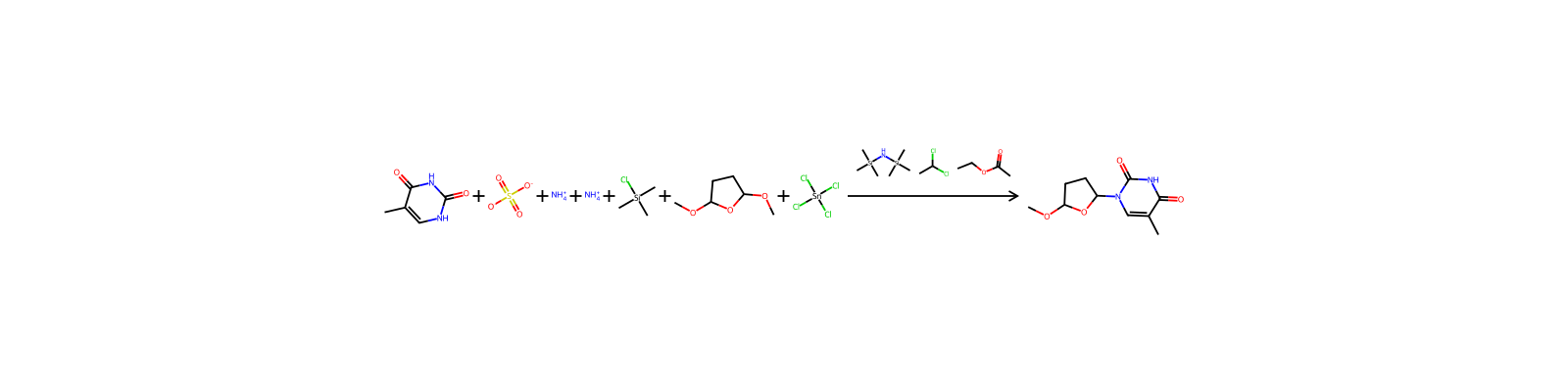
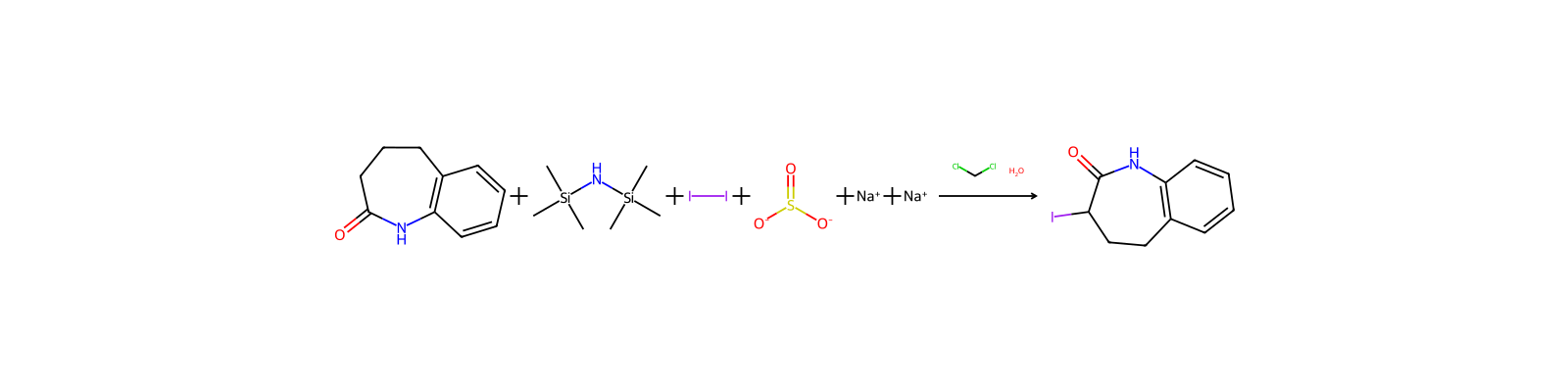
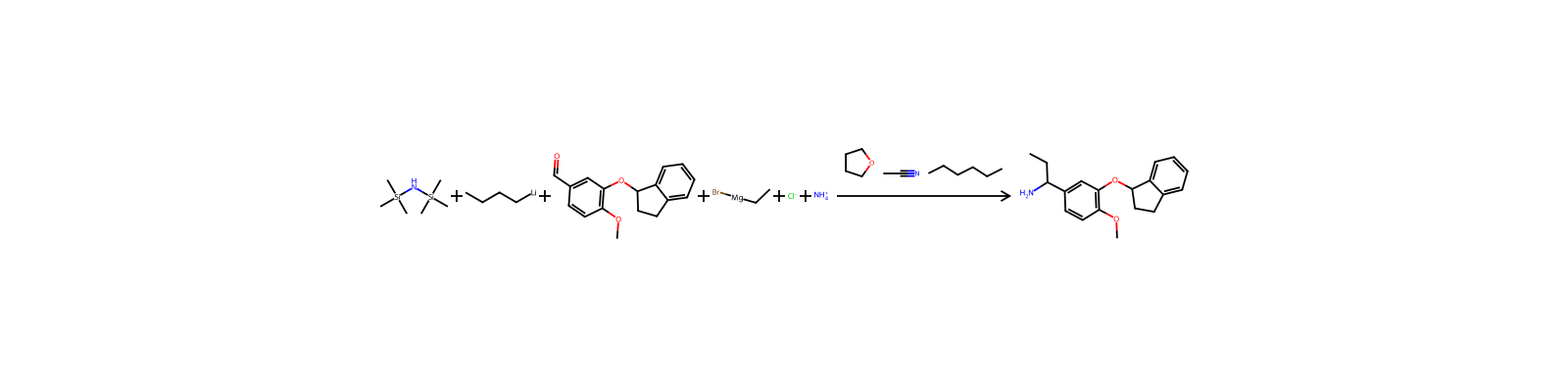
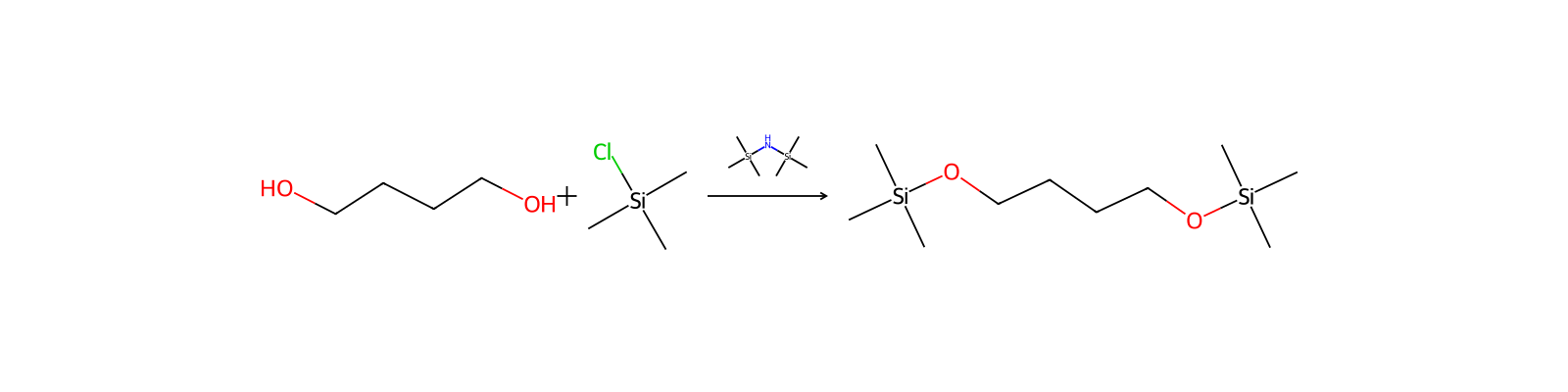
UsesHexamethyldisilazane mainly used as methyl silane alkylation (such as amikacin, penicillin, cephalosporins and kinds of penicillin derivatives), hydroxyl protectants of antibiotics. It is used as surface treatment agent of diatomite, white carbon black, titanium and blond additives of photoresist in the semiconductor industry. It is used as treatment agent of tearing strength resistance. It is used as a solvent in organic synthesis and organometallic chemistry. It is used as an adhesion promoter for photoresist in photolithography. it is used for the preparation of trimethylsilyl ethers from hydroxy compounds. It is used as an alternative to critical point drying during sample preparation in electron microscopy. It is added to analyte to get silylated diagnostic products during pyrolysis in gas chromatography- mass spectrometry.
General DescriptionHexamethyldisilazane appears as a liquid. May be toxic by ingestion. Irritates skin and eyes. Vapors are heavier than air. May emit highly toxic nitrogen oxide fumes when heated to decomposition. Used to deactivate chromatography support materials and to promote adhesion of photoresists in the electronics industry.
DefinitionChEBI: Hexamethyldisilazane is an N-silyl compound obtained from ammonia by replacement of two of the hydrogens with trimethylsilyl groups. Hexamethyldisilazane is a derivatisation agent used in gas chromatography mass spectrometry applications. It has a role as a chromatographic reagent. It derives from a hydride of an ammonia.