
HRID 46615As reactant

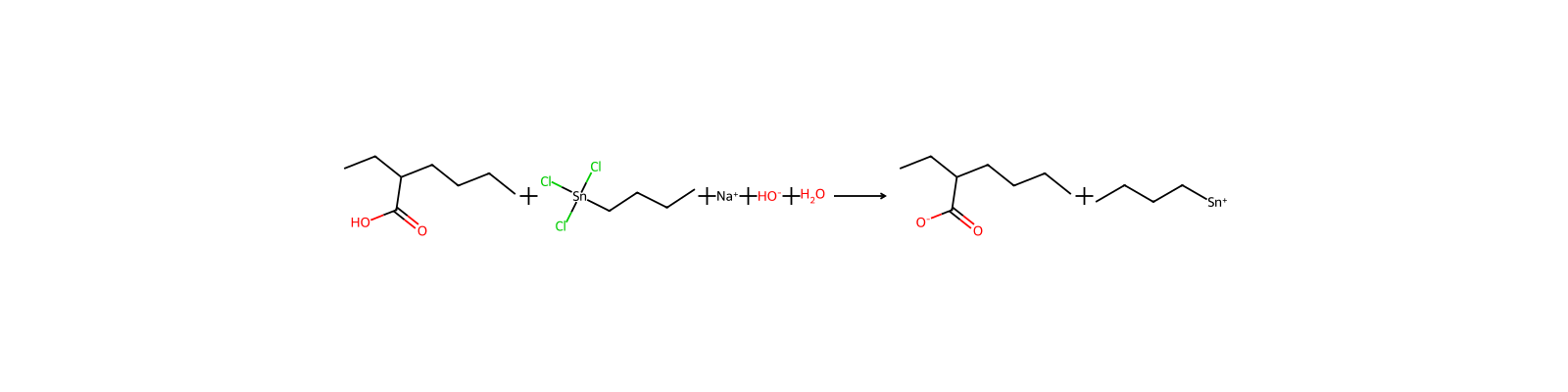
1118-46-3CCC[CH2][Sn]([Cl])([Cl])[Cl]YMLFYGFCXGNERH-UHFFFAOYSA-KMonobutyltin trichloride is an organotin compound. Tin is a chemical element with the symbol Sn and atomic number 50. It is a natural component of the earth's crust and is obtained chiefly from the mineral cassiterite, where it occurs as tin dioxide. (L307, L309)
1118-46-3DTXSID0029210Index of refraction: 1.5190 at 25 °C
INDEX OF REFRACTION 1.5244 AT 20 °C
Liquid; Dry Powder
Safety information is for reference only and does not replace the supplier’s Safety Data Sheet (SDS), applicable regulations, or professional assessment.
This chemical does not meet GHS hazard criteria for 5% (6 of 120) of reports.
Danger
H302 (40%): Harmful if swallowed [Warning Acute toxicity, oral]
P203, P260, P261, P264, P264+P265, P270, P271, P273, P280, P301+P317, P301+P330+P331, P302+P352, P302+P361+P354, P304+P340, P305+P351+P338, P305+P354+P338, P316, P317, P318, P319, P321, P330, P332+P317, P337+P317, P362+P364, P363, P391, P403+P233, P405, and P501 (click each P-code to see the statement)
Aggregated GHS information provided per 120 reports by companies from 12 notifications to the ECHA C&L Inventory. Each notification may be associated with multiple companies.
Danger
Chemical: Stannane, butyltrichloro-
Stannane, butyltrichloro- is listed on the EPA's Chemical Data Reporting (CDR) system. Manufacturers and importers of Stannane, butyltrichloro- are required to report information about their production and use of this chemical to the EPA under the Toxic Substances Control Act (TSCA). (40 eCFR Part 711)
REACH registered substance: N-butyltin trichloride (EC: 214-263-6)
Stannane, butyltrichloro-: Does not have an individual approval but may be used under an appropriate group standard
A strong skin irritant Oral LD50 (rat) = 2140 mg/kg; [Sax] Corrosive to skin and eyes; [eChemPortal: ERMA] A corrosive substance that can cause injury to the skin, eyes, and respiratory tract; Inhalation may cause chemical pneumonitis and pulmonary edema; [MSDSonline] See Tin, organic compounds.
The effects of dibutyltin and tributyltin compounds on the thymus were studied in relation to the cell kinetics of thymic atrophy. Male Wistar rats were exposed to single oral doses of 10 to 180 mg/kg mono-n-butyltin trichloride, 5 to 35 mg/kg di-n-butyltin dichloride, and 5 to 60 mg/kg tri-n-butyltin chloride. Body weights and organ weights for thymus, spleen, liver, kidneys, and adrenals were measured at varying times up to 9 days after exposure, and thymocyte suspensions were assessed for cell counts, cell size, and the incorporation of DNA, RNA, and protein precursors into acid precipitable material. Organ weights were not affected by any dose of mono-n-butyltin but were reduced di-n-butyltin dichloride and tri-n-butyltin chloride with the most significant effects obvious at 4 days post treatment. Dose levels reducing the relative thymic weight by 50% were 18 mg/kg di-n-butyltin dichloride and 29 mg/kg tri-n-butyltin chloride. Di-n-butyltin dichloride and tri-n-butyltin chloride produced a dose related reduction of cortical lymphocytes in thymus with pronounced reduction in the width of the thymic cortex at doses greater than 100 umol/kg body weight. The frequency of small cells in thymocyte suspensions increased over the 9 day post exposure period with progressive decrements in the number of intermediate and large thymocytes. Lymphoblast counts increased significantly on post exposure day four concomitant with maximal thymic atrophy. It was/ suggested that atrophy of the thymus and the subsequent immunosuppression are characteristics of diorganotin compounds.
Though tin metal is very poorly absorbed, tin compounds may be absorbed via oral, inhalation, or dermal routes, with organotin compounds being much more readily absorbed than inorganic tin compounds. Tin may enter the bloodstream and bind to hemoglobin, where it is distributed and accumulates mainly in the kidney, liver, lung, and bone. Organotin compounds may undergo dealkylation, hydroxylation, dearylation, and oxidation catalyzed by cytochrome P-450 enzymes in the liver. The alkyl products of dealkylation are conjugated with glutathione and further metabolized to mercapturic acid derivatives. Tin and its metabolites are excreted mainly in the urine and feces. (L308)


Colorless liquid; [HSDB] Yellow to red clear liquid; [MSDSonline]
Acute Tox. 4 (40%)
Skin corrosion - category 1
Flammable liquids - Category 4
Flammable liquids - Category 4
UN 3146; Organotin cmpd, solid, not otherwise specified
UN 2788; Organotin cmpd, liquid, not otherwise specified
IMO 6.1; Organotin cmpd, liquid or solid, not otherwise specified
SRP: At the time of review, criteria for land treatment or burial (sanitary landfill) disposal practices are subject to significant revision. Prior to implementing land disposal of waste residue (including waste sludge), consult with environmental regulatory agencies for guidance on acceptable disposal practices.
AVOID EXPOSURE TO LIQUIDS OR VAPORS.
SRP: Contaminated protective clothing should be segregated in such a manner so that there is no direct personal contact by personnel who handle, dispose, or clean the clothing. Quality assurance to ascertain the completeness of the cleaning procedures should be implemented before the decontaminated protective clothing is returned for reuse by the workers. All contaminated clothing should not be taken home at end of shift, but should remain at employee's place of work for cleaning.
Wherever possible, safer substitutes should be used in the place of alkyltin compounds. When it is necessary to make and use them ... /handling should be done in/ enclosed systems ... /equipped with/ exhaust ventilation. Engineering control should ensure that exposure limits are not exceeded. Personal protective equipment should be worn, & in appropriate circumstances respiratory protection should be used. Emergency showers should be installed ... to allow workers to wash immediately after splashes. /Organotin compounds/
SRP: The scientific literature supports the wearing of contact lenses in industrial environments, as part of a program to protect the eye against chemical compounds and minerals causing eye irritation. However, there may be individual substances whose irritating or corrosive properties are such that the wearing of contact lenses would be harmful to the eye. In those specific cases contact lenses should not be worn.
For more Preventive Measures (Complete) data for MONO-N-BUTYLTIN TRICHLORIDE (12 total), please visit the HSDB record page.
0.1 [mg/m3], as Sn
0.2 [mg/m3], as Sn
8 hr Time Weighted Avg (TWA): 0.1 mg/cu m; 15 min Short Term Exposure Limit (STEL): 0.2 mg/cu m, skin. /Tin, organic cmpd, as Sn/
A4; Not classifiable as a human carcinogen. /Tin, organic cmpd, as Sn/
Safety goggles or face shields should be worn (8 inch minimum). Impervious clothing should include gloves, aprons, and suits. /Organotin compounds/
Personnel protection: ... Wear appropriate chemical protective gloves, boots and goggles. ... /Organotin compounds, NOS/
Recommendations for respirator selection: Max. concn for use: 1 mg/cu m). Any chemical cartridge respirator with organic vapor cartridge(s) in combination with a dust and mist filter. Any supplied-air respirator. /Tin (organic cmpds, as Sn)/
Recommendations for respirator selection: Max. concn for use: 2.5 mg/cu m). Any supplied-air respirator operated in a continuous-flow mode. Any powered, air-purifying respirator with organic vapor cartridge(s) in combination with a dust and mist filter. /Tin (organic cmpds, as Sn)/
For more Personal Protective Equipment (PPE) (Complete) data for MONO-N-BUTYLTIN TRICHLORIDE (8 total), please visit the HSDB record page.
Mono-n-butyltin trichloride is expected to dissociate in soil forming the cation, mono-n-butyltin(SRC). Mono-n-butyltin is expected to adsorb to organic carbon and clay; therefore, mobility in soil will be limited(SRC). Volatilization from moist soil surfaces is not expected to be an important fate process because the cation is not expected to volatilize(SRC). The potential for volatilization of mono-n-butyltin trichloride from dry soil surfaces may exist(SRC) based upon an estimated vapor pressure of 1.3 mm Hg(SRC), determined from a fragment constant method(1). In a 278-day marine mesocosm experiment in which tributyltin was added in summer, mono-n-butyltin was formed as a degradation product; there was no evidence that mono-n-butyltin degraded in water or sediment(2) and, therefore, mono-n-butyltin may be stable in soil(SRC).
AQUATIC FATE: Mono-n-butyltin chloride is expected to dissociate in water forming the cation, mono-n-butyltin(SRC). The hydrated mono-n-butyltin cation is acidic and forms hydroxylated mono-n-butyl cation species in solution(1). Cations generally adsorb to suspended solids and sediment(SRC). Volatilization from water surfaces is not expected to be an important fate process because the cation is not expected to volatilize(SRC). Butyltin compounds may react with sulfides present in sediment, leading to the formation of mono-n-butyltin sulfide(2). In a 278-day marine mesocosm experiment in which tributyltin was added in summer, mono-n-butyltin was formed as a degradation product but there was no evidence that mono-n-butyltin degraded in water or in sediment(3).
ATMOSPHERIC FATE: According to a model of gas/particle partitioning of semivolatile organic compounds in the atmosphere(1), mono-n-butyltin trichloride, which has an estimated vapor pressure of 1.3 mm Hg at 25 °C(SRC), determined from a fragment constant method(2), is expected to exist solely as a vapor in the ambient atmosphere(SRC). Vapor-phase mono-n-butyltin trichloride is degraded in the atmosphere by reaction with photochemically-produced hydroxyl radicals(SRC); the half-life for this reaction in air is estimated to be 1.1 days(SRC), calculated from its rate constant of 14X10-12 cu cm/molecule-sec at 25 °C(SRC) determined using a structure estimation method(3). Butyltin species obtained by dissolution of mono-n-butyltin trichloride in water weakly absorb light at wavelength >290 nm(4); therefore, mono-n-butyltin trichloride may be subject to direct photolysis(SRC). Mono-n-butyltin trichloride may dissociate in moist air which results in the formation of hydrogen chloride and hydrated butyltin hydroxide dichloride(5).
Organotin compounds produce neurotoxic and immunotoxic effects. Organotins may directly activate glial cells contributing to neuronal cell degeneration by local release of pro-inflammatory cytokines, tumor necrosis factor-_, and/or interleukins. They may also induce apoptosis by direct action on neuronal cells. Organotin compounds stimulate the neuronal release of and/or decrease of neuronal cell uptake of neurotransmitters in brain tissue, including aspartate, GABA, glutamate, norepinephrine, and serotonin. This may be either a contributing factor to or result of the neuronal cell loss. The immunotoxic effects of organotins are characterized by thymic atrophy caused by the suppression of proliferation of immature thymocytes and apoptosis of mature thymocytes. Organotin compounds are believed to exert these effects by suppressing DNA and protein synthesis, inducing the expression of genes involved in apoptosis (such as nur77), and disrupting the regulation of intracellular calcium levels, giving rise to the uncontrolled production of reactive oxygen species, release of cytochrome c to the cytosol, and the proteolytic and nucleolytic cascade of apoptosis. The suppression of proliferation of immature thymocytes further results in the suppression of T-cell-mediated immune responses. Organotins are also endocrine disruptors and are believed to contribute to obesity by inappropriate receptor activation, leading to adipocyte differentiation. Inorganic tin triggers eryptosis, contributing to tin-induced anemia. (L308, A182, A184)
The adsorption of butyltin trichloride was studied under simulated estuarine conditions which included artificial seawater (salinity (S)), hydrous iron oxide (modelling particulate matter (PM)) and fulvic acid(1). The partition coefficients Kp (ug/kg)/ug/l) ranged from 95,000 (at pH 7.2, moderate S and moderate PM concn) to 1X10+6 (at high PM concn at either pH 8.2 and high or low S or pH 6.2 and high S). Based upon these results, butyltin trichloride is expected to exist mainly in the adsorbed phase in estuarine and seawater(1). In a study of desorption from sediment, approximately 2% of the initial butyltin species was observed to desorb from the unshaken Toronto Harbor (Canada) sediment/water mixtures in 10.6 months(2).
Mono-n-butyltin trichloride is expected to dissociate in soil forming the cation, mono-n-butyltin, which is expect to adsorb strongly to soil(SRC). In a 278-day marine mesocosm experiment in which tributyltin was added to the system in summer, the distribution coefficient for mono-n-butyltin between dissolved state and particulate matter calculated from data between days 2-19 was 2900 L/kg (standard deviation 500). Other investigators obtained distribution constants for adsorption of mono-n-butyltin to particulate matter and sediment of 2,600 L/kg and 1800-29,000 L/kg, respectively; values were a function of sediment type and location(1). The Freundlich parameters, log k and 1/n, for mono-n-butyltin to sediment were 2.92 and 0.622, respectively(2).
The only monitoring data located were for monobutyltin (BuSn+++) without regard for the identity of the accompanying anion(s) and concn was reported in Sn equivalents(1). Monobutyltin was detected and quantified in 1 of 14 samples of whole fish collected from Canadian surface waters during 1982 and 1984 at the following concn (species; location): 0.06 ppm Sn (wet wt), herring (Clupea harengus pallasi; Vancouver Harbor); monobutyltin also was detected, not quantified in another 4 of the samples (concn <0.01 ppm Sn (wet wt) (limit of quantitation))(1). The levels of monobutyltin in mussel tissue (n=16) in the Sado Estuary, Portugal were 3.2-169 ng/g dry wt(2).
Mono-n-butyltin trichloride's production and use as an intermediate in the production of other mono-n-butyltin compounds, as a poly(vinyl chloride) stabilizer, and use in the hot-end coating of glass to improve abrasion resistance and bursting strength of glass bottles(1) may result in its release to the environment through various waste streams(SRC). Mono-n-butyltin is formed as a degradation product of tributyltin, an antifouling agent used in marine paint and dibutyltin(2).
Tributyltin species, obtained by dissolution of tributyltin oxide in water, are sequentially degraded by microorganisms to dibutyltin, monobutyltin (similar to the monobutyltin obtained by dissolution of mono-n-butyltin trichloride), and finally to inorganic tin using water/sediment mixtures or water alone from Toronto Harbor, Canada(1). Butyltin compounds may be susceptible to biomethylation based upon the possible biomethylation of dibutyltin and tributyltin compounds(1).
A degradation product of dibutyltin and tributyltin (antifouling agents in marine paints); Used as an intermediate for other mono-n-butyltin compounds, a PVC stabilizer, and a hot-end coating of glass bottles; [HSDB]
Glass Manufacturing [Category: Industry]
Hot-end coating of glass to improve abrasion resistance and bursting strength of glass bottles.
Although generally less effective than dialkyl tin compounds as PVC stabilizers, monoalkyltin compounds when added to dialkyltin compounds in amounts of 5-20 wt% exert a synergistic effect on stabilizer effectiveness, preventing early yellowing.
2023: 10,000,000 - <50,000,000 lb
(1977) AT LEAST 5.04X10+7 GRAMS
REDISTRIBUTION REACTION OF TETRA-N-BUTYLTIN & STANNIC CHLORIDE IN AN APPROX 1:3 RATIO TO FORM A MIXTURE OF CHLOROBUTYLTINS, FOLLOWED BY SEPN; OXIDATIVE ADDITION OF N-BUTYL CHLORIDE TO STANNOUS CHLORIDE IN THE PRESENCE OF TRI-N-BUTYLANTIMONY CATALYST.
The oxidative addition of aliphatic organic halides to stannous chloride has long been of interest for the preparation of monoorganotin trihalides. Fair to good yields are obtained for the reaction with quaternary ammonium or phosphonium catalysts. Trialkylantimony compounds at 100-160 °C are also used as catalyst.
Plastics Product Manufacturing
Stannane, butyltrichloro-: ACTIVE
UsesGlass hot end spraying