Reaction equation

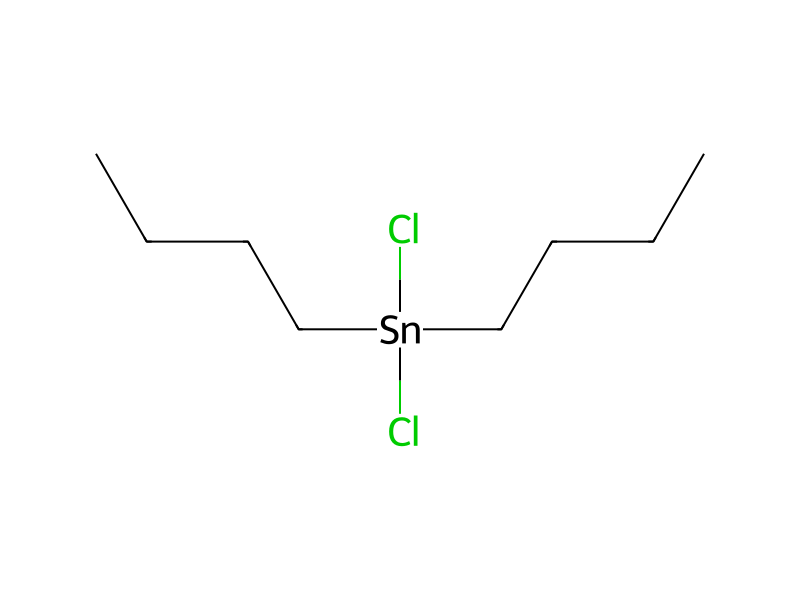
[CH2:1]([Sn:5]([CH:18]1[CH2:23][CH2:22][CH2:21][CH2:20][CH2:19]1)([CH:12]1[CH2:17][CH2:16][CH2:15][CH2:14][CH2:13]1)[CH:6]1[CH2:11][CH2:10][CH2:9][CH2:8][CH2:7]1)[CH2:2][CH2:3][CH3:4].[CH2:24]([Sn:28]([Cl:31])(Cl)[Cl:29])[CH2:25][CH2:26][CH3:27]>C1(C)C(C)=CC=CC=1>[CH:18]1([Sn:5]([Cl:29])([CH:6]2[CH2:7][CH2:8][CH2:9][CH2:10][CH2:11]2)[CH:12]2[CH2:13][CH2:14][CH2:15][CH2:16][CH2:17]2)[CH2:23][CH2:22][CH2:21][CH2:20][CH2:19]1.[CH2:1]([Sn:28]([Cl:31])([Cl:29])[CH2:24][CH2:25][CH2:26][CH3:27])[CH2:2][CH2:3][CH3:4]Participants
5
Reactant 2


Product 2

Reagents, catalysts & solvents 1

Procedure
A solution of equimolar amounts of butyl tricyclohexyltin and butyltin trichloride in commercial xylene was refluxed for 221/2 hours. Analysis of the reaction mixture obtained showed that the reaction had gone to about 89% completion to form predominantly tricyclohexyltin chloride and dibutyltin dichloride.
Workup
- customAnalysis of the reaction mixture obtained
Sources & evidence
- ORD record
- ord-c5e415f74b814fec966c82cbe051672a
- Source dataset
- uspto-grants-1979_11
- Patent number
- US04174346
Linked notes
Loading…