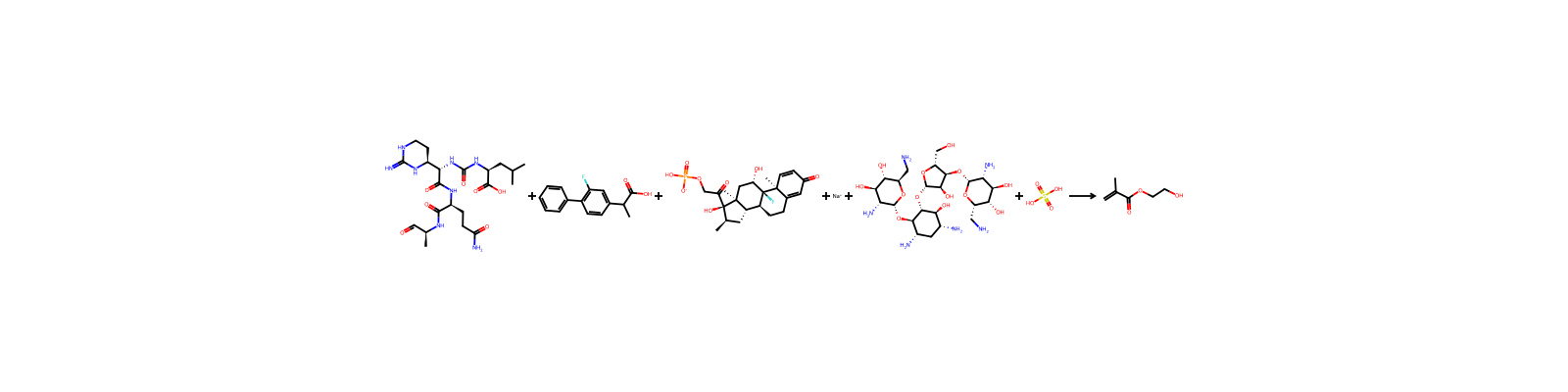
Neomycin Sulfate
Completing data — refresh the page later to see the latest
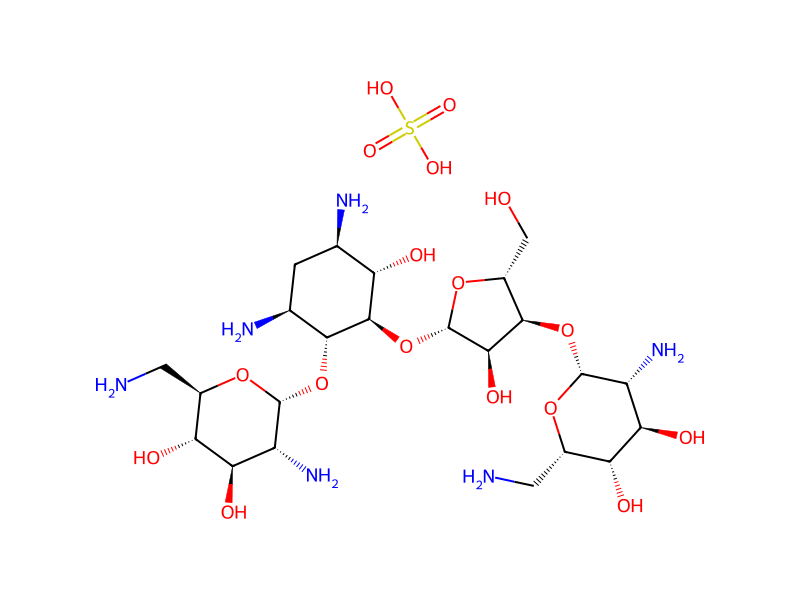
Basic information
- CAS
1405-10-3- Standard SMILES
NC[C@@H]1O[C@H](O[C@H]2[C@@H](O)[C@H](O[C@@H]3[C@@H](O)[C@H](N)C[C@H](N)[C@H]3O[C@H]3O[C@H](CN)[C@@H](O)[C@H](O)[C@H]3N)O[C@@H]2CO)[C@H](N)[C@@H](O)[C@@H]1O.O=S(=O)(O)O- InChIKey
OIXVKQDWLFHVGR-WQDIDPJDSA-N- Molecular formula
- C23H48N6O17S
- Average molar mass
- 712.7 g/mol
- Monoisotopic mass
- 712.27966508
Overview
Neomycin B sulfate is the aminoglycoside sulfate salt that is the sulfate salt of neomycin B; a component of neomycin sulfate. It contains a framycetin.
Names & identifiers
- Preferred name
- Neomycin Sulfate
- IUPAC
- (2R,3S,4R,5R,6R)-5-amino-2-(aminomethyl)-6-[(1R,2R,3S,4R,6S)-4,6-diamino-2-[(2S,3R,4S,5R)-4-[(2R,3R,4R,5S,6S)-3-amino-6-(aminomethyl)-4,5-dihydroxyoxan-2-yl]oxy-3-hydroxy-5-(hydroxymethyl)oxolan-2-yl]oxy-3-hydroxycyclohexyl]oxyoxane-3,4-diol;sulfuric acid
- English name
- neomycin B sulphate
- Molecular formula
- C23H48N6O17S
- Molecular weight
- 712.72
Names & synonyms
NEOMYCIN SULFATENeomycin B sulfate1405-10-3Neomycin sulphateMycifradinBykomycinNeomixNeomycin, sulfate (salt)Fradiomycin sulfateNeo-RxMyciguentNeobiotic
Show more names
Framycin sulfateneomycin B sulphateChlorotoluron Impurity 5Neomycin B Sulfate (Framycetin Sulfate)2nd International Standard for Neomycin BFramycetin sulfate (Neomycin B sulfate) RS(2S,3S,4R,5R,6R)-5-Amino-2-(aminomethyl)-6-(((2R,3S,4R,5S)-5-(((1R,2R,3S,5R,6S)-3,5-diamino-2-(((2R,3R,4R,5S,6R)-3-amino-6-(aminomethyl)-4,5-dihydroxytetrahydro-2H-pyran-2-yl)oxy)-6-hydroxycyclohexyl)(2S,3S,4R,5R,6R)-5-Amino-2-(aminomethyl)-6-(((2R,3S,4R,5S)-5-(((1R,2R,3S,5R,6S)-3,5-diamino-2-(((2R,3R,4R,5S,6R)-3-amino-6-(aminomethyl)-4,5-dihydroxytetrahydro-2H-pyran-2-yl)oxy)-6-hydroxycyclohexyl)oxy)-4-hydroxy-2-(hydroxymethyl)tetrahydrofuran-3-yl)oxy)tetrahydro-2H-pyran-3,4-diol xsulfate
Properties
Computed structural propertiesFilling in
- Topological polar surface area
- 436 Ų
- Hydrogen bond donors
- 15
- Hydrogen bond acceptors
- 23
- Rotatable bonds
- 9
- Heavy atoms
- 47
- Formal charge
- 0
- Complexity
- 953
Experimental & physicochemical properties
Human Drugs
Breast Feeding; Lactation; Milk, Human; Anti-Infective Agents; Antibacterial Agents; Aminoglycosides; Dermatologic Agents
FDA approved drugs -> Active ingredient
FDA approved drugs -> Active ingredient
Animal DrugsActive Ingredients (Neomycin Sulfate) -> FDA Greenbook
Physicochemical properties
- storage temp.
- -20 °C · -20°C
- form
- solid
- Major Application
- USP Biologicspharmaceutical
- InChIKey
- OIXVKQDWLFHVGR-WQDIDPJDSA-N
- FDA UNII
- 3720 KZ4TQ · Y3720KZ4TQ
- UNSPSC Code
- 41116107 · 41116107
- NACRES
- 24 · NA.24
- Symbol(GHS)
- 7 · GHS07
- Signal word
- Warning
- Hazard statements
- 317 · H317
Safety & regulation
Safety information is for reference only and does not replace the supplier’s Safety Data Sheet (SDS), applicable regulations, or professional assessment.
GHS classification
GHS Classification
Danger
H317 (95.7%): May cause an allergic skin reaction [Warning Sensitization, Skin]
P203, P233, P260, P261, P271, P272, P273, P280, P284, P302+P352, P304+P340, P318, P319, P321, P333+P317, P342+P316, P362+P364, P403, P403+P233, P405, and P501 (click each P-code to see the statement)
Aggregated GHS information provided per 372 reports by companies from 27 notifications to the ECHA C&L Inventory. Each notification may be associated with multiple companies.
This chemical does not meet GHS hazard criteria for 96.3% (52 of 54) of all reports.
Not Classified
Hazard information
Regulatory Information
Hazard Traits - Developmental Toxicity
Neomycin sulphate: Does not have an individual approval but may be used under an appropriate group standard
Framycetin sulfate: Does not have an individual approval but may be used as a component in a product covered by a group standard. It is not approved for use as a chemical in its own right.
Other Safety InformationIMAP assessments - Neomycin, sulfate (salt): Human health tier I assessment
Hazard Classes and Categories
Not Classified
Skin Sens. 1 (95.7%)
Acute Tox. 4 (15.4%)
Toxicology
TreatmentHemodialysis will remove neomycin sulfate from the blood. (L1712)
Health EffectsAntibiotic resistance
Exposure Routes
Chemistry & industry
Pharmacology
Metabolism/Metabolites
Neomycin undergoes negligible biotransformation after parenteral administration. Route of Elimination: The small absorbed fraction is rapidly distributed in the tissues and is excreted by the kidney in keeping with the degree of kidney function. Half Life: 2 to 3 hours
FDA Pharmacological Classification
FIRST AID OINTMENT
Aminoglycoside Antibacterial [EPC]; Aminoglycosides [CS]
NEOMYCIN SULFATE
Aminoglycoside Antibacterial [EPC]; Aminoglycosides [CS]
NEOMYCIN OINTMENT
Aminoglycoside Antibacterial [EPC]; Aminoglycosides [CS]
MeSH Pharmacological Classification
Compounds which inhibit the synthesis of proteins. They are usually ANTI-BACTERIAL AGENTS or toxins. Mechanism of the action of inhibition includes the interruption of peptide-chain elongation, the blocking the A site of ribosomes, the misreading of the genetic code or the prevention of the attachment of oligosaccharide side chains to glycoproteins.
Substances that inhibit the growth or reproduction of BACTERIA.
Uses & manufacturing
Uses
Topical uses include treatment for superficial eye infections caused by susceptible bacteria (used in combination with other antiinfectives), treatment of otitis externa caused by susceptible bacteria, treatment or prevention of bacterial infections in skin lesions, and use as a continuous short-term irrigant or rinse to prevent bacteriuria and gram negative rod bacteremia in abacteriuric patients with indwelling catheters. May be used orally to treat hepatic encephalopathy, as a perioperative prophylactic agent, and as an adjunct to fluid and electrolyte replacement in the treatment of diarrhea caused to enteropathogenic E. coli (EPEC).
Use ClassificationAnimal Drugs -> FDA Approved Animal Drug Products (Green Book) -> Active Ingredients
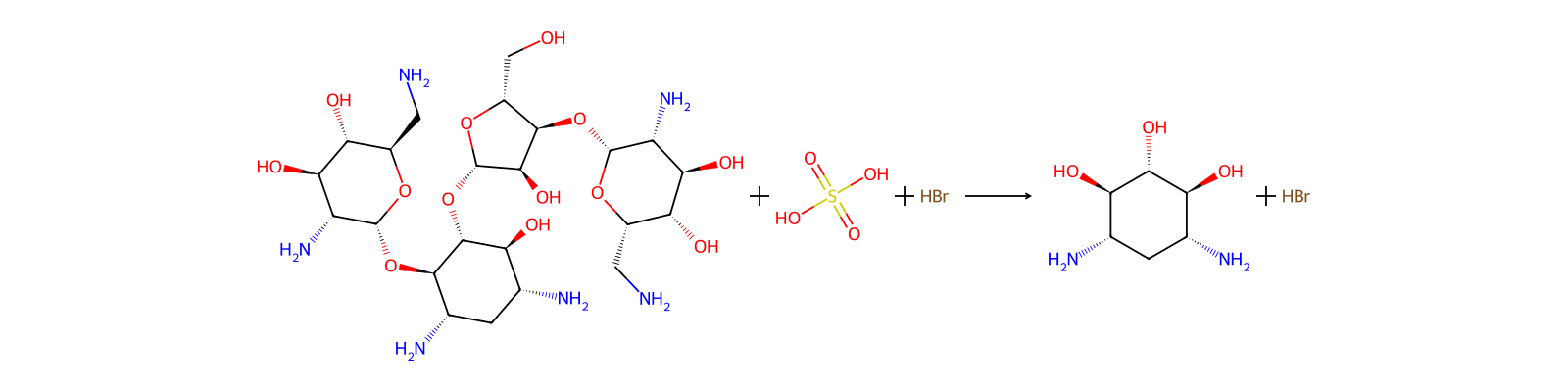
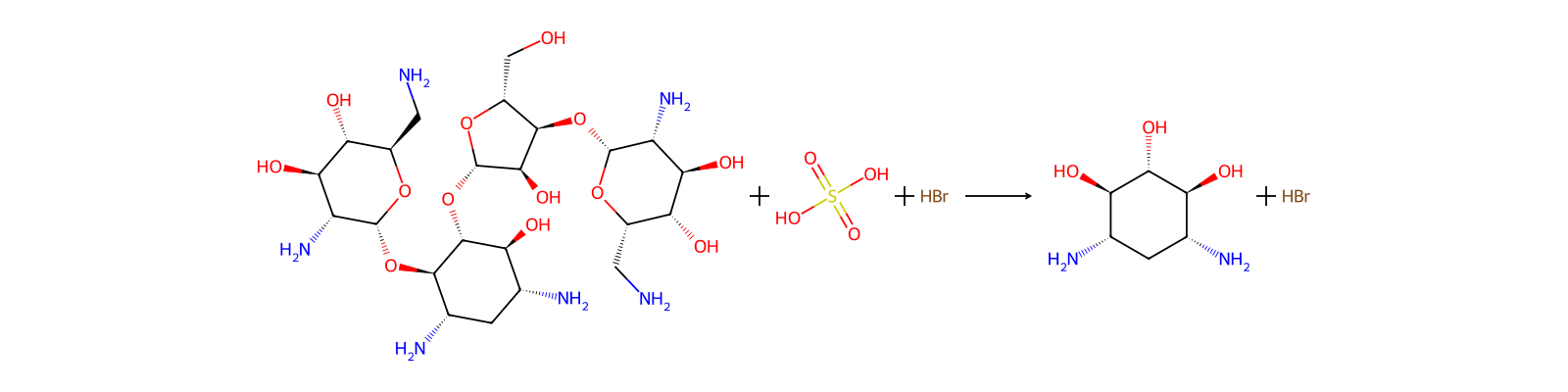
Related reactions
5 records

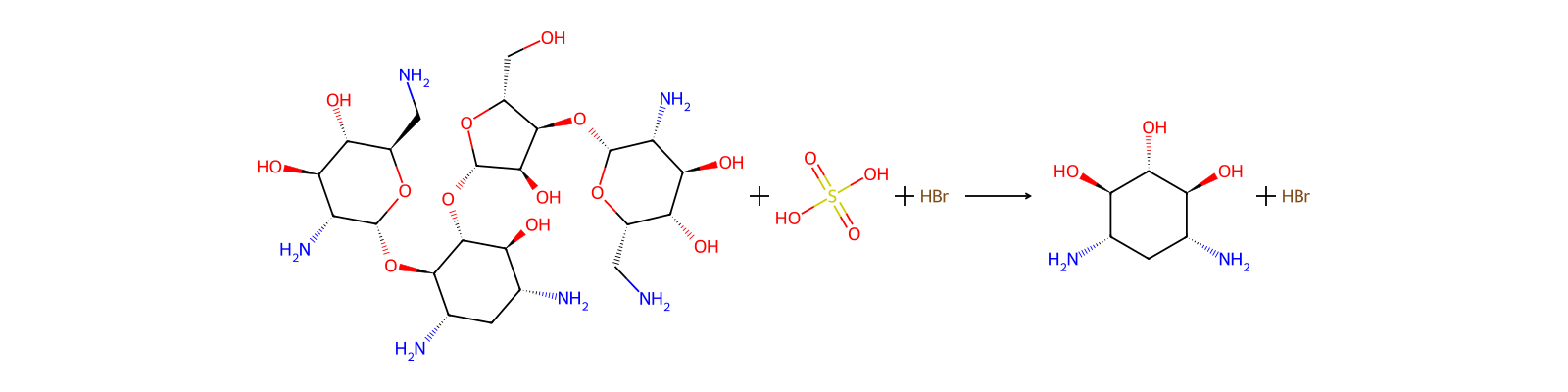
Compound notes
Loading…