

Basic information
- Standard SMILES
O=[N+]([O-])[O-].O=[N+]([O-])[O-].O=[N+]([O-])[O-].[Ce+3]- InChIKey
HSJPMRKMPBAUAU-UHFFFAOYSA-N- Molecular formula
- CeN3O9
- Average molar mass
- 326.13 g/mol
- Monoisotopic mass
- 325.86889228
Overview
RN given refers to unspecified cerium salt
Names & identifiers
- Preferred name
- Cerium nitrate
- IUPAC
- cerium(3+) trinitrate
Names & synonyms
RefChem:575222DTXSID001340641241-339-617309-53-4Cerium nitrateNitric acid, cerium saltCerous nitratecerium(3+);trinitrate10108-73-3CERIUM(III) NITRATEcerium(3+) trinitratecerium (III) nitrate
Show more names
CERAMICS-AEium(III) nitrateNitric acid cerium (3+) salt (3:1)7U25VKD7PWCEROUS NITRATE [MI]Ce(NO3)3SCHEMBL35227Cerium (III) nitrate hydrateCEROUS NITRATE [MART.]
Database identifiers
- CAS
10108-73-3、17309-53-4- PubChem CID
- 24948
- DTXSID
DTXSID20881414- UNII
- 7U25VKD7PW
- EC Number
- 233-297-2、241-339-6
Properties
Computed structural properties
- Topological polar surface area
- 189 Ų
- Hydrogen bond donors
- 0
- Hydrogen bond acceptors
- 9
- Rotatable bonds
- 0
- Heavy atoms
- 13
- Formal charge
- 0
- Complexity
- 18.8
Experimental & physicochemical properties
Chemical ClassesMetals -> Rare Earth Metals
Physical DescriptionColorless, deliquescent solid; [Hawley]
Safety & regulation
GHS classification
GHS Classification
This chemical does not meet GHS hazard criteria for 0.5% (1 of 201) of reports.
Danger
H272 (96%): May intensify fire; oxidizer [Danger Oxidizing liquids; Oxidizing solids]
P210, P220, P264+P265, P273, P280, P305+P351+P338, P305+P354+P338, P317, P337+P317, P370+P378, P391, and P501 (click each P-code to see the statement)
Aggregated GHS information provided per 201 reports by companies from 15 notifications to the ECHA C&L Inventory. Each notification may be associated with multiple companies.
Danger
Hazard information
Regulatory InformationStatus: Active Update: 21-08-2019 https://echa.europa.eu/registration-dossier/-/registered-dossier/13575
Hazards SummaryCaution: strong oxidizer and fire risk; [Hawley] See Cerium. See RARE EARTH METALS and linked occupational diseases.
Hazard Classes and Categories
Ox. Sol. 2 (96%)
Met. Corr. 1 (100%)
Safety & protection
Protective Action Criteria (PAC)
9.5 [mg/m3]
100 [mg/m3]
620 [mg/m3]
Toxicology
Adverse EffectsFibrogenic - Inducing tissue injury and fibrosis (scarring).
Chemistry & industry
Pharmacology
MeSH Pharmacological ClassificationSubstances used on humans and other animals that destroy harmful microorganisms or inhibit their activity. They are distinguished from DISINFECTANTS, which are used on inanimate objects.
Uses & manufacturing
UsesUsed in separation of rare earth elements and as a catalyst; Used in past to make incandescent mantles; [Merck Index]
Related reactions
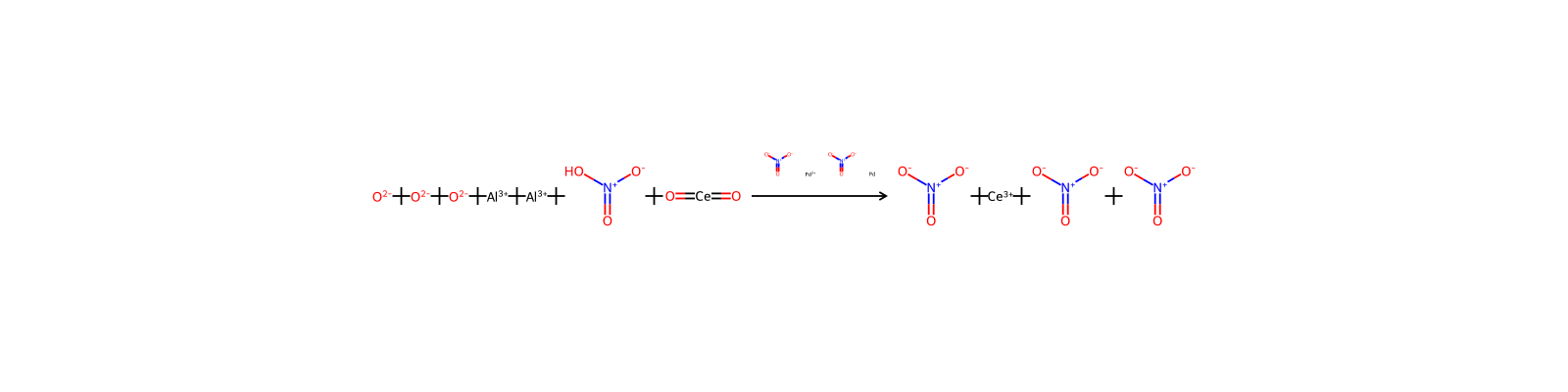
26 records


Linked notes
Loading…