Basic information
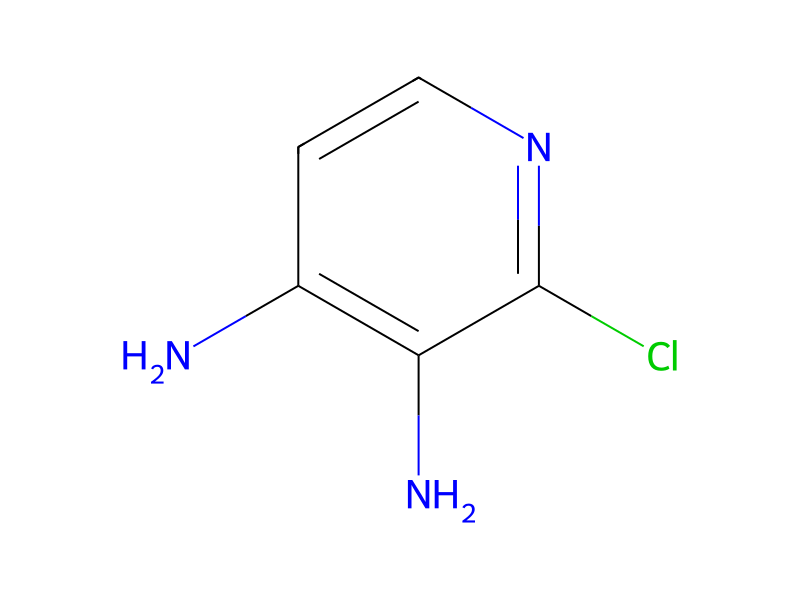
- Standard SMILES
Nc1ccnc(Cl)c1N- InChIKey
PWOIYBVEDIFBEO-UHFFFAOYSA-N- Molecular formula
- C5H6ClN3
- Average molar mass
- 143.57 g/mol
- Monoisotopic mass
- 143.0250249
Names & identifiers
- Preferred name
- 2-Chloropyridine-3,4-diamine
- IUPAC
- 2-chloropyridine-3,4-diamine
- English name
- 2-Chloro-3,4-diaminopyridine
- Molecular formula
- C5H6ClN3
- Molecular weight
- 143.57
Names & synonyms
2-chloropyridine-3,4-diamineDTXSID90301412RefChem:470508DTXCID40252546686-011-739217-08-82-CHLORO-3,4-DIAMINOPYRIDINE3,4-Diamino-2-chloropyridine2-Chloro-3,4-pyridinediamineMFCD07363739NSC143160SCHEMBL337291
Show more names
NSC 143160oropyridine-3,4-diamine2-Chloro-3,4-pyridinediam...3,4-Pyridinediamine, 2-chloro-(4-amino-2-chloro-3-pyridyl)amine2-chloropyridine-3,4-diaMinehydrochloride
SCHEMBL29738526CS-D07762-CHLOROPYRIDIN-3,4-DIAMINESBB079600SC32213,4-Diamino-2-chloropyridine, 97%AKOS005257926GS-5810
Database identifiers
- CAS
39217-08-8- PubChem CID
- 285736
- DTXSID
DTXSID90301412- EC Number
- 686-011-7
- Nikkaji
- J1.876.825I
Properties
Computed structural properties
- XLogP
- 0.5
- Topological polar surface area
- 64.9 Ų
- Hydrogen bond donors
- 2
- Hydrogen bond acceptors
- 3
- Rotatable bonds
- 0
- Heavy atoms
- 9
- Formal charge
- 0
- Complexity
- 98
Physicochemical properties
- Melting point
- 158 · 158-163℃
- Boiling point
- 381.3 · 381.3±37.0 °C(Predicted)
- Density
- 1.447 · 1.447±0.06 g/cm3(Predicted)
- storage temp.
- 2 · under inert gas (nitrogen or Argon) at 2–8 °C
- solubility
- soluble in Methanol
- form
- powder to crystal
- pka
- 4.79 · 4.79±0.42(Predicted)
- color
- Light yellow to Brown to Dark green
- InChI
- 1S/C5H6ClN3/c6-5-4(8)3(7)1-2-9-5/h1-2H,8H2,(H2,7,9)
- InChIKey
- PWOIYBVEDIFBEO-UHFFFAOYSA-N
- SMILES
- Nc1ccnc(Cl)c1N
- UNSPSC Code
- 12352100 · 12352100
- NACRES
- 22 · NA.22
- Symbol(GHS)
- 6 · GHS06
- Signal word
- Danger
- Hazard statements
- 301 · H301-H317-H319
- Precautionary statements
- 280 · P280-P301+P310+P330-P302+P352-P305+P351+P338
- Hazard Codes
- Xi,Xn
- Risk Statements
- 36 · 36/37/38-43-36-22
- Safety Statements
- 26 · 26-37-36/37-24/25-36/37/39
- RIDADR
- 2811 · 2811
- WGK Germany
- 3 · 3
- HazardClass
- 6.1 · 6.1
- PackingGroup
- Ⅲ
- HS Code
- 29333990 · 29333990
- Storage Class
- 6.1 C · 6.1C - Combustible acute toxic Cat.3toxic compounds or compounds which causing chronic effects
- Hazard Classifications
- 3 OralEye · Acute Tox. 3 OralEye Irrit. 2Skin Sens. 1
Safety & regulation
GHS classification
GHS Classification
Danger
H301 (97.7%): Toxic if swallowed [Danger Acute toxicity, oral];H317 (97.7%): May cause an allergic skin reaction [Warning Sensitization, Skin];H319 (100%): Causes serious eye irritation [Warning Serious eye damage/eye irritation]
P261, P264, P264+P265, P270, P272, P280, P301+P316, P302+P352, P305+P351+P338, P321, P330, P333+P317, P337+P317, P362+P364, P405, and P501 (click each P-code to see the statement)
Aggregated GHS information provided per 43 reports by companies from 4 notifications to the ECHA C&L Inventory. Each notification may be associated with multiple companies.;Information may vary between notifications depending on impurities, additives, and other factors. The percentage value in parenthesis indicates the notified classification ratio from companies that provide hazard codes. Only hazard codes with percentage values above 10% are shown. For more detailed information, please visit ECHA C&L website.
Hazard information
Hazard Classes and CategoriesAcute Tox. 3 (97.7%);Skin Sens. 1 (97.7%);Eye Irrit. 2A (100%)
Safety data
- wgk
- 3
- ridadr
- 2811
- hs_code
- 29333990
- risk_code
- 36/37/38-43-36-22
- Signal word
- Danger
- Symbol(GHS)
- GHS06
- hazard_code
- Xi,Xn
- safety_code
- 26-37-36/37-24/25-36/37/39
- hazard_class
- 6.1
- Storage Class
- 6.1C - Combustible acute toxic Cat.3toxic compounds or compounds which causing chronic effects
- packing_group
- Ⅲ
- Hazard statements
- H301-H317-H319
- Hazard Classifications
- Acute Tox. 3 OralEye Irrit. 2Skin Sens. 1
- Precautionary statements
- P280-P301+P310+P330-P302+P352-P305+P351+P338
Chemistry & industry
Applications
Uses2-Chloropyridine-3,4-diamine
Upstream & downstream products
Upstream raw materials
Downstream products
Suppliers50 total
Shandong chuangyingchemical Co., Ltd.18853181302 · [email protected]
苏州启航生物科技有限公司18151111370 · [email protected]
温州共赢化学有限公司+86-0086-577-64498589 +86-15355981851 · [email protected]
INTATRADE GmbH+49 3493/605464 · [email protected]
环生美森医药技术(山东)有限公司0531-88762217 18301471076 · [email protected]
Dayang Chem (Hangzhou) Co.,Ltd.+86-0571-88938639 17705817739 · [email protected]
韶远科技(上海)有限公司021-50795510 4000665055 · [email protected]
北京华威锐科化工有限公司0757-86329057 18934348241 · [email protected]
河北松辰医药科技有限公司0319-5801333-8008 15630992918 · [email protected]
常州科化生物科技有限公司0519-68985668 13685222090 · [email protected]
上海瀚鸿科技股份有限公司021-54306202 13764082696 · [email protected]
Advanced chemblocks inc650-6922368 650-6922368;650-6922368 · [email protected]
上海相辉医药科技有限公司13761987713 · [email protected]
上海景颜化工科技有限公司13817811078 · [email protected]
嘉兴市艾森化工有限公司0573-85285100 18627885956 · [email protected]
Pure Chemistry Scientific Inc.001-857-928-2050 or 1-888-588-9418 · [email protected]
上海隆盛化工有限公司58099637 13585536065 · [email protected]
济南精合医药科技有限公司0531-88811783 · [email protected]
南京斯贝源医药科技有限公司+86-25-68710855, +86-25-68710897 · [email protected]
济南千叶医药技术有限公司0531-81313138 13066006660 · [email protected]
苏州思变化学技术有限公司0512-65617459 18915409046 · [email protected]
上海特伯化学科技有限公司+86-21-60341587 · [email protected]
南京诺利斯医药科技有限公司13901585132 · [email protected]
TCI AMERICA800-4238616 · [email protected]
TOKYO CHEMICAL INDUSTRY CO., LTD.03-36680489 · [email protected]
TCI Europe320-37350700 · [email protected]
上海贤鼎生物科技有限公司4009209199 · [email protected]
上海睿升化工科技有限公司+86-021-50935922
广州康瑞泰药业有限公司020-82185713,82185709 13418171485 · [email protected]
苏州亚科科技股份有限公司0512-87182055 13451648594 · [email protected]
苏州信一药谷生物科技有限公司0512-65757861-8000 · [email protected]
上海宸香医药科技有限公司021-20960837 · [email protected]
KARMEL TECHNOLOGY (HK) CO.,LIMITED+8618795957998 · [email protected]
HBCChem, Inc.+1-510-219-6317 · [email protected]
上海毕得医药科技股份有限公司400-164-7117 18317119277 · [email protected]
Labnetwork lnc.+86-27-50766799 +86-18062016861 · [email protected]
上海石洋化工有限公司021-56795766 · [email protected]
湖南华腾制药有限公司400-8592883 · [email protected]
南京多隆生物科技有限公司18905173768 · [email protected]
上海孚一生物科技有限公司+86 (21) 61124340
Sigma-Aldrich西格玛奥德里奇(上海)贸易有限公司021-61415566 800-8193336 · [email protected]
AN PharmaTech Co Ltd86(21)68097365 · [email protected]
天津詹士顿医药科技有限公司022-60131465 18920720807 · [email protected]
北京六合宁远医药科技股份有限公司010-60400365-8001 15910885229 · [email protected]
苏州新凯生物医药技术有限公司0512-67213637 13952409868 · [email protected]
诺尔凯立科技有限公司86-(0)21-31261262 373522135 · [email protected]
Henan Alfa Chemical Co., Ltd+8618339805032 · [email protected]
sgtlifesciences pvt ltd+91-8790379245 · [email protected]
南京世洲生物科技有限公司025-85563444 18351873721 · [email protected]
上海天习化工有限公司021-20960837,QQ1332204249 · [email protected]
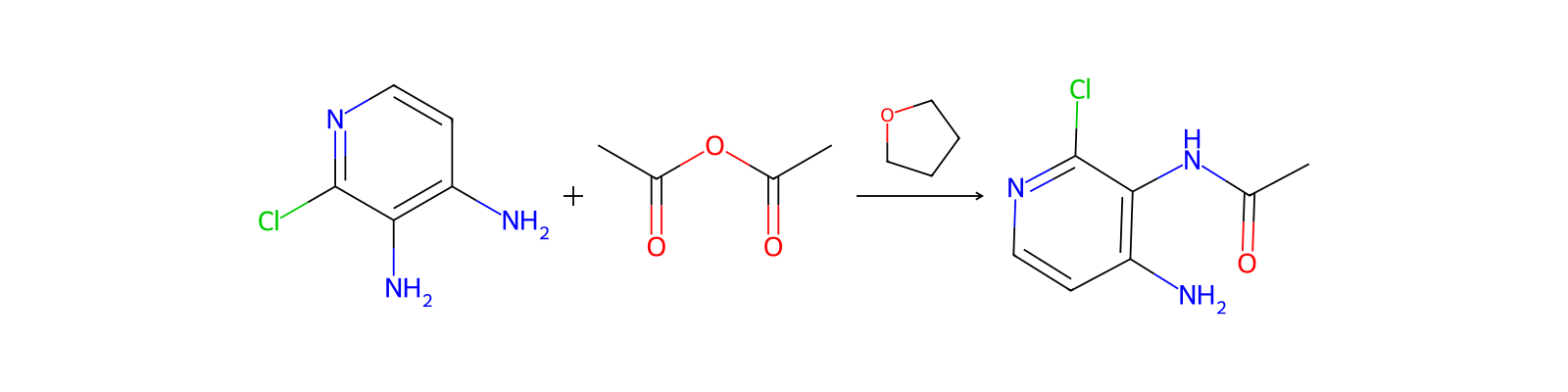
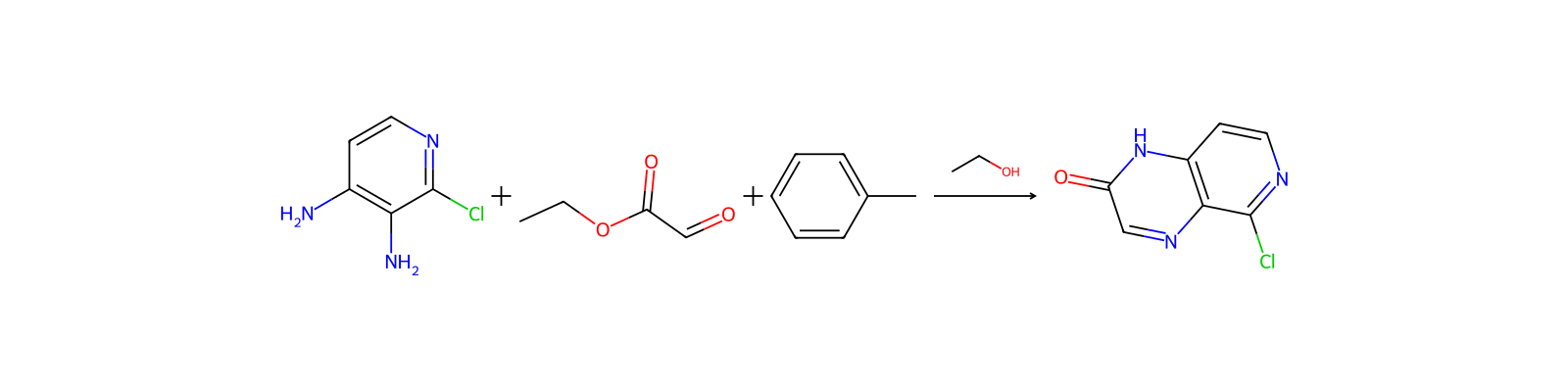
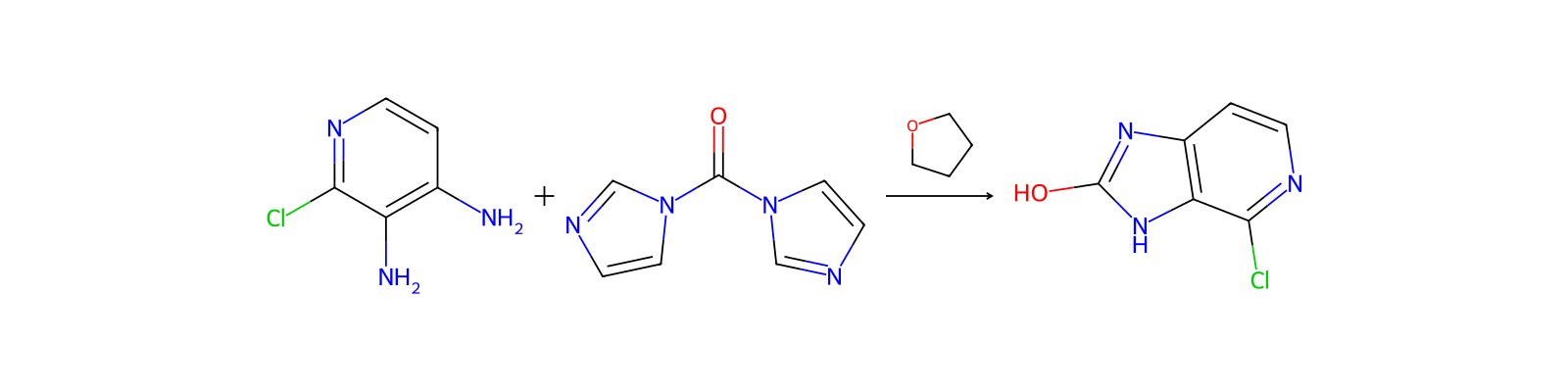
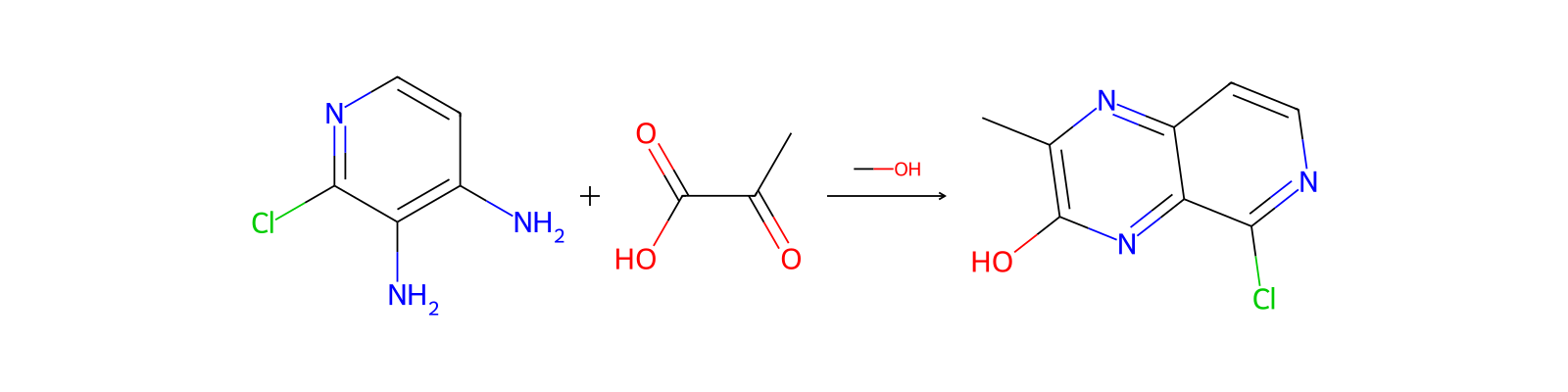
Related reactions
12 records
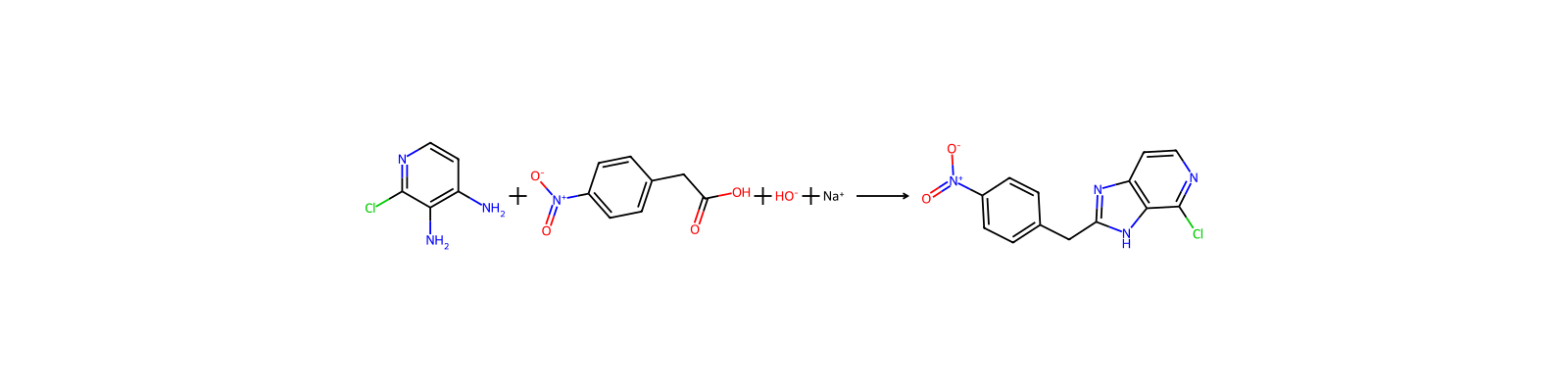
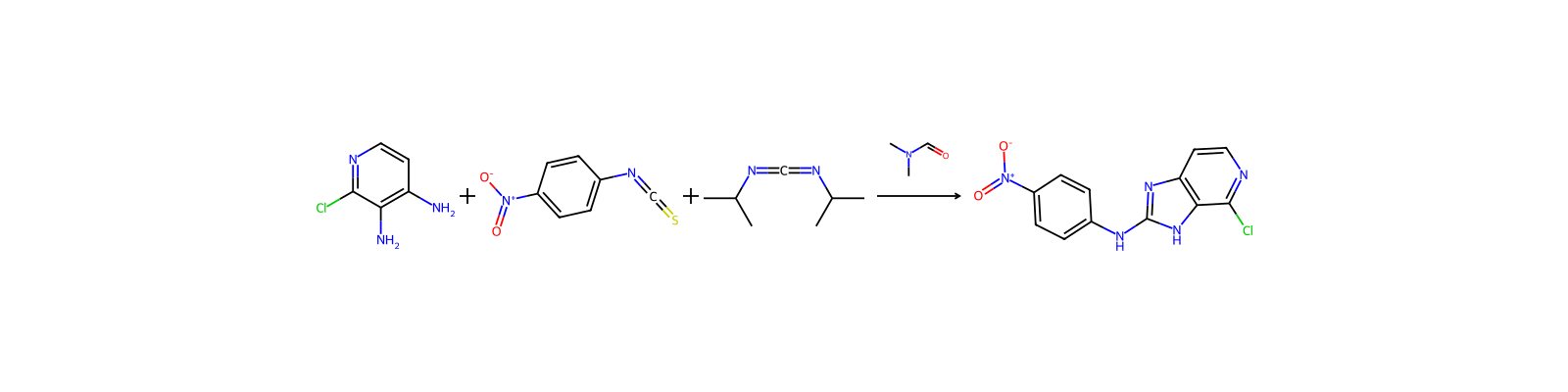
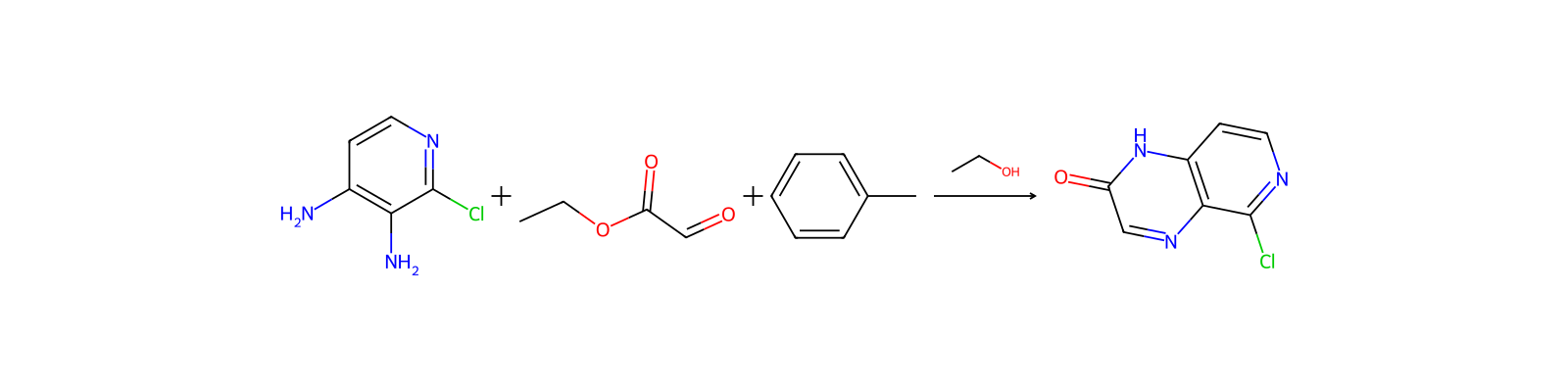
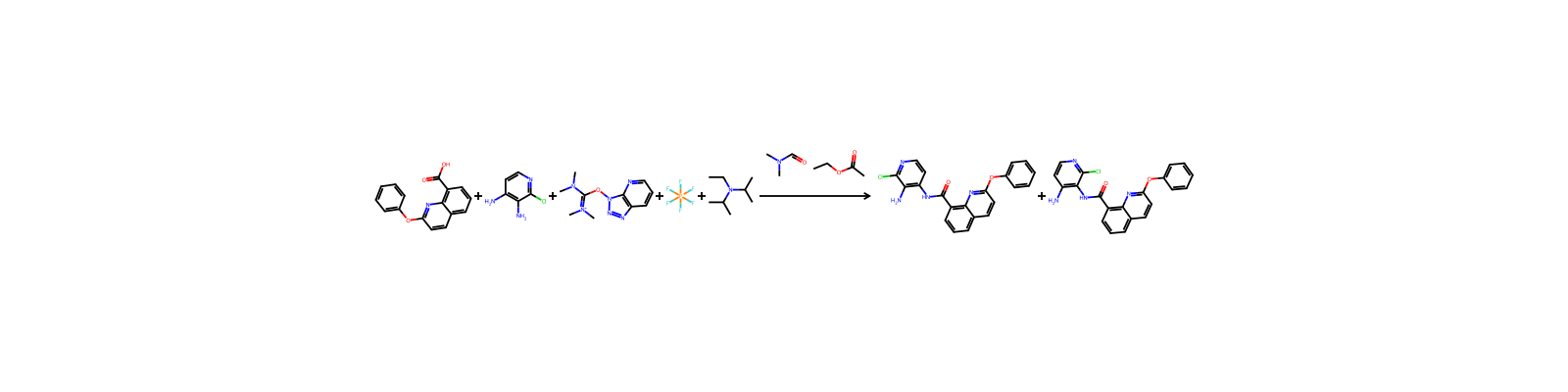
Linked notes
Loading…