HRID 7342As reactant
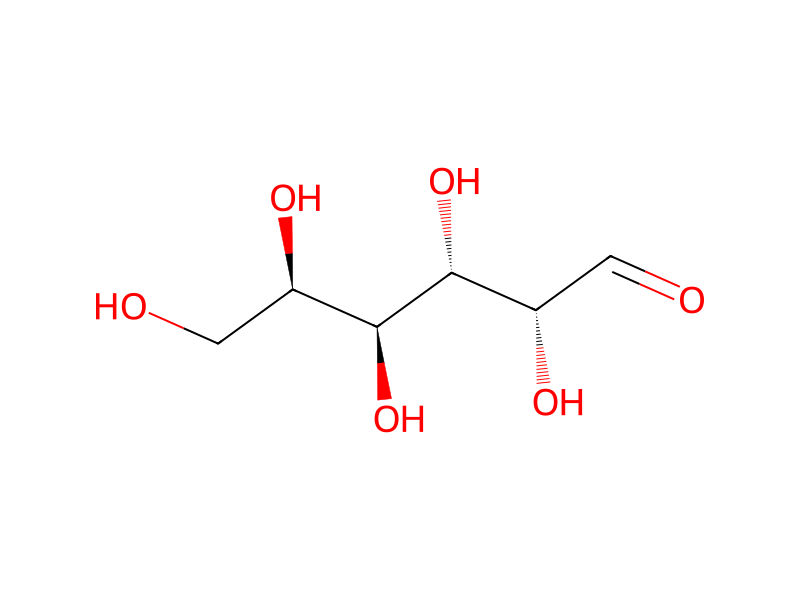
26566-61-0O=C[C@H](O)[C@@H](O)[C@@H](O)[C@H](O)COGZCGUPFRVQAUEE-KCDKBNATSA-NAldehydo-D-galactose is a D-galactose and an aldehydo-galactose. It is an enantiomer of an aldehydo-L-galactose.
26566-61-0、59-23-4DTXSID0023088CHEMBL6067641CHEBI:17118Safety information is for reference only and does not replace the supplier’s Safety Data Sheet (SDS), applicable regulations, or professional assessment.
Galactose is a naturally occurring monosaccharide that forms the disaccharide lactose when combined with glucose (another monosaccharide). Subsequently, when lactose or small amounts of free galactose found in various common dairy products (and other foods) are consumed, the hydrolysis of lactose to glucose and galactose occurs and galactose is itself further metabolized to generate glucose. Such glucose is, of course, ultimately relied upon and used as the primary metabolic fuel for humans in a variety of biological reactions. Conversely, however, the ways in which galactose is commonly used in therapeutic agents generally do not rely upon such pharmacodynamics, even though they ultimately remain the most important ways in which galactose exerts or elicits useful biological actions for the human body.
In the development of typhoid Ty21a live oral vaccine, the use of exogenous galactose is critical. When dealing with Salmonella typhimurium, it has been shown that rough strains with incomplete lipopolysaccharide (LPS) lacking O-specific side chains are much less virulent than smooth strains with complete LPS with O-specific side chains. Salmonella typhimurium gal E mutants used to produce the vaccine are effectively avirulent and highly protective but lack the specific UDP-galactose 4-epimerase enzyme which allows for the normal synthesis of UDP-galactose from UDP-glucose. The consequence of this mutant defect is that the gal E mutants can only generate incomplete LPS without O-specific antigen side chains, which are not capable enough as the complete LPS with O-specific side chains at generating an immunologic response. When exogenous galactose is added to the vaccine medium, however, it allows the mutants to generate UDP-galactose via galactose 1-phosphate. This ultimately allows the mutants to form smooth-type LPS with O-specific side chains. Regardless, the mutant's epimerase defect ultimately results in the accumulation of such intermediary products like galactose 1-phosphate and UDP-galactose, which consequently causes lysis of the mutant cells. The resultant vaccine is subsequently effective enough to elicit an immunologic response while the bacteriolysis prevents the mutant cells from regaining virulence under conditions where smooth type LPS similar to the active parental strain is synthesized. Galactose is also an essential element to the chemical structure of the commonly used laxative solution lactulose. Lactulose itself is a synthetic disaccharide that is made in parts from lactose, galactose, and various other sugars. It is poorly absorbed from the gastrointestinal tract and no enzyme capable of hydrolysis of lactulose is present in human gastrointestinal tissue. Oral doses of lactulose subsequently arrive at the colon largely unchanged. At the colon, lactulose is finally broken down predominantly to lactic acid, and also small amounts of formic and acetic acids by the action of colonic bacteria, which results in an increase in osmotic pressure and slight acidification of the colonic contents. This action consequently causes an increase in stool water content and softens the stool for a laxative effect.
The primary pathway for galactose metabolism is called the Leloir pathway, so named after Luis Federico Leloir. The initial stage of this pathway is the conversion of beta-D-galactose to alpha-D-galactose by the enzyme galactose mutarotase (GALM). The pathway then performs the conversion of alpha-D-galactose to UDP-glucose by way of three principal enzymes and their reactions: galactokinase (GALK) phosphorylates alpha-D-galactose to galactose-1-phosphate (Gal-1-P); galactose-1-phosphate uridyltransferase (GALT) transfers a UMP group from UDP-glucose to Gal-1-P to form UDP-galactose; and finally, UDP galactose-4-epimerase (GALE) interconverts UDP-galactose and UDP-glucose, which completes the pathway.
The absorption of galactose from the human jejunum was calculated to be 1.0 g per minute per 30 cm of the gut.
The primary route of elimination for galactose is hepatic.
It has been documented that galactose distributes in a volume equivalent to 40% of body weight.
In subjects with no liver disease, systemic galactose clearance was calculated to be 1.5 +/- 0.1 L/min.
DefinitionChEBI: Aldehydo-D-galactose is a D-galactose and an aldehydo-galactose. It is an enantiomer of an aldehydo-L-galactose.