Reaction equation

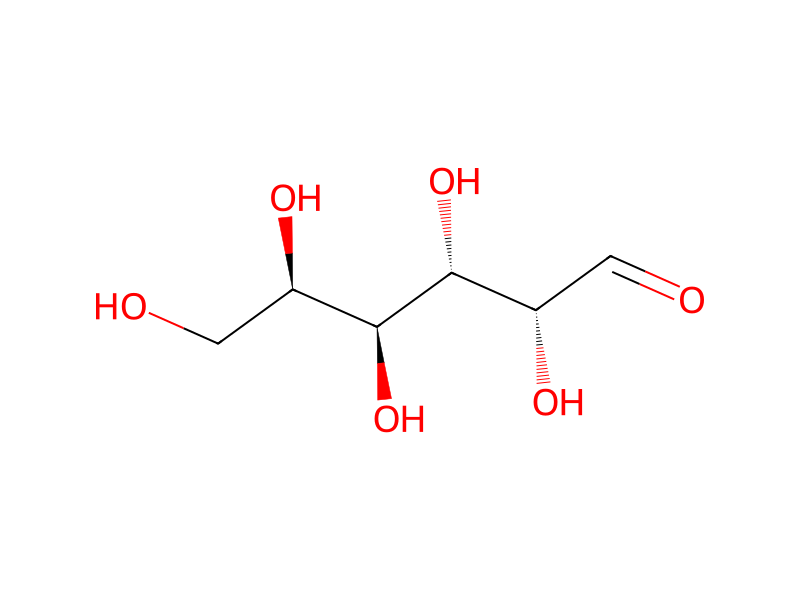
[O:1]=[CH:2][C@@H:3]([C@H:5]([C@H:7]([C@@H:9]([CH2:11]O)[OH:10])O)O)O.C(OS(C1C=CC=CC=1)(=O)=O)CCCCCCCCCCC.[Na].C1(C)C=CC=CC=1.[ClH:43]>[Cl-].C([N+](C)(C)C)CCCCCCCCCCCCCCC.O>[Cl:43][CH2:11][C:9]1[O:10][C:3]([CH:2]=[O:1])=[CH:5][CH:7]=1Participants





Procedure
To the same three-necked flask as in Example 1 were added 5 g (0.028 mole) of a commercially available D-(+)-galactose and two kinds of surface active agent, i.e., 89.6 mg (0.00028 mole) of cetyltrimethylammonium chloride and 97.6 mg (0.00028 mole) of sodium laurylbenzenesulfonate. Then, 30 ml of toluene was added thereto and the mixture was stirred to make a suspension. Thereafter, about 6 ml of 35% aqueous hydrochloric acid was added dropwise from a dropping funnel over about 1 hour. A slight excess of hydrogen chloride was then slowly passed therethrough at 50° C. over 3 hours with stirring. After stirring was continued for a further 5 hours, the reaction solution was diluted with a little water and filtered through Celite while being washed with toluene. The toluene layer was neutralized, dried and concentrated to obtain about 1.9 g (theoretical yield 4.01 g) of 5-chloromethylfurfural as a crude product.
Workup
- stirringat 50° C. over 3 hours with stirring
- stirringAfter stirring
- filtrationfiltered through Celite
- washwhile being washed with toluene
- customdried
- concentrationconcentrated
Sources & evidence
- ORD record
- ord-37b182d5d2eb41d79c8e5f2a89c4a45a
- Source dataset
- uspto-grants-1979_05
- Patent number
- US04154744
Linked notes
Loading…