Reaction equation

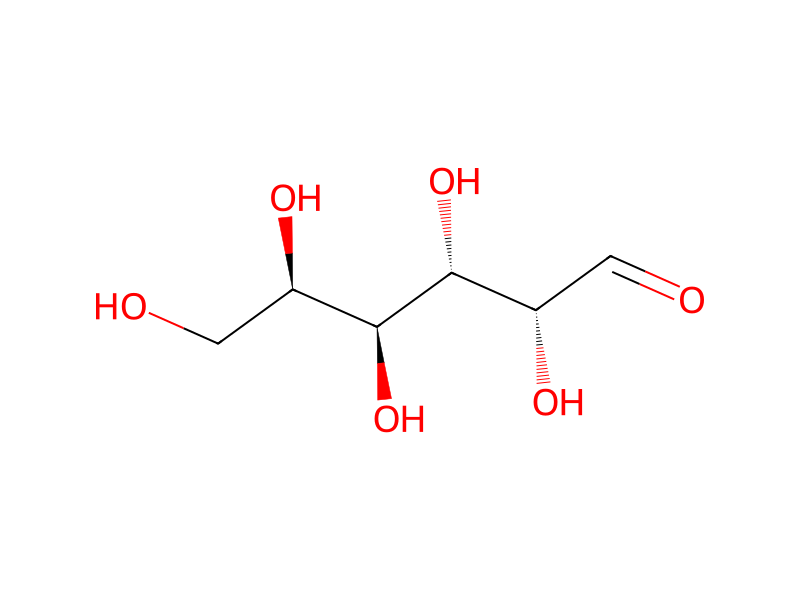
[O:1]=[CH:2][C@@H:3]([C@H:5]([C@H:7]([C@@H:9]([CH2:11][OH:12])[OH:10])[OH:8])[OH:6])O.[FH:13]>>[C@H:11]1([F:13])[O:12][C@H:3]([CH2:2][OH:1])[C@H:5]([OH:6])[C@H:7]([OH:8])[C@H:9]1[OH:10]Participants
3

Procedure
In an apparatus and by the procedure according to Example 1, 1 g of D-galactose was reacted with 10 g of hydrogen fluoride, the mixture was left to stand for 1 hour at -30° to -40° C. and the hydrogen fluoride was then stripped out within 15 minutes by blowing in nitrogen. The working-up gave α-D-galactosyl fluoride (about 1 g) which was identified by elemental analysis, thin-layer chromatogram and 19F and 13C nuclear magnetic resonance spectra (cf. J. E. C. Barnett et al., Biochem. J. 105 (1967), page 669). Melting point: 130° (decomposition).
Workup
- waitthe mixture was left
- customwas then stripped out within 15 minutes
Sources & evidence
- ORD record
- ord-16776c047081431289aa1e48fce5fd59
- Source dataset
- uspto-grants-1989_07
- Patent number
- US04847372
Linked notes
Loading…