a Farnesol
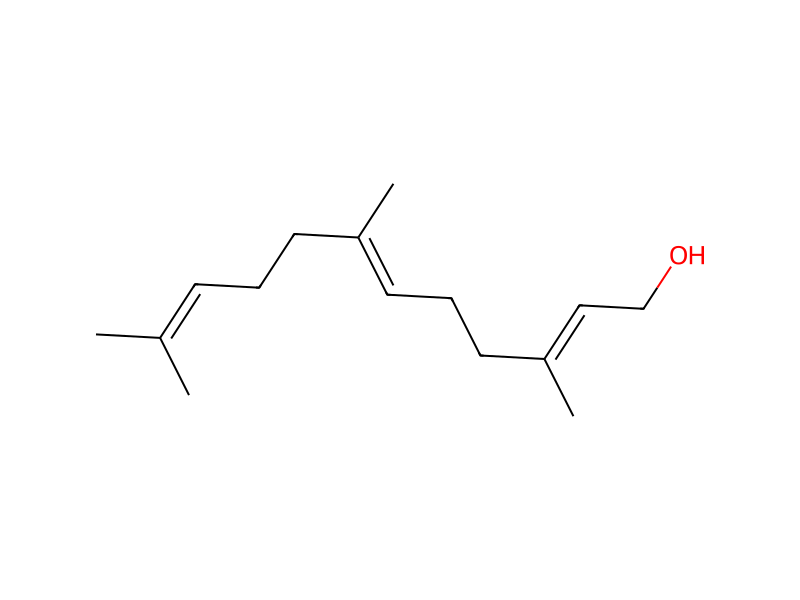
Basic information
- CAS
4602-84-0- Standard SMILES
CC(C)=CCCC(C)=CCCC(C)=CCO- InChIKey
CRDAMVZIKSXKFV-UHFFFAOYSA-N- Molecular formula
- C15H26O
- Average molar mass
- 222.37 g/mol
- Monoisotopic mass
- 222.19836545
Overview
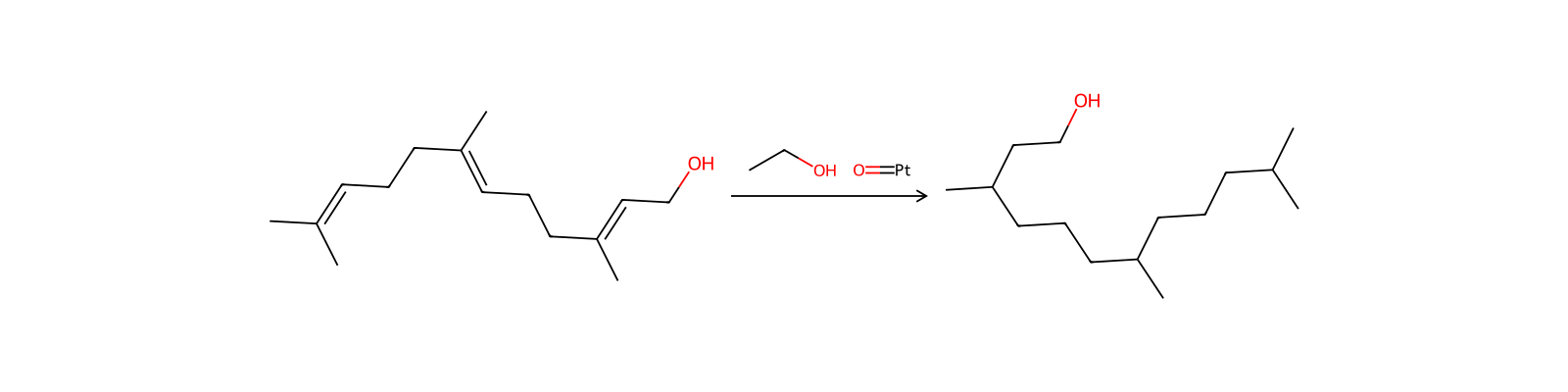
(2E/Z,6E/Z)-farnesol has been reported in Aristolochia triangularis, Humulus lupulus, and other organisms with data available.
Names & identifiers
- Preferred name
- a Farnesol
- IUPAC
- 3,7,11-trimethyldodeca-2,6,10-trien-1-ol
- English name
- FARNESOL
- Molecular formula
- C15H26O
- Molecular weight
- 222.37
Names & synonyms
a farnesolRefChem:1075118Spectrum_001282trans,trans-Farnesol; trans-FarnesolSpecPlus_000549Spectrum2_001397Spectrum3_001070Spectrum4_001221SCHEMBL58069KBioGR_001682KBioSS_001762DivK1c_006645
Show more names
2,6,10-Dodecatrien-1-ol, 3,7,11-trimethyl-3,7,11-TRIMETHYL-2,6,10-DODECATRIEN-1-OLFEMA 2478PolyprenolFarnesol 95%Farnesyl alcoholLINALOOL, DL-(SG)LINALOOL, (-)-(SG)3,7,11-TRIMETHYLDODECA-2,6,10-TRIEN-1-OL6,10-Dodecatrien-1-ol,3,7,11-trimethyl-2
SPBio_001414GTPL3215orb1299430orb3139646SCHEMBL2852929SCHEMBL9953423CHEMBL4464165KBio1_001589
Database identifiers
- CAS
4602-84-0- PubChem CID
- 3327
- DTXSID
DTXSID3032389- ChEMBL
CHEMBL4464165
Properties
Computed structural properties
- XLogP
- 4.8
- Topological polar surface area
- 20.2 Ų
- Hydrogen bond donors
- 1
- Hydrogen bond acceptors
- 1
- Rotatable bonds
- 7
- Heavy atoms
- 16
- Formal charge
- 0
- Complexity
- 265
Physicochemical properties
- Melting point
- 25 °C · 25°C
- Boiling point
- 149 °C4 · 149 °C4 mm Hg(lit.)
- Density
- 0.886 g/mL · 0.886 g/mL at 20 °C(lit.)
- vapor pressure
- 13 Pa · 13Pa at 20℃
- FEMA
- 2478 · 2478 | FARNESOL
- refractive index
- 20 · n20/D 1.490(lit.)
- FLAVIS Number
- 2.029 · 02.029 | 3,7,11-Trimethyldodeca-2,6,10-trien-1-ol
- Flash point
- 205 °F · 205 °F
- storage temp.
- 2 · 2-8°C
- solubility
- 100 · DMSO:100.0(Max Conc. mg/mL);449.7(Max Conc. mM)
- pka
- 14.69 · 14.69±0.10(Predicted)
- form
- Liquid
- color
- Clear colorless to faint yellow
- Odor
- 100 % · at 100.00 %. mild fresh sweet linden floral angelica
- Odor Type
- floral
- biological source
Safety & regulation
Safety information is for reference only and does not replace the supplier’s Safety Data Sheet (SDS), applicable regulations, or professional assessment.
Safety data
- F
- 8
- PPE
- Eyeshields, Gloves, multi-purpose combination respirator cartridge (US)
- wgk
- 3
- tsca
- TSCA listed
- rtecs
- JR4979000
- ridadr
- UN 3082 9 / PGIII
- hs_code
- 29052200
- Signal word
- Warning
- Symbol(GHS)
- GHS07,GHS09
- hazard_code
- Xi
- hazard_note
- Irritant
- safety_code
- 24/25-22
- hazard_class
- 9
- Storage Class
- 10 - Combustible liquids
- Hazard statements
- H315-H317-H410
- Limited Quantities
- 5.0 L (1.3 gallons) (liquid) or 5.0 kg (11 lbs) (solid)
- Excepted Quantities
- Max Inner Pack (30g or 30ml) and Max Outer Pack (1Kg or 1L)
- REACH Registrations
- Active
- Hazard Classifications
- Aquatic Acute 1Aquatic Chronic 1Skin Irrit. 2Skin Sens. 1
- Precautionary statements
- P261-P264-P272-P273-P280-P302+P352
- Hazardous Substances Data
- 4602-84-0(Hazardous Substances Data)
Chemistry & industry
Pharmacology
Metabolism/MetabolitesFarnesol has known human metabolites that include (2S,3S,4S,5R)-3,4,5-Trihydroxy-6-(3,7,11-trimethyldodeca-2,6,10-trienoxy)oxane-2-carboxylic acid.
Applications
DescriptionFarnesol has a characteristic flowery odor.
OccurrenceThe presence of this terpene alcohol in nature has been reported in more than 30 essential oils; the levels are generally low (0.5 to 1.0%) with the exception of cabreuva, which contains up to 2 5% farensol, and the distillate from fowers of Oxystigma buccholtzii Harms which contains up to 18% farnesol Among the essential oils containing farnesol are lemongrass, Ceylon citronella, cananga, ambrette seeds, ylang-ylang, Acacia farnesiana, Peru balsam, palmarosa, tuberose, and others Reported found in apricot, citrus peel oils, grapefruit juice, strawberry jam, ginger, clove bud, hop oil, cardamom, ginger, thyme, beer, whiskey, basil, papaya, anise seed, German chamomile and Cympogon citratus oils
UsesIt can be used to induce apoptosis in cell cultures. It is also used as an antimicrobial agent. It is used in perfumes and as a flavoring agent.
Usesfarnesol is described as a substance of high biological potential, capable of acting in the skin as a true bioactivator. A biological precursor and fatty alcohol, farnesol is one component of vitamin K. It is said to help smooth wrinkles, normalize sebum secretion, and increase the skin’s elasticity, tissue tension, and moisture-binding capability. It is able to penetrate the epidermis. In humans, farnesol is found in the skin and is involved in sterol biosynthesis. It is also used for its deodorant, odor-masking, and skin-soothing properties. In clinical studies, farnesol has demonstrated anti-microbial activity, though it is unclear if this remains the case once incorporated into a cosmetic formulation. It is widely present in vegetables and found in many essential oils (for example, acacia, lilac, lily of the valley, rose, orange blossom, oak moss, and sandalwood).
Usesantineoplastic, antibacterial
General DescriptionColorless liquid with a delicate floral odor.
Related reactions
67 records


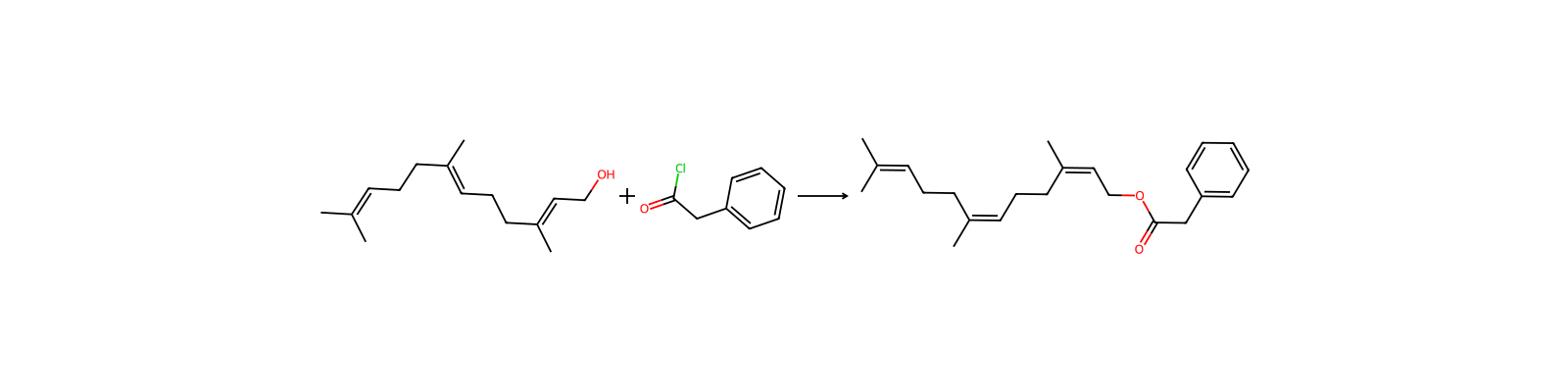

Compound notes
Loading…