HomeMCPWorkbenchSkills
HomeWorkbenchNotificationsMe
llms.txt · MCP GuidePrivacy Policy · Terms of Service · Supportv1.8.3
  1. Home
  2. /Compound

N-Acetyl-D-Glucosamine

HCID 439174
New reaction
Print
Basic informationOverviewNames & identifiersPropertiesSafety & regulationChemistry & industryRelated reactionsCompound notes
Substructure searchFind similar structures

Basic information

CAS
7512-17-6
Standard SMILES
CC(=O)N[C@H]1C(O)O[C@H](CO)[C@@H](O)[C@@H]1O
InChIKey
OVRNDRQMDRJTHS-RTRLPJTCSA-N
Molecular formula
C8H15NO6
Average molar mass
221.21 g/mol
Monoisotopic mass
221.0899372

Overview

N-acetyl-D-glucosamine is the D isomer of N-acetylglucosamine. It has a role as a bacterial metabolite. It is a N-acetyl-D-hexosamine and a N-acetylglucosamine.

Names & identifiers

Preferred name
N-Acetyl-D-Glucosamine
IUPAC
N-[(3R,4R,5S,6R)-2,4,5-trihydroxy-6-(hydroxymethyl)oxan-3-yl]acetamide
English name
N-Acetyl-D-Glucosamine
Molecular formula
C8H15NO6
Molecular weight
221.21

Names & synonyms

2-acetamido-2-deoxy-D-glucopyranoseGlcNAc2-Deoxy-2-Acetamido-D-Glucopyranosen-acetyl-glucosamine2-acetamido-2-deoxy-glucose2-Deoxy-2-Acetamido-Glucose2-Acetamido-2-Deoxy-Glucopyranose2-Deoxy-2-Acetamido-Glucopyranose2-acetamido-2-deoxy-glucopyranoside2-Deoxy-2-Acetamido-Glucopyranoside2-acetamido-2-deoxy-D-glucopyranoside2-Deoxy-2-Acetamido-D-Glucopyranoside
Show more names
N-ACETYLGLUCOSAMINEacetylglucosamineN-Acetyl-D-glucosaminN-Acetyl-beta-D-glucosamineNADGAcetyl chitin2-Acetamido-D-glucose
2-Acetamido-2-Deoxy-D-Glucose2-Deoxy-2-Acetamido-D-GlucoseD-GlcNAcGlcNAc (SNFG)N-Acetyl-D-GlucosamineSNFG:GlcNAcN-AcetylchitosamineN-Acetyl-D-glucosamine-Agarose

Database identifiers

CAS
7512-17-6

Properties

Computed structural properties

XLogP
-1.7
Topological polar surface area
119 Ų
Hydrogen bond donors
5
Hydrogen bond acceptors
6
Rotatable bonds
2
Heavy atoms
15
Formal charge
0
Complexity
235

Experimental & physicochemical properties

LogP-2.1
Solubility · 2 items

167 mg/mL

>33.2 [ug/mL] (The mean of the results at pH 7.4)

Melting Point210 °C
Physical DescriptionSolid
Collision Cross Section · 2 items

147.3 Ų [M+H]+ [CCS Type: DT; Method: single field calibrated with Agilent tune mix (Agilent)]

160.36 Ų [M+Na]+ [CCS Type: DT; Method: stepped-field]

Physicochemical properties

Melting point
211 °C · 211 °C (dec.) (lit.)
alpha
42 · 42 º (c=2,water,2 hrs)
vapor pressure
8 Pa · 8Pa at 20℃
refractive index
39 to · +39.0 to +42.0 ° (C=1, H2O)
storage temp.
-20 °C · -20°C
solubility

Safety & regulation

Safety information is for reference only and does not replace the supplier’s Safety Data Sheet (SDS), applicable regulations, or professional assessment.

Safety data

F
3-10
PPE
Eyeshields, Gloves, type N95 (US)
wgk
3
tsca
TSCA listed
rtecs
LZ6651000
hs_code
29329985
risk_code
36/37/38
Signal word
Danger
Symbol(GHS)
GHS05
hazard_code
Xi
hazard_note
Irritant
safety_code
24/25-36-26-22
Storage Class
11 - Combustible Solids
Hazard statements
H314
REACH Registrations
Active
Precautionary statements
P280-P305+P351+P338-P310

Chemistry & industry

Pharmacology

Tissue LocationsIntestine
Cellular LocationsCytoplasm
Metabolite PathwaysAmino Sugar Metabolism
Applications · 4 items

DescriptionN-Acetyl-D-Glucosamine is the N-acetyl derivative of glucosamine.Chemically it is an amide between glucosamine and acetic acid. A single N-acetlyglucosamine moiety linked to serine or threonine residues on nuclear and cytoplasmic proteins -O-GlcNAc, is an ubiquitous post-translational protein modification. O-GlcNAc modified proteins are involved in sensing the nutrient status of the surrounding cellular environment and adjusting the activity of cellular proteins accordingly. O-GlcNAc regulates cellular responses to hormones such as insulin, initiates a protective response to stress, modulates a cell's capacity to grow and divide, and regulates gene transcription. In humans, it exists in skin, cartilage and blood vessel as a component of hyaluronic acid, and bone tissue, cornea and aorta as a component of keratan sulfate. N-Acetyl-D-glucosamine (D-GlcNAc) is a derivitized glucose monomer found in polymers of bacterial cell walls, chitin, hyaluronic acids and various glycans. It is also synthesized in the glycosylation pathway as uridine diphosphate (UDP-GlcNAc), which can then be released following degradation of glycosylated proteins.D-GlcNAc is used to identify, differentiate and characterize N-acetyl-β-D-hexoaminidase(s). It is also used in the treatment of osteoarthritis and inflammatory bowel disease (IBD), including ulcerative colitis and Crohn's disease. Further, it is used as a substrate in sialic acid production, cosmetics and in drug development research.

UsesN-Acetyl-D-glucosamine is used in the identification and characterization of N-acetyl-beta-D-hexoaminidase. It is also used in the treatment of osteoarthritis and inflammatory bowel disease (IBD), including ulcerative colitis and Crohn's disease. Further, it is used as a substrate in sialic acid production, cosmetics and in drug development research.

UsesN-acetyl-D-Glucosamine (GlcNAc) is a monosaccharide derivative of glucose. It is released by the action of O-GlcNAcase, in mammalian systems from proteins that have been post-translationally modified with O-GlcNAc.D-GlcNAc enhances the proliferation and collagen expression of fibroblasts, reduces hyperpigmentation and is therefore considered a valuable ingredient in cosmetics for improving skin wrinkles and color.Important substrate for the production of sialic acids.Used in multiple other applications in drug development and food supplement, based on a newly described bio-wave model.

Related reactions

38 records
New reaction record
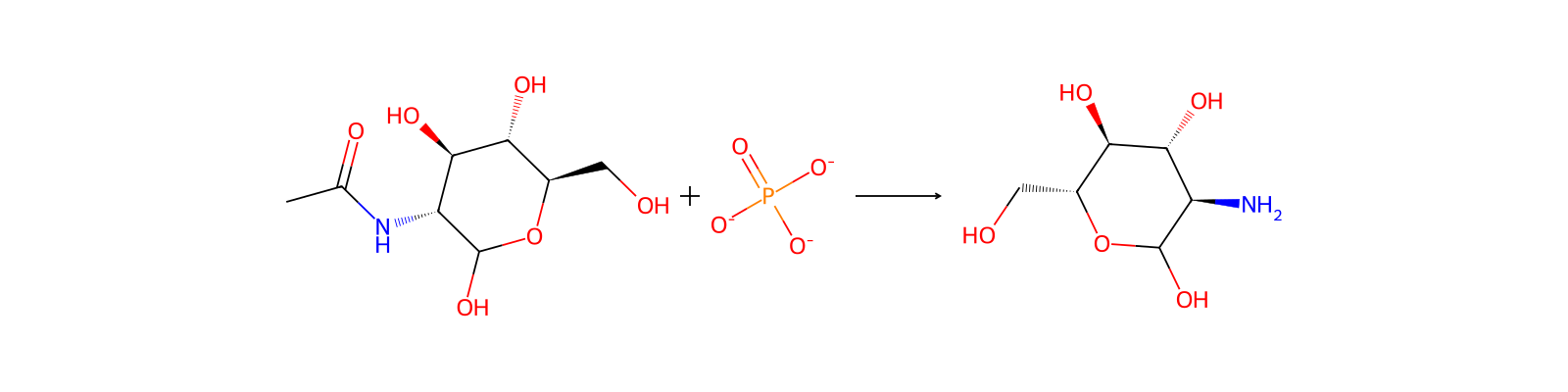
HRID 2686 reaction equation
HRID 2686As reactant
HRID 21346 reaction equation
HRID 21346As reactant
HRID 21347 reaction equation
HRID 21347As reactant
HRID 257307 reaction equation
HRID 257307As product
HRID 257720 reaction equation
HRID 257720As reactant
HRID 429740 reaction equation
HRID 429740As product
HRID 482209 reaction equation
HRID 482209As reactant
HRID 532103 reaction equation
HRID 532103As reactant
PreviousPage 1 of 5

Compound notes

On this pageBasic informationOverviewNames & identifiersPropertiesSafety & regulationChemistry & industryRelated reactionsCompound notes
PubChem CID
439174
DTXSID
DTXSID901045903
ChEMBL
CHEMBL240524
ChEBI
CHEBI:506227
Nikkaji
J35.752I
Soluble in concentrated hydrochloric acid, sulfuric acid, phosphoric acid and formic acid. Insoluble in water, dilute acids, dilute alkalis, concentrated alkalis and organic solvents.
Boiling point
636.4 · 636.4±55.0 °C(Predicted)
Density
1.54 g/cm3 · 1.54 g/cm3
pka
13.04 · 13.04±0.20(Predicted)
form
saline suspension
color
white to off-white
biological source
crab (red)
optical activity
75 · Alpha type +75 → +41 Beta type -22 → +41.3
Water Solubility
2 O: · H2O: 50 mg/mL colorless to faint yellow solution, clear to very slightly hazy
Sensitive
Hygroscopic
Merck
14 · 14,4458
BRN
1727589 · 1727589
Stability
Stable. Incompatible with strong oxidizing agents.
Cosmetic Ingredient Review (CIR)
N-Acetyl-D-Glucosamine (7512-17-6)
InChI
1S/C8H15NO6/c1-3(11)9-5-7(13)6(12)4(2-10)15-8(5)14/h4-8,10,12-14H,2H2,1H3,(H,9,11)/t4-,5-,6-,7-,8/m1/s1
InChIKey
OVRNDRQMDRJTHS-ROGOILFBSA-N
SMILES
CC(=O)N[C@H]1C(O)O[C@H](CO)[C@@H](O)[C@@H]1O
LogP
-2.2 at · -2.2 at 23.7℃
CAS DataBase Reference
7512 · 7512-17-6(CAS DataBase Reference)
FDA UNII
956696549 · V956696549
EPA Substance Registry System
N-Acetylglucosamine (7512-17-6)
UNSPSC Code
41116107 · 41116107
NACRES
75 · NA.75
Symbol(GHS)
5 · GHS05
Signal word
Danger
Hazard statements
314 · H314
Precautionary statements
280 · P280-P305+P351+P338-P310
PPE
95 · Eyeshields, Gloves, type N95 (US)
Hazard Codes
Xi
Risk Statements
36 · 36/37/38
Safety Statements
24 · 24/25-36-26-22
WGK Germany
3 · 3
RTECS
6651000 · LZ6651000
F
3 · 3-10
Hazard Note
Irritant
TSCA
TSCA listed
HS Code
29329985 · 29329985
Storage Class
11 · 11 - Combustible Solids
REACH Registrations
Active

General DescriptionN-Acetyl-D-glucosamine (GlcNAc) is a monosaccharide, derived from glucose and undergoes linear polymerization by (1,4)-β-linkages to form the polymer chitin. It is also a component of heterogenous polysaccharides, such as murein and hyaluronic acid. N-acetylglucosamine exhibits anti-inflammatory properties and is considered as a potential drug in the treatment of osteoarthritis. Its antiarthritic mode of mechanism involves the suppression of IL-1β (Interleuken-1β)-induced NO (nitric oxide), cyclooxygenase-2 (COX-2), and IL-6 production by inhibition of expression of iNOS (inducible nitric oxide synthase) protein and mRNA.Pharmaceutical secondary standards for application in quality control, provide pharma laboratories and manufacturers with a convenient and cost-effective alternative to the preparation of in-house working standards.

Upstream & downstream products

Downstream products

Benzyl 2-acetamido-2-deoxy-alpha-D-glucopyranosideD(+)-Glucose

Additional notes

DefinitionChEBI: N-acetyl-D-glucosamine is the D isomer of N-acetylglucosamine. It has a role as a bacterial metabolite. It is a N-acetylglucosamine and a N-acetyl-D-hexosamine.