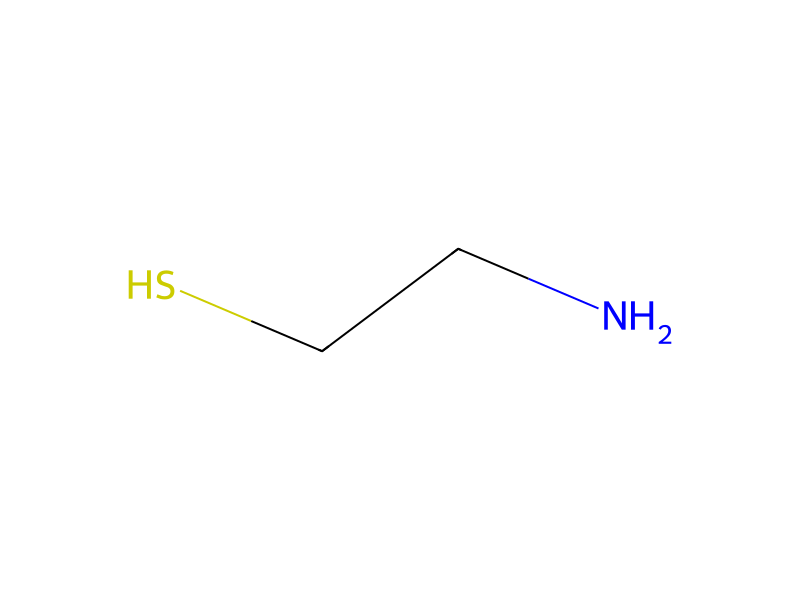
Basic information
- Standard SMILES
NCCS- InChIKey
UFULAYFCSOUIOV-UHFFFAOYSA-N- Molecular formula
- C2H7NS
- Average molar mass
- 77.15 g/mol
- Monoisotopic mass
- 77.02992022
Overview
Cysteamine is an amine that consists of an ethane skeleton substituted with a thiol group at C-1 and an amino group at C-2. It has a role as a geroprotector, a radiation protective agent, a mouse metabolite and a human metabolite. It is a thiol and an amine. It is functionally related to an ethylamine. It is a conjugate base of a cysteaminium.
Names & identifiers
- Preferred name
- Cysteamine
- IUPAC
- 2-aminoethanethiol
Names & synonyms
CYSTEAMINE2-Aminoethanethiol60-23-1MercaptamineThioethanolamine2-MercaptoethylamineMercaminebeta-MercaptoethylamineDecarboxycysteineCysteinamine2-Amino-1-ethanethiolbeta-Aminoethanethiol
Show more names
Ethanethiol, 2-amino-Mercaptoethylamine2-Mercaptoethanaminebeta-Aminoethylthiol2-Aminoethyl mercaptanbeta-MEAMercaptaminaMercaptaminum
Database identifiers
- CAS
60-23-1- PubChem CID
- 6058
- DTXSID
DTXSID3022875- ChEMBL
CHEMBL602- ChEBI
CHEBI:17141- UNII
- 5UX2SD1KE2
- EC Number
- 200-463-0
- Nikkaji
- J62.801H
Properties
Computed structural properties
- XLogP
- -0.4
- Topological polar surface area
- 27 Ų
- Hydrogen bond donors
- 2
- Hydrogen bond acceptors
- 2
- Rotatable bonds
- 1
- Heavy atoms
- 4
- Formal charge
- 0
- Complexity
- 10
Experimental & physicochemical properties
DrugsPharmaceuticals -> Listed in ZINC15
SpringerMaterials PropertiesCoriolis coupling
OdorDisagreeable odor
Color/Form
Crystals by sublimation in vacuo
Crystals from alcohol
Solubility
Freely soluble in water.
Soluble in methanol, ethanol
Freely soluble in alkaline media
In water, soluble at 20 °C, value not given
Human DrugsEMA approved medicines: Human medicine (Orphan designations)
Boiling Point
133.6±23.0
Decomposes
Melting Point
67-71
97-98.5 °C
98 °C
Physical DescriptionSolid
Dissociation Constants
10.4
pKa1 = 8.19 (thiol); pKa2 = 10.75 (amine) (c= 0.01 moles/L, mixed constants)
Other Experimental Properties
Oxidizes to cystamine on standing in air
Crystals from alcohol, mp 70.2 to 70.7 °C. Soluble in water, alcohol. /Hydrochloride/
Safety & regulation
GHS classification
GHS Classification
Warning
H302 (100%): Harmful if swallowed [Warning Acute toxicity, oral]
P261, P264, P264+P265, P270, P271, P280, P301+P317, P302+P352, P304+P340, P305+P351+P338, P319, P321, P330, P332+P317, P337+P317, P362+P364, P403+P233, P405, and P501 (click each P-code to see the statement)
Aggregated GHS information provided per 42 reports by companies from 4 notifications to the ECHA C&L Inventory. Each notification may be associated with multiple companies.
Danger
H317: May cause an allergic skin reaction [Warning Sensitization, Skin]
Hazard information
Regulatory InformationStatus: Active Update: 17-05-2018 https://echa.europa.eu/registration-dossier/-/registered-dossier/24783
FDA Requirements
The Approved Drug Products with Therapeutic Equivalence Evaluations List identifies currently marketed prescription drug products, incl cysteamine bitartrate, approved on the basis of safety and effectiveness by FDA under sections 505 of the Federal Food, Drug, and Cosmetic Act. /Cysteamine Bitartrate/
Hazard Classes and Categories
Acute Tox. 4 (100%)
Acute toxicity (Oral) - Category 4
Serious eye damage/eye irritation - Category 1
Safety & protection
Storage ConditionsStore below 40 °C (104 °F), preferably between 15 and 30 °C (59 and 86 °F)
Disposal Methods
SRP: The most favorable course of action is to use an alternative chemical product with less inherent propensity for occupational exposure or environmental contamination. Recycle any unused portion of the material for its approved use or return it to the manufacturer or supplier. Ultimate disposal of the chemical must consider: the material's impact on air quality; potential migration in soil or water; effects on animal, aquatic, and plant life; and conformance with environmental and public health regulations.
Toxicology
Hepatotoxicity
During long term use of cysteamine in preregistration studies, serum ALT elevations occurred in a small proportion of treated subjects, but the background rate of serum enzyme elevations in this population is high and was not defined in the open label studies. There have been reports of more marked enzyme elevations during high dose therapy with cysteamine, with recurrence on reexposure. These abnormalities were invariably asymptomatic and rapidly reversed with dose adjustment. In addition, patients with cystinosis appear to be at risk for developing nodular regenerative hyperplasia and noncirrhotic portal hypertension. The role of long term cysteamine therapy in these hepatic complications is not clear. There have been no reports of clinically apparent, acute liver injury with jaundice attributable to cysteamine, although it has had only limited wide scale use.
Environmental Fate
TERRESTRIAL FATE: Based on a classification scheme(1), an estimated Koc value of 33(SRC), determined from a structure estimation method(2), indicates that cysteamine is expected to have very high mobility in soil(SRC). Volatilization of cysteamine from moist soil surfaces is not expected to be an important fate process(SRC) given an estimated Henry's Law constant of 3.6X10⁻⁷ atm-cu m/mole(SRC), using a fragment constant estimation method(3). Cysteamine is expected to volatilize from dry soil surfaces(SRC) based upon an estimated vapor pressure of 2.4 mm Hg(SRC), determined from a fragment constant method(4). Biodegradation data were not available(SRC, 2005).
AQUATIC FATE: Based on a classification scheme(1), an estimated Koc value of 33(SRC), determined from a structure estimation method(2), indicates that cysteamine is not expected to adsorb to suspended solids and sediment(SRC). Volatilization from water surfaces is not expected(3) based upon an estimated Henry's Law constant of 3.6X10⁻⁷ atm-cu m/mole(SRC), developed using a fragment constant estimation method(4). The pKa1 and pKa2 values for cysteamine are 8.19 and 10.75(5), respectively, indicating that this compound will primarily exist in the cation form in the environment and cations generally adsorb more strongly to organic carbon and clay than their neutral counterparts(6). According to a classification scheme(7), an estimated BCF of 3(SRC), from an estimated log Kow of -0.20(8) and a regression-derived equation(9), suggests the potential for bioconcentration in aquatic organisms is low(SRC). Biodegradation data were not available(SRC, 2005).
ATMOSPHERIC FATE: According to a model of gas/particle partitioning of semivolatile organic compounds in the atmosphere(1), cysteamine, which has an estimated vapor pressure of 2.45 mm Hg at 25 °C(SRC), determined from a fragment constant method(2), is expected to exist solely as a vapor in the ambient atmosphere. Vapor-phase cysteamine is degraded in the atmosphere by reaction with photochemically-produced hydroxyl radicals(SRC); the half-life for this reaction in air is estimated to be 5 hours(SRC), calculated from its rate constant of 7.3X10⁻¹¹ cu cm/molecule-sec at 25 °C(SRC) that was derived using a structure estimation method(3). Cysteamine does not contain chromophores that absorb at wavelengths >290 nm and therefore is not expected to be susceptible to direct photolysis by sunlight(SRC).
Soil Adsorption/Mobility
Using a structure estimation method based on molecular connectivity indices(1), the Koc of cysteamine can be estimated to be 33(SRC). According to a classification scheme(2), this estimated Koc value suggests that cysteamine is expected to have very high mobility in soil. The pKa1 and pKa2 values for cysteamine are 8.19 and 10.75(3), respectively, indicating that this compound will primarily exist in the cation form in the environment and cations generally adsorb more strongly to soils containing organic carbon and clay than their neutral counterparts(4).
Human Toxicity Excerpts
/SIGNS AND SYMPTOMS/ The most frequent adverse reactions seen involve the GI and central nervous systems. These are especially prominent at the initiation of therapy. Temporarily suspending treatment, then gradual reintroduction may be effective in improving tolerance. The most common events (> 5%) were vomiting (35%), anorexia (31%), fever (22%), diarrhea (16%), lethargy 11%) and rash (7%). Other adverse reactions are as follows: CNS: Somnolence; encephalopathy; headache; seizures; ataxia; confusion; tremor; hyperkinesia; decreased hearing; dizziness; jitteriness. GI: Nausea; bad breath; abdominal pain; dyspepsia; constipation; gastroenteritis; duodenitis; duodenal ulceration. Psychiatric: Nervousness; abnormal thinking; depression; emotional lability; hallucinations; nightmares. Miscellaneous: Abnormal liver function; anemia; leukopenia; dehydration; hypertension; urticaria.
Artificial Pollution Sources
Cysteamine's production and use as an antidote to acetaminophen, experimentally as a radioprotective agent, and as a research chemical in the study of duodenal ulcers(1) may result in its release to the environment through various waste streams(SRC).
Environmental Bioconcentration
An estimated BCF of 3 was calculated for cysteamine(SRC), using an estimated log Kow of -0.20(1) and a regression-derived equation(2). According to a classification scheme(3), this BCF suggests the potential for bioconcentration in aquatic organisms is low(SRC).
Volatilization from Water/Soil
The Henry's Law constant for cysteamine is estimated as 3.6X10⁻⁷ atm-cu m/mole(SRC) using a fragment constant estimation method(1). This Henry's Law constant indicates that cysteamine is expected to be essentially nonvolatile from water surfaces(2). Cysteamine is expected to volatilize from dry soil surfaces(SRC) based upon an estimated vapor pressure of 2.45 mm Hg(SRC), determined from a fragment constant method(3).
Non-Human Toxicity Excerpts
/LABORATORY ANIMALS: Acute Exposure/ A single oral dose of 660 mg/kg was lethal to rats.
/LABORATORY ANIMALS: Developmental or Reproductive Toxicity/ Studies in male and female rats given oral cysteamine doses of 75 mg per kg of body weight (mg/kg) per day (450 mg per square meter of body surface area (mg/sq m) per day). /Investigators/ found no evidence of impairment of fertility or reproductive performance. However, another study in male and female rats given 375 mg/kg per day (2250 mg/sq m per day) revealed reduced fertility.
/LABORATORY ANIMALS: Developmental or Reproductive Toxicity/ A study in male and female rats given 375 mg/kg per day (2250 mg/m 2 per day) revealed a reduction in survival of the offspring.
/GENOTOXICITY/ No evidence of mutagenicity was found in the Ames test. Cysteamine produced a negative response in the in vitro sister chromatid exchange assay in human lymphocytes, but a positive response in a similar assay in hamster ovarian cells.
Environmental Abiotic Degradation
The rate constant for the vapor-phase reaction of cysteamine with photochemically-produced hydroxyl radicals has been estimated as 7.3X10⁻¹¹ cu cm/molecule-sec at 25 °C(SRC) using a structure estimation method(1). This corresponds to an atmospheric half-life of about 5 hours at an atmospheric concentration of 5X10+5 hydroxyl radicals per cu cm(1). Cysteamine is not expected to undergo hydrolysis in the environment due to the lack of hydrolyzable functional groups(2). Cysteamine does not contain chromophores that absorb at wavelengths >290 nm and therefore is not expected to be susceptible to direct photolysis by sunlight(SRC).
Probable Routes of Human Exposure
Occupational exposure to cysteamine may occur through inhalation and dermal contact with this compound at workplaces where cysteamine is produced or used. Exposure to cysteamine among the general population may be limited to those administered the drug cysteamine bitartrate. (SRC)
Environmental Fate/Exposure Summary
Cysteamine's production and use as an antidote to acetaminophen, experimentally as a radioprotective agent, and as a research chemical in the study of duodenal ulcers may result in its release to the environment through various waste streams. If released to air, an estimated vapor pressure of 2.4 mm Hg at 25 °C indicates cysteamine will exist solely as a vapor in the ambient atmosphere. Vapor-phase cysteamine will be degraded in the atmosphere by reaction with photochemically-produced hydroxyl radicals; the half-life for this reaction in air is estimated to be 5 hours. Cysteamine does not contain chromophores that absorb at wavelengths >290 nm and therefore is not expected to be susceptible to direct photolysis by sunlight. If released to soil, cysteamine is expected to have very high mobility based upon an estimated Koc of 33. Volatilization from moist soil surfaces is not expected to be an important fate process based upon an estimated Henry's Law constant of 3.6X10⁻⁷ atm-cu m/mole. The pKa1 and pKa2 values for cysteamine are 8.19 and 10.75, respectively, indicating that this compound will primarily exist in the cation form in the environment and cations generally adsorb more strongly to soils containing organic carbon and clay than their neutral counterparts. Cysteamine may volatilize from dry soil surfaces based upon its vapor pressure. Biodegradation data were not available. If released into water, cysteamine is not expected to adsorb to suspended solids and sediment based upon the estimated Koc. Volatilization from water surfaces is not expected to be an important fate process based upon this compound's estimated Henry's Law constant. The pKa values indicate cysteamine will exist almost entirely in the cation form at pH values of 5 to 9 and therefore volatilization from water surfaces is not expected to be an important fate process. An estimated BCF of 3 suggests the potential for bioconcentration in aquatic organisms is low. Hydrolysis is not expected to be an important environmental fate process since this compound lacks functional groups that hydrolyze under environmental conditions. Occupational exposure to cysteamine may occur through inhalation and dermal contact with this compound at workplaces where cysteamine is produced or used. Exposure to cysteamine among the general population may be limited to those administered the drug cysteamine bitartrate. (SRC)
Antidote and Emergency Treatment
Should overdose occur, appropriately support the respiratory and cardiovascular systems. No specific antidote is known. ... Hemodialysis may be considered since cysteamine is poorly bound to plasma proteins.
Basic treatment: Establish a patent airway. Suction if necessary. Watch for signs of respiratory insufficiency and assist ventilations if needed. Administer oxygen by nonrebreather mask at 10 to 15 L/min. Monitor for pulmonary edema and treat if necessary ... . Monitor for shock and treat if necessary ... . Anticipate seizures and treat if necessary ... . For eye contamination, flush eyes immediately with water. Irrigate each eye continuously with normal saline during transport ... . Do not use emetics. For ingestion, rinse mouth and administer 5 ml/kg up to 200 ml of water for dilution if the patient can swallow, has a strong gag reflex, and does not drool ... . Cover skin burns with dry sterile dressings after decontamination ... . /Poison A and B/
Advanced treatment: Consider orotracheal or nasotracheal intubation for airway control in the patient who is unconscious, has severe pulmonary edema, or is in respiratory arrest. Positive pressure ventilation techniques with a bag valve mask device may be beneficial. Monitor cardiac rhythm and treat arrhythmias as necessary ... . Start an IV with D5W /SRP: "To keep open", minimal flow rate/. Use lactated Ringer's if signs of hypovolemia are present. Watch for signs of fluid overload. Consider drug therapy for pulmonary edema ... . For hypotension with signs of hypovolemia, administer fluid cautiously. Watch for signs of fluid overload ... . Treat seizures with diazepam (Valium) ... . Use proparacaine hydrochloride to assist eye irrigation ... . /Poison A and B/
Regulatory information
FDA Requirements
The Approved Drug Products with Therapeutic Equivalence Evaluations List identifies currently marketed prescription drug products, incl cysteamine bitartrate, approved on the basis of safety and effectiveness by FDA under sections 505 of the Federal Food, Drug, and Cosmetic Act. /Cysteamine Bitartrate/
Chemistry & industry
Pharmacology
ATC Code
A16AA04
A - Alimentary tract and metabolism
S - Sensory organs
QS - Sensory organs
QA - Alimentary tract and metabolism
Protein BindingCysteamine is 52% plasma protein bound, and is mostly bound to albumin.
Pharmacodynamics
Cystine accumulation is the cause of organ damage in cystinosis. Cysteamine prevents the accumulation of cystine crystals in the body and is specifically prescribed to prevent kidney and eye damage. Cysteamine converts cystine into a form that may easily exit cells, preventing harmful accumulation.
Mechanism of Action
Individuals born without the ability to metabolize cystine suffer from cystinosis, a rare genetic disorder characterized by the widespread accumulation of cystine crystals throughout the body and eye tissues. The cystine crystals may cause considerable damage, particularly in the renal tissues and corneal tissues. In some cases, renal failure can occur during childhood if the condition is left untreated. Other organs that may be affected by cystinosis include the CNS, thyroid, pancreas, muscle tissues, and gonads. Cysteamine converts cystine to cysteine and cysteine-cysteamine mixed disulfides, reducing the buildup of corneal cystine crystals. This drug participates in a thiol-disulfide interchange reaction with lysosomes, leading to cysteine exit from the lysosome in patients diagnosed with cystinosis.
Cysteamine is an aminothiol that converts cystine to cysteine and cysteine-cysteamine mixed disulfide, both of which can pass through the lysosomal membrane of patients with cystinosis. In the nephropathic form of cystinosis, the accumulation of cystine and the formation of crystals damage various organs, especially the kidney. Cysteamine improves glomerular function without affecting tubular function.
Biological Half-LifeThe half-life of cysteamine is about 3.7 hours.
Metabolism/MetabolitesThere is limited information in the literature regarding the metabolism of cysteamine. This drug undergoes significant first-pass metabolism.
FDA Pharmacological Classification
5UX2SD1KE2
CYSTEAMINE
Established Pharmacologic Class [EPC] - Cystine Depleting Agent
Mechanisms of Action [MoA] - Cystine Disulfide Reduction
Cysteamine is a Cystine Depleting Agent. The mechanism of action of cysteamine is as a Cystine Disulfide Reduction.
MeSH Pharmacological ClassificationCompounds and drugs that react with CYSTINE and convert it into a compound that can be more easily metabolized or intracellularly transported. Drugs in this class have been used to treat CYSTINOSIS.
Absorption, Distribution and Excretion
Orally administered cysteamine is absorbed in the gastrointestinal tract and reaches its maximum plasma concentration in about 1.4 hours, with some variation according to the type of formulation (delayed versus immediate-release). One pharmacokinetic study of adults with Cystic Fibrosis revealed a Cmax of 2.86 mg/L.The maximum plasma concentration after administration of cysteamine eye drops is unknown, however, it is likely to be considerably lower than oral administration. According to prescribing information, the AUC 0-12 h for the delayed-release oral tablets is 99.26 ± 44.2 μmol*h/L with a Cmax of 27.70 ± 14.99 μmol/L. The AUC 0-12 for the immediate-release tablets is 192.00 ± 75.62 μmol*h/L with a Cmax of 37.72 ± 12.10 μmol/L.
Cysteamine has a volume of distribution of about 129 L, according to one pharmacokinetic study. Prescribing information indicates a volume of distribution of 382 L for the delayed-release formulation and 198 L for the immediate-release preparation. It is known to cross the blood-brain barrier.
The plasma clearance of cysteamine is about 1.2 - 1.4 L/min. One reference mentions a clearance of 89.9 L/h in patients with Cystic Fibrosis.
/Cysteamine is/ poorly bound to plasma proteins.
It is not known whether cysteamine is distributed into breast milk.
In a patient with cystinosis, an oral dose of cysteamine was absorbed rapidly, with plasma cysteamine reaching a maximum of 56 microM 1 h after the dose. By 1.8 h the plasma cysteamine concentration had decreased to one-half the maximum value.
Tissue LocationsLeukocyte
Cellular LocationsCytoplasm
Metabolite PathwaysPantothenate and CoA Biosynthesis
Uses & manufacturing
Uses
Therap Cat: Antidote to acetaminophen /SRP: former/
Experimentally as a radioprotective agent and to produce acute and chronic duodenal ulcers in rats.
Use (kg; approx.) in Germany (2009): >50
Formulations/PreparationsU.S.- 50 mg (Rx) Cystagon. 150 mg (Rx) Cystagon.
General Manufacturing Information
While data specific to cysteamine were not available(SRC, 2005), the literature suggests that some pharmaceutically active compounds originating from human and veterinary therapy are not eliminated completely in municipal sewage treatment plants and are therefore discharged into receiving waters(1). Wastewater treatment processes often were not designed to remove them from the effluent(2). Selected organic waste compounds may be degrading to new and more persistent compounds that may be released instead of or in addition to the parent compound(2). Studies have indicated that several polar pharmaceutically active compounds can leach through subsoils into aquifers(1).
Related reactions
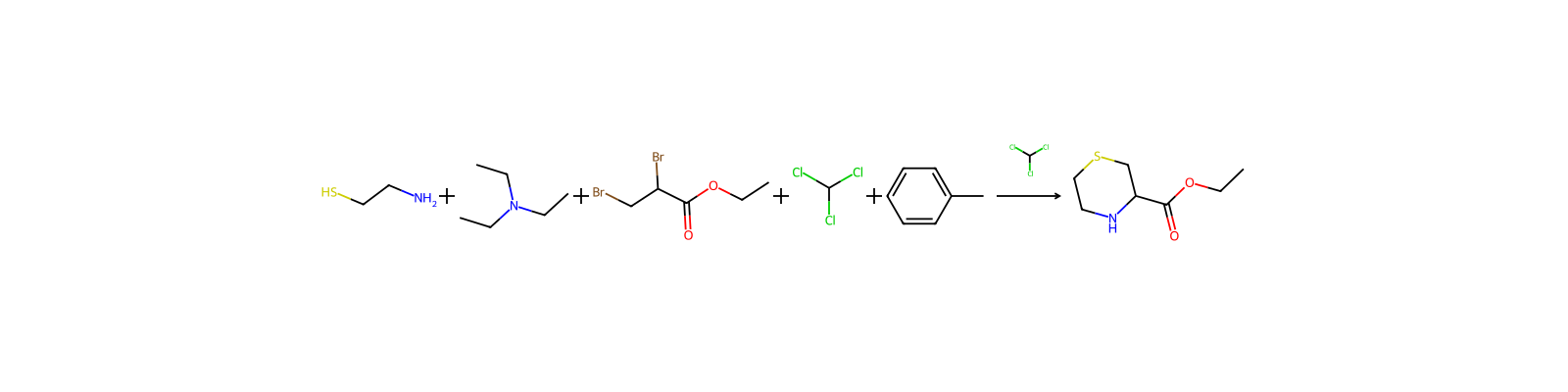
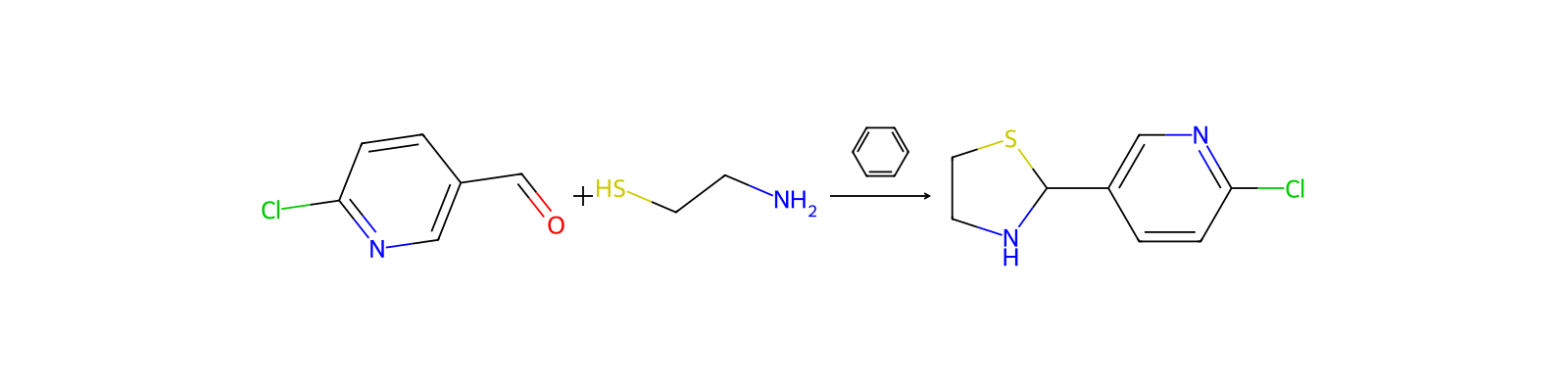
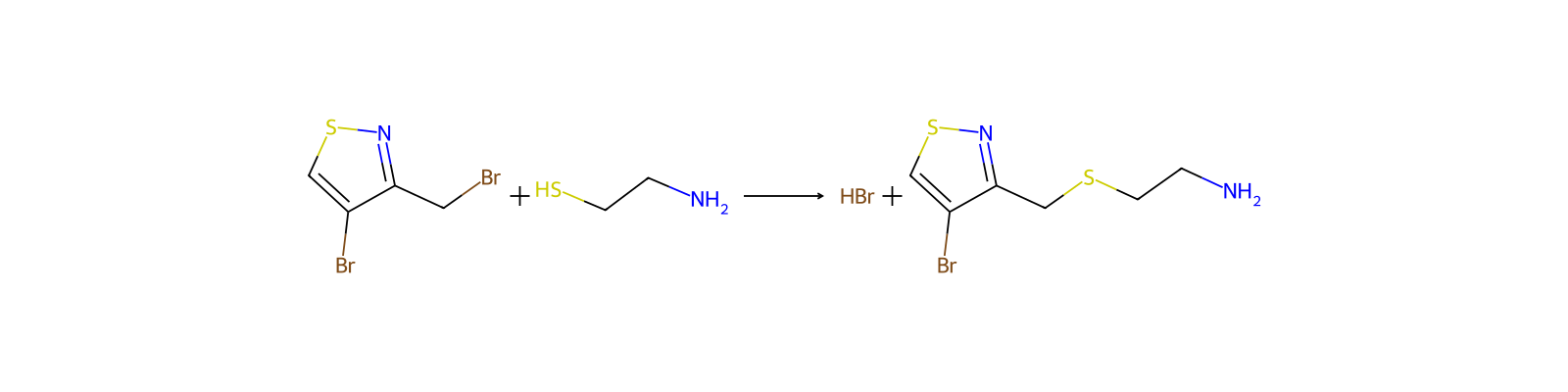
312 records



Linked notes
Loading…