HomeMCPWorkbenchSkills
HomeWorkbenchNotificationsMe
llms.txt · MCP GuidePrivacy Policy · Terms of Service · Supportv1.8.3
  1. Home
  2. /Compound

Isopropyl isocyanate

HCID 61277
New reaction
Print
Basic informationOverviewNames & identifiersPropertiesSafety & regulationChemistry & industryRelated reactionsCompound notes
Substructure searchFind similar structures

Basic information

CAS
1795-48-8
Standard SMILES
CC(C)N=C=O
InChIKey
GSLTVFIVJMCNBH-UHFFFAOYSA-N
Molecular formula
C4H7NO
Average molar mass
85.1 g/mol
Monoisotopic mass
85.05276385

Overview

Isopropyl isocyanate appears as a colorless liquid with a pungent odor. Insoluble in water. Very toxic by ingestion and inhalation. Vapors are heavier than air. Used to make other chemicals.

Names & identifiers

Preferred name
Isopropyl isocyanate
IUPAC
2-isocyanatopropane
English name
Isopropyl isocyanate
Molecular formula
C4H7NO
Molecular weight
85.1

Names & synonyms

Isopropyl isocyanate2-Isocyanatopropane1795-48-8Propane, 2-isocyanato-Isocyanic acid, isopropyl ester1-methylethyl isocyanaten-isopropyl isocyanateEINECS 217-276-5UN2483AI3-28282DTXSID3061976Propane, 2isocyanato
Show more names
i-picIsopropylisocyanat2-isocyanato-propansopropyl isocyaneteIsorpopyl IsocyanatePropane,2-isocyanato-IsopropylIsocyanate>
RefChem:792176DTXCID9035701217-276-5isopropylisocynateisoproylisocyanate2-propylisocyanatei-propyl isocyanateiso-propyl-isocyanat

Database identifiers

CAS
1795-48-8
PubChem CID
61277
DTXSID
DTXSID3061976
UNII
K7N2Z27VQ9
EC Number
217-276-5
Nikkaji
J68.772C

Properties

Computed structural properties

XLogP
1.8
Topological polar surface area
29.4 Ų
Hydrogen bond donors
0
Hydrogen bond acceptors
2
Rotatable bonds
1
Heavy atoms
6
Formal charge
0
Complexity
71.6

Experimental & physicochemical properties

Chemical Classes · 2 items

Toxic Gases & Vapors -> Monoisocyanates

Flammable agents - 3rd degree

SpringerMaterials Properties15N nuclear magnetic resonance spectrum
Physical Description · 2 items

Isopropyl isocyanate appears as a colorless liquid with a pungent odor. Insoluble in water. Very toxic by ingestion and inhalation. Vapors are heavier than air. Used to make other chemicals.

Colorless liquid with a pungent odor; [CAMEO]

Physicochemical properties

Melting point
-75 ℃ · <-75℃
Boiling point
75 °C · 75 °C
Density
0.87 · 0.87
refractive index
1.38 · 1.38
Flash point
-3 °C · -3 °C
storage temp.
2 · 2-8°C
solubility
Chloroform (Soluble), Ethyl Acetate

Safety & regulation

Safety information is for reference only and does not replace the supplier’s Safety Data Sheet (SDS), applicable regulations, or professional assessment.

GHS classification

GHS Classification · 4 items

Danger

H225 (100%): Highly Flammable liquid and vapor [Danger Flammable liquids]

P210, P223, P231+P232, P233, P240, P241, P242, P243, P260, P261, P264, P264+P265, P270, P271, P272, P280, P284, P301+P316, P301+P317, P302+P335+P334, P302+P352, P303+P361+P353, P304+P340, P305+P351+P338, P316, P319, P320, P321, P330, P332+P317, P333+P317, P337+P317, P342+P316, P362+P364, P370+P378, P402+P404, P403, P403+P233, P403+P235, P405, and P501 (click each P-code to see the statement)

Aggregated GHS information provided per 198 reports by companies from 14 notifications to the ECHA C&L Inventory. Each notification may be associated with multiple companies.

Hazard information

Hazards IdentificationToxic/poison by inhalation (TIH/PIH)
Regulatory Information · 2 items

REACH registered substance: Isopropyl isocyanate (EC: 217-276-5)

The New Jersey Worker and Community Right to Know Act requires public and private employers to provide information about hazardous substances at their workplaces. (N.J.S.A. 34:5A-1 et. seq.)

DOT LabelPoison Inhalation Hazard Flammable Liquid
Fire Hazards · 2 items

Excerpt from ERG Guide 155 [Substances - Toxic and/or Corrosive (Flammable / Water-Sensitive); polymerization hazard]:

· HIGHLY FLAMMABLE: Will be easily ignited by heat, sparks or flames.

Health Hazards · 2 items

Excerpt from ERG Guide 155 [Substances - Toxic and/or Corrosive (Flammable / Water-Sensitive); polymerization hazard]:

· TOXIC and/or CORROSIVE; inhalation, ingestion or contact (skin, eyes) with vapors, dusts or substance may cause severe injury, burns or death.

Chemistry & industry

Uses & manufacturing

UsesUsed to make other chemicals; [CAMEO]
General Manufacturing InformationPropane, 2-isocyanato-: ACTIVE
Applications · 2 items

UsesIsopropyl isocyanate is used as a reagent in the preparation of androgen receptor antagonist for prostate cancer treatment. It is also used in the synthesis of selective dual inhibitor of mammalian target of rapamycin (mTORC1 and mTORC2). Further, it serves as a reagent in the synthesis of O-aryl N-isopropylcarbamates. In addition to this, it is used as a derivatization reagent during the stereoisomeric analysis of secondary alcohols.

General DescriptionA colorless liquid with a pungent odor. Insoluble in water. Flash point near 60°F. Very toxic by ingestion and inhalation. Vapors are heavier than air. Used to make other chemicals.

Upstream & downstream products

Downstream products

Propyl isocyanateIprodioneN-IsopropylacetamideN-(Propan-2-yl)morpholine-4-carboxamide

Related reactions

614 records
New reaction record
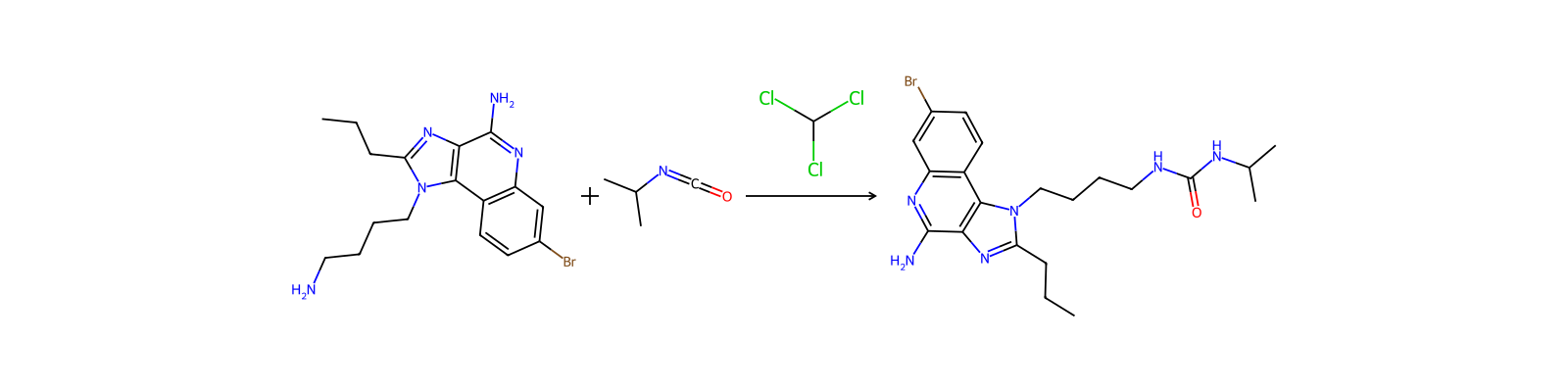
HRID 3461 reaction equation
HRID 3461As reactant
HRID 3795 reaction equation
HRID 3795As reactant
HRID 4480 reaction equation
HRID 4480As reactant
HRID 4611 reaction equation
HRID 4611As reactant
HRID 4620 reaction equation
HRID 4620As reactant
HRID 9437 reaction equation
HRID 9437As reactant
HRID 9440 reaction equation
HRID 9440As reactant
HRID 9505 reaction equation
HRID 9505As reactant
PreviousPage 1 of 77

Compound notes

On this pageBasic informationOverviewNames & identifiersPropertiesSafety & regulationChemistry & industryRelated reactionsCompound notes
form
clear liquid
color
Colorless to Light yellow
Water Solubility
Insoluble
Sensitive
Moisture Sensitive
BRN
969356 · 969356
Stability
Hygroscopic, Light Sensitive, Moisture Sensitive, Volatile
CAS DataBase Reference
1795 · 1795-48-8(CAS DataBase Reference)
EPA Substance Registry System
2 · Propane, 2-isocyanato- (1795-48-8)
Symbol(GHS)
2 · GHS02,GHS05,GHS06,GHS08
Signal word
Danger
Hazard statements
330 · H330-H301-H314-H334-H335-H225
Precautionary statements
501 · P501-P270-P240-P260-P210-P233-P243-P241-P242-P271-P264-P280-P284-P370+P378-P342+P311-P303+P361+P353-P301+P330+P331-P363-P301+P310+P330-P304+P340+P310-P305+P351+P338+P310-P403+P233-P403+P235-P405
Hazard Codes
F,T+,Xi
Risk Statements
11 · 11-26-36/37/38-42
Safety Statements
16 · 16-23-26-36/37/39-45
RIDADR
2483 · UN 2483
WGK Germany
1 · 1
F
10 · 10-21
TSCA
TSCA listed
HazardClass
6.1 · 6.1
PackingGroup
I
HS Code
2929109000 · 2929109000
REACH Registrations
Active
Excepted Quantities
Forbidden
Hazards SummaryVery toxic by ingestion or inhalation; Highly flammable; [CAMEO] A lachrymator; [CHEMINFO] See Methyl isocyanate. See MONOISOCYANATES.
DOT ID and Guide2483 155P
Reactive GroupIsocyanates and Isothiocyanates
Reactivity AlertsHighly Flammable
Reactivity Profile · 1 item

Isocyanates and thioisocyanates, such as ISOPROPYL ISOCYANATE, are incompatible with many classes of compounds, reacting exothermically to release toxic gases. Reactions with amines, aldehydes, alcohols, alkali metals, ketones, mercaptans, strong oxidizers, hydrides, phenols, and peroxides can cause vigorous releases of heat. Acids and bases initiate polymerization reactions in these materials. Some isocyanates react with water to form amines and liberate carbon dioxide. Base-catalysed reactions of isocyanates with alcohols should be carried out in inert solvents. Such reactions in the absence of solvents often occur with explosive violence, [Wischmeyer(1969)].

DOT Hazard Classification · 6 items

Isopropyl isocyanate

UN2483

Div 6.1 Poisonous materials (49 eCFR § 173.132)

Div 6.1 Poisonous materials (49 eCFR § 173.132)

PG I: the degree of danger presented by the material is great

Symbol +: Fixes the proper shipping name, hazard class and packing group for that entry

Air and Water ReactionsHighly flammable. Insoluble in water.

Safety & protection

Fire FightingExcerpt from ERG Guide 155 [Substances - Toxic and/or Corrosive (Flammable / Water-Sensitive); polymerization hazard]:
Accidental Release Measures · 2 items

· CALL 911. Then call emergency response telephone number on shipping paper. If shipping paper not available or no answer, refer to appropriate telephone number listed on the inside back cover.

· ELIMINATE all ignition sources (no smoking, flares, sparks or flames) from immediate area.

First Aid · 2 items

Excerpt from ERG Guide 155 [Substances - Toxic and/or Corrosive (Flammable / Water-Sensitive); polymerization hazard]:

General First Aid:

Exposure Control and Personal Protection · 2 items

· Wear positive pressure self-contained breathing apparatus (SCBA).

TIH (Toxic Inhalation Hazard) - Term used to describe gases and volatile liquids that are toxic when inhaled. Some are TIH materials themselves, e.g., chlorine, and some release TIH gases when spilled in water, e.g., chlorosilanes. [ERG 2016].

Nonfire Spill ResponseExcerpt from ERG Guide 155 [Substances - Toxic and/or Corrosive (Flammable / Water-Sensitive); polymerization hazard]:
Isolation and Evacuation · 4 items

Excerpt from ERG Guide 155 [Substances - Toxic and/or Corrosive (Flammable / Water-Sensitive); polymerization hazard]:

Immediate precautionary measure

Small spill:

Small spill:

Personal Protective Equipment (PPE)Excerpt from ERG Guide 155 [Substances - Toxic and/or Corrosive (Flammable / Water-Sensitive); polymerization hazard]:
Emergency Response Planning Guidelines· Note: Most foams will react with the material and release corrosive/toxic gases.
Acute Exposure Guideline Levels (AEGLs)The compound is currently at the Holding Status AEGLs which have been reviewed by the NAC/AEGL Committee and are on hold due to insufficient data to develop AEGL values.
AEGLs NotesAEGLs Status: Holding

Toxicology

Adverse EffectsLacrimator (Lachrymator) - A substance that irritates the eyes and induces the flow of tears.

Safety data

F
10-21
wgk
1
tsca
TSCA listed
ridadr
UN 2483
hs_code
2929109000
risk_code
11-26-36/37/38-42
Signal word
Danger
Symbol(GHS)
GHS02,GHS05,GHS06,GHS08
hazard_code
F,T+,Xi
safety_code
16-23-26-36/37/39-45
hazard_class
6.1
packing_group
I
Hazard statements
H330-H301-H314-H334-H335-H225
Excepted Quantities
Forbidden
REACH Registrations
Active
Precautionary statements
P501-P270-P240-P260-P210-P233-P243-P241-P242-P271-P264-P280-P284-P370+P378-P342+P311-P303+P361+P353-P301+P330+P331-P363-P301+P310+P330-P304+P340+P310-P305+P351+P338+P310-P403+P233-P403+P235-P405