

Basic information
- Standard SMILES
C=Cc1ccc(C=C)cc1- InChIKey
WEERVPDNCOGWJF-UHFFFAOYSA-N- Molecular formula
- C10H10
- Average molar mass
- 130.19 g/mol
- Monoisotopic mass
- 130.07825032
Overview
See also: Polacrilin Potassium (monomer of).
Names & identifiers
- Preferred name
- p-Divinylbenzene
- IUPAC
- 1,4-bis(ethenyl)benzene
- English name
- P-DIVINYLBENZENE 85
- Molecular formula
- C10H10
- Molecular weight
- 130.19
Names & synonyms
1,4-Divinylbenzenep-Divinylbenzene105-06-6Benzene, 1,4-diethenyl-1,4-Diethenylbenzene1,4-bis(ethenyl)benzeneDTXSID2033863QN8RGZ4ML2DTXCID0013863RefChem:73349203-266-84-vinylstyrene
Show more names
JACS-105-06-6paradienebenzene1,4-Divinylbenzol1,4-diethenyl-benzenp-Divinylbenzene 85%P-DIVINYLBENZENE 85
1,4-Divinyl-benzeneMFCD00008622UNII-QN8RGZ4ML2p-vinylstyreneP-DIVINYLBENZENE 85p-divinyl benzenepara-divinylbenzeneEINECS 203-266-8
Database identifiers
- CAS
105-06-6- PubChem CID
- 66041
- DTXSID
DTXSID2033863- ChEMBL
CHEMBL1520722- UNII
- QN8RGZ4ML2
- EC Number
- 203-266-8
- Nikkaji
- J91.290E
Properties
Computed structural properties
- XLogP
- 3.5
- Topological polar surface area
- 0 Ų
- Hydrogen bond donors
- 0
- Hydrogen bond acceptors
- 0
- Rotatable bonds
- 2
- Heavy atoms
- 10
- Formal charge
- 0
- Complexity
- 100
Experimental & physicochemical properties
SpringerMaterials Properties13C nuclear magnetic resonance spectrum
LogP3.2
Physicochemical properties
- Melting point
- 31 °C · 31°C
- Boiling point
- 175.9 °C · 175.9°C (rough estimate)
- Density
- 0.914 g/mL · 0.914 g/mL at 25 °C (lit.)
- vapor pressure
- 71.06 Pa · 71.06Pa at 25℃
- refractive index
- 20 · n20/D 1.5470(lit.)
- Flash point
- 148 °F · 148 °F
- storage temp.
- -70 °C · -70°C
- form
- low melting solid
- color
- Clear, colourless
- Water Solubility
- 1 μg/L · 1μg/L
- Exposure limits
- 0.5 ppm · TLV-TWA: 0.5 ppm (as total divinylbenzene isomers)
- InChI
- InChI=1S/C10H10/c1-3-9-5-7-10(4-2)8-6-9/h3-8H,1-2H2
- InChIKey
- WEERVPDNCOGWJF-UHFFFAOYSA-N
- SMILES
- C1(C=C)=CC=C(C=C)C=C1
- LogP
- 4.46 at · 4.46 at 25℃
- CAS DataBase Reference
- 105 · 105-06-6
- FDA UNII
- 8 RGZ4ML2 · QN8RGZ4ML2
- EPA Substance Registry System
- p-Divinylbenzene (105-06-6)
- UNSPSC Code
- 12162002 · 12162002
- NACRES
- 23 · NA.23
- Symbol(GHS)
- 7 · GHS07,GHS08
- Signal word
- Warning
- Hazard statements
- 302 · H302-H315-H317-H319-H335-H351-H361d-H373-H412
- Precautionary statements
- 273 · P273-P280-P301+P312-P302+P352-P305+P351+P338-P308+P313
- Hazard Codes
- Xn
- Risk Statements
- 22 · 22-36/37/38-43
- Safety Statements
- 7 · 7-23-26-36-45-36/37
- RIDADR
- 1993 · NA 1993 / PGIII
- WGK Germany
- 3 · 3
- TSCA
- TSCA listed
- HS Code
- 2902900000 · 2902900000
- Storage Class
- 10 · 10 - Combustible liquids
- Hazard Classifications
- 4 OralAquatic · Acute Tox. 4 OralAquatic Chronic 2Eye Irrit. 2Skin Irrit. 2
- REACH Registrations
- Inactive
Safety & regulation
GHS classification
GHS Classification
Danger
H302 (84.3%): Harmful if swallowed [Warning Acute toxicity, oral]
P260, P261, P264, P264+P265, P270, P271, P272, P280, P301+P317, P302+P352, P304+P340, P305+P351+P338, P319, P321, P330, P332+P317, P333+P317, P337+P317, P362+P364, P403+P233, P405, and P501 (click each P-code to see the statement)
Aggregated GHS information provided per 51 reports by companies from 7 notifications to the ECHA C&L Inventory. Each notification may be associated with multiple companies.
Danger
H304: May be fatal if swallowed and enters airways [Danger Aspiration hazard]
Hazard information
Regulatory InformationStatus: Active Update: 27-05-2018 https://echa.europa.eu/registration-dossier/-/registered-dossier/17357
Hazard Classes and Categories
Acute Tox. 4 (84.3%)
Skin corrosion/irritation - Category 2
Skin corrosion/irritation - Category 2
Safety data
- wgk
- 3
- tsca
- TSCA listed
- ridadr
- NA 1993 / PGIII
- hs_code
- 2902900000
- risk_code
- 22-36/37/38-43
- Signal word
- Warning
- Symbol(GHS)
- GHS07,GHS08
- hazard_code
- Xn
- safety_code
- 7-23-26-36-45-36/37
- Storage Class
- 10 - Combustible liquids
- Hazard statements
- H302-H315-H317-H319-H335-H351-H361d-H373-H412
- REACH Registrations
- Inactive
- Hazard Classifications
- Acute Tox. 4 OralAquatic Chronic 2Eye Irrit. 2Skin Irrit. 2
- Precautionary statements
- P273-P280-P301+P312-P302+P352-P305+P351+P338-P308+P313
Chemistry & industry
Uses & manufacturing
General Manufacturing InformationBenzene, 1,4-diethenyl-: ACTIVE
Applications
UsesDVB can be cross-linked with styrene/vinylbenzene chloride and incorporated with multi-walled carbon nanotubes (MWCNTs) to form new microporous nanocomposites for water remediation. It can also be used in combination with polyethylene glycol diacrylate to form linkages with polyethylene oxide (PEO), which can be used as an electrolytic material for lithium batteries.
General Descriptionp-Divinylbenzene(DVB) is a cross-linking agent, which is used in a variety of polymeric processes such as copolymerization of styrene to improve the thermo-mechanical properties of the composite.
Upstream & downstream products
Upstream raw materials
Suppliers50 total
郑州阿尔法化工有限公司+86-18530059196 · [email protected]
Career Henan Chemica Co+86-0371-86658258 +86-13203830695 · [email protected]
上海麦克林生化科技股份有限公司021-50706066 15221275939 · [email protected]
广州佳途科技股份有限公司81960175 18933936954 · [email protected]
武汉欣扬瑞和化学科技有限公司153-07155313 15307155313 · [email protected]
上海毕得医药科技股份有限公司400-1647117 13681763483 · [email protected]
江苏星科元信息科技有限公司400-605-7200 15335295587
Compound Net Biotechnology Inc.15266686121 · [email protected]
郑州德元凯化工有限公司17837139533 · [email protected]
Syntechem Co.,Ltd[email protected]
北京华威锐科化工有限公司0757-86329057 18934348241 · [email protected]
北京索莱宝科技有限公司010-50973130 17801761073 · [email protected]
北京药素科技有限公司13051859142
韶远科技(上海)有限公司021-50795510 4000665055 · [email protected]
烟台盛凯伦生物制品有限公司13356901049 · [email protected]
北京迈索化学技术有限公司010-57862036 18811083386 · [email protected]
上海梅凯科技有限公司021-68689288 15300790979 · [email protected]
郑州研德生物科技有限公司0371-63682289 15538176268 · [email protected]
烟台正信新材料科技有限公司13854547682 13854547682 · [email protected]
上海翱跃化工科技有限公司021-021-64367138 15900495324 · [email protected]
广东元丰化学试剂有限公司0751-2829979 13376591640 · [email protected]
深圳振强药物研发有限公司0755-66853366 13670046396 · [email protected]
上海敏寒医药科技有限公司17612188245 · [email protected]
陕西麟邦实业有限公司17709134430 · [email protected]
北京奥秘佳得医药科技有限公司+86-13522808617 · [email protected]
成都零六生物科技有限公司400-1166-196 13458535857 · [email protected]
杭州宇昊化工科技有限公司0571-82693216 · [email protected]
上海鑫圭生物科技有限公司15121041756 · [email protected]
梯尔希(南京)药物研发有限公司18012923235 · [email protected]
吉林中科研伸科技有限公司0431-80534353 19917294565 · [email protected]
Sigma-Aldrich西格玛奥德里奇(上海)贸易有限公司021-61415566 800-8193336 · [email protected]
BOC Sciences16314854226; +8616314854226 · [email protected]
郑州九亿时光新材料有限公司+86-15225627621 +86-13213167925 · [email protected]
HANGZHOU LEAP CHEM CO., LTD.+86-571-87711850 +86-15355479329 · [email protected]
安耐吉化学&3A(安徽泽升科技股份有限公司)400-0056266 · [email protected]
聊城莱博特生物医药科技有限公司0635-893290 · [email protected]
上海玻尔化学试剂有限公司19102157732 · [email protected]
上海大然化学有限公司021-64478606 15900664856 · [email protected]
上海阿拉丁生化科技股份有限公司6206333 13167063860 · [email protected]
陕西缔都医药化工有限公司029-029-81120477 17792793610 · [email protected]
北京华威锐科化工科技有限公司89508211 18501085097 · [email protected]
上海源叶生物科技有限公司13636370518 · [email protected]
上海鹤成医药科技有限公司13564747822 · [email protected]
成都标样生物科技有限公司028-81700200 13308200041 · [email protected]
上海颖心实验室设备有限公司021-021-59178156 15300768757 · [email protected]
山东弗珍化学科技有限公司13146841504 · [email protected]
上海希凯姆医药开发有限公司13889470786 · [email protected]
郑州汇聚化工有限公司0371-55900031 18137872243 · [email protected]
烟台博运生物科技有限公司13793517650 13793517650 · [email protected]
吉林中科研伸科技有限公司0431-80534350 15044023330 · [email protected]
Related reactions
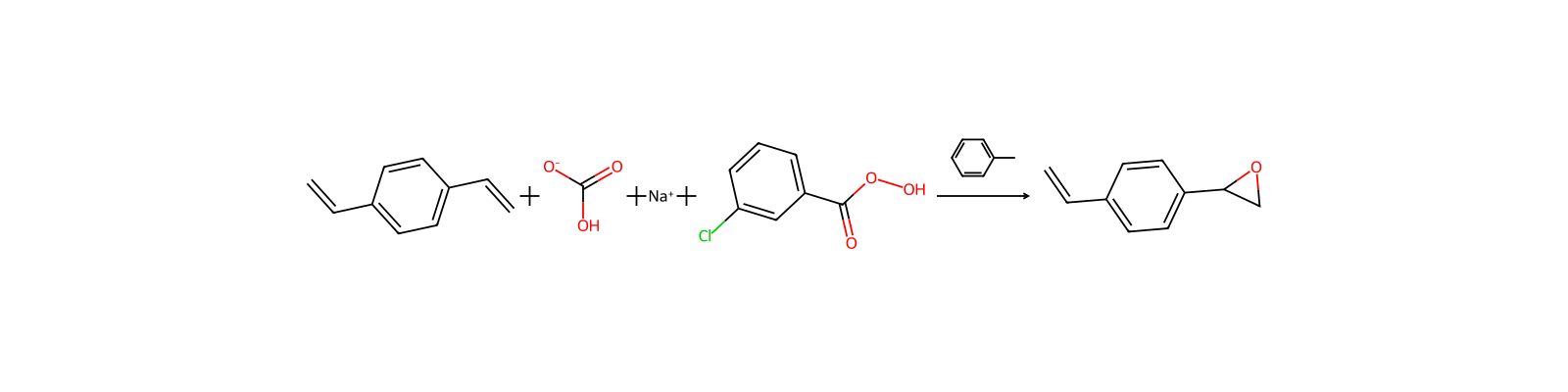
13 records




Linked notes
Loading…