HomeMCPWorkbenchSkills
HomeWorkbenchNotificationsMe
llms.txt · MCP GuidePrivacy Policy · Terms of Service · Supportv1.8.0
  1. Home
  2. /Compound

N-Nitrosodiphenylamine

HCID 6838
New noteNew reactionRequest quotes
Print preview
Basic informationOverviewNames & identifiersPropertiesSafety & regulationChemistry & industryRelated reactionsCompound notes
Substructure searchFind similar structures

Basic information

CAS
86-30-6
Standard SMILES
O=NN(c1ccccc1)c1ccccc1
InChIKey
UBUCNCOMADRQHX-UHFFFAOYSA-N
Molecular formula
C12H10N2O
Average molar mass
198.22 g/mol
Monoisotopic mass
198.07931295

Overview

n-Nitrosodiphenylamine is an industrial compound. It is an orange-brown or yellow solid that has been produced since 1945. n-Nitrosodiphenylamine is used to make rubber products such as tires or to make other chemicals. In the early 1980s, most U.S. rubber manufacturers replaced it with more efficient chemicals. Today, only one manufacturer in the United States produces n-nitrosodiphenylamine. We do not know if it occurs naturally in the environment. There is some evidence that microorganisms make it.

Names & identifiers

Preferred name
N-Nitrosodiphenylamine
IUPAC
N,N-diphenylnitrous amide
English name
N-Nitrosodiphenylamine
Molecular formula
C12H10N2O
Molecular weight
198.22

Names & synonyms

N-NITROSODIPHENYLAMINE86-30-6DiphenylnitrosamineNitrosodiphenylamineBenzenamine, N-nitroso-N-phenyl-VultrolRetarder JN-Nitroso-N-phenylanilineRedaxVulcatard AVulkalent AN,N-Diphenylnitrosamine
Show more names
NdpaNdphATJBdelacj
OrtardSconocVulcalent ACuretard ADiphenylnitrosaminDiphenylamine, N-nitroso-Naugard TJBDelac J

Database identifiers

CAS
86-30-6
PubChem CID
6838
DTXSID
DTXSID6021030
ChEMBL
CHEMBL165491
ChEBI
CHEBI:34875
UNII
AP2V89J1DA
EC Number
201-663-0
Nikkaji
J3.893H

Properties

Computed structural properties

XLogP
3.1
Topological polar surface area
32.7 Ų
Hydrogen bond donors
0
Hydrogen bond acceptors
3
Rotatable bonds
2
Heavy atoms
15
Formal charge
0
Complexity
178

Experimental & physicochemical properties

Chemical Classes · 3 items

Nitrogen Compounds -> Nitrosamines

Carcinogens

Semi-Volatile Organic Compound (SVOC)

SpringerMaterials PropertiesChemical shift
PesticidesPesticide -> EPA IRIS
LogP · 3 items

log Kow = 3.13

2.57/3.13

3.13

Density · 5 items

1.23 (NTP, 1992) - Denser than water; will sink

1.23

1.23 g/cm³

1.23

1.23 @25 °C

Color/Form · 3 items

Yellow plates from ligroin

Yellow plates or green crystals

Yellow plates from petroleum ether

Solubility · 6 items

less than 1 mg/mL at 66 °F (NTP, 1992)

In water, 35 mg/L at 25 °C

In water, 35.09 mg/L at 25 °C

Slightly soluble in ethanol, chloroform; soluble in benzene

Soluble in acetone, ethylene dichloride; somewhat soluble in gasoline; 10% in ethanol; 10% in benzene

Safety & regulation

Safety information is for reference only and does not replace the supplier’s Safety Data Sheet (SDS), applicable regulations, or professional assessment.

GHS classification

GHS Classification · 6 items

This chemical does not meet GHS hazard criteria for 1.9% (2 of 104) of reports.

Warning

H302 (48.1%): Harmful if swallowed [Warning Acute toxicity, oral]

P203, P260, P261, P264, P270, P272, P273, P280, P301+P317, P302+P352, P318, P319, P321, P330, P333+P317, P362+P364, P391, P405, and P501 (click each P-code to see the statement)

Aggregated GHS information provided per 104 reports by companies from 11 notifications to the ECHA C&L Inventory. Each notification may be associated with multiple companies.

Warning

Hazard information

Regulatory Information · 5 items

Chemical: Benzenamine, N-nitroso-N-phenyl-

Hazard Traits - Carcinogenicity

REACH registered substance: Nitrosodiphenylamine (EC: 201-663-0)

Benzenamine, N-nitroso-N-phenyl-: Does not have an individual approval but may be used as a component in a product covered by a group standard. It is not approved for use as a chemical in its own right.

The New Jersey Worker and Community Right to Know Act requires public and private employers to provide information about hazardous substances at their workplaces. (N.J.S.A. 34:5A-1 et. seq.)

Other Safety InformationIMAP assessments - Benzenamine, N-nitroso-N-phenyl-: Human health tier II assessment
DOT LabelClass 9
Fire Hazards · 2 items

Flash point data for this chemical are not available; however, it is probably combustible. (NTP, 1992)

Combustible. Gives off irritating or toxic fumes (or gases) in a fire.

Health HazardsACUTE/CHRONIC HAZARDS: When heated to decomposition this compound emits toxic fumes of nitrogen oxides. (NTP, 1992)

Chemistry & industry

Pharmacology

Biological Half-Life · 1 item

Results from a study of rats, rabbits, and guinea pigs receiving 50 mg/kg N-nitrosodiphenylamine through intraperitoneal injection suggested that the rate of excretion of N-nitrosodiphenylamine into the bile and elimination of the chemical from the bile varies among species. ... The half-lives for N-nitrosodiphenylamine elimination from bile for these species are as follows: 95 minutes for rabbits, 240 minutes for guinea pigs, and 510 minutes for rats.

Metabolism/Metabolites · 5 items

The state of the xenobiotic biotransformation system has been studied after a single per os administration of diphenylamine (DPA) and N-nitrosodiphenylamine (NDPA) to male albino rats. ... There was an increase in the total content of cytochrome P-450 and the activity of NADPH-cytochrome P-450 reductase as well as a marked elevation of activity of microsomal glutathione S-transferase. This was paralleled with the induction of activity of individual isoenzymes of the multifunctional family of rat liver cytosol glutathione S-transferases and increased activity of glutathione reductase. ... Diphenylamine /stimulated/ the activity of both membrane-bound and soluble glutathione S-transferases. ...

Millions of people are exposed daily to N-nitrosamines from different environmental sources. The present study aims at investigating the role of N-nitrosamines in the alteration of homocysteine, lipid profile, oxidative stress, paraoxonase activity, antioxidant enzymes, and free radicals which are important risk factors for CVD. In addition, biomarkers of cardiovascular diseases such as creatine kinase MB activity (CK-MB) and lactate dehydrogenase (LDH) as well as protein expression of both glutathione peroxidase and glutathione S-transferase p isozyme were assayed after treatment of rats with 0.2 mg/kg body weight of N-nitrosodibutylamine (NDBA), N-nitrosoethylbutylamine (NEBA), N-nitrosobutylpropylamine (NBPA), N-nitrosodiethylamine (NDEA), N-nitrosodimethylamine (NDMA), and N-nitrosodiphenylamine (NDPA) as a daily dose for two weeks. LDL levels, paraoxonase activity, reduced glutathione levels, and glutathione reductase activities were increased, whereas HDL levels decreased after treatment of rats with most of N-nitrosamines compared to control group. Moreover, levels of free radicals and catalase activity increased, whereas protein expression of both glutathione peroxidase and glutathione S-transferase decreased after treatment of rats with some N-nitrosamines. The data showed that most N-nitrosamines increased CK-MB and LDH activities. It is concluded that N-nitrosamines increased levels of free radicals, and decreased the activity of antioxidant enzymes which may consequently increase the incidence of CVDs.

Related reactions

14 records
New reaction record
HRID 7265 reaction equation
HRID 7265As productuspto-grants-2006_08
HRID 46680 reaction equation
HRID 46680As productuspto-grants-1979_11
HRID 92731 reaction equation
HRID 92731As productTraining data from https://doi.org/10.1039/C8SC04228D (2/10)
HRID 313401 reaction equation
HRID 313401As productTraining data from https://doi.org/10.1039/C8SC04228D (8/10)
HRID 443656 reaction equation
HRID 443656As catalystuspto-grants-1981_04
HRID 573509 reaction equation
HRID 573509As productuspto-grants-2015_05
HRID 867145 reaction equation
HRID 867145As productuspto-grants-1978_07
HRID 1363642 reaction equation
HRID 1363642As reactantuspto-grants-2011_02
Page 1 of 2

Compound notes

Loading…

On this pageBasic informationOverviewNames & identifiersPropertiesSafety & regulationChemistry & industryRelated reactionsCompound notes
More actions
New noteNew reactionRequest quotes

Solubility in water: none

Boiling Point101 °C
Decomposition · 3 items

Hazardous decomposition products formed under fire conditions - Carbon oxides, nitrogen oxides (NOx).

Energy of decomposition (in range 300-500 °C) measured as 0.65 kJ/g.

When heated to decomp it emits highly toxic fumes of ... /nitrogen oxides/.

Melting Point · 5 items

151.7 °F (NTP, 1992)

66.7 °C

66.5 °C

151.7 °F

66.5 °C

Vapor Pressure0.00007 [mmHg]
Physical Description · 4 items

N-nitrosodiphenylamine appears as yellow to brown or orange powder or flakes or a black solid. Insoluble in water and denser in water. Hence sinks in water. (NTP, 1992)

Yellow to brown or orange powder or flakes or a black solid; [CAMEO]

YELLOW FLAKES.

Yellow to brown or orange powder or flakes or a black solid.

Physicochemical properties

Melting point
65 · 65-66 °C
Boiling point
268 °C · 268°C
Density
1.23 · 1.23
vapor pressure
0.1 at · 0.1 at 25 °C (assigned by analogy, Mabey et al., 1982)
refractive index
1.633 · 1.6330 (estimate)
Flash point
11 °C · 11 °C
storage temp.
2 · 2-8°C
solubility
0.1 g/mL, · methanol: 0.1 g/mL, clear
pka
-5.83 · -5.83±0.50(Predicted)
form
Yellow to brown or orange powder or flakes
color
Yellow to brown to orange power or flakes
Water Solubility
Insoluble
BRN
909531 · 909531
Henry's Law Constant
2.33 at · 2.33 at 25 °C (approximate - calculated from water solubility and vapor pressure)
Stability
Stability Combustible. Incompatible with oxidising agents.
InChI
1S/C12H10N2O/c15-13-14(11-7-3-1-4-8-11)12-9-5-2-6-10-12/h1-10H
InChIKey
UBUCNCOMADRQHX-UHFFFAOYSA-N
SMILES
O=NN(c1ccccc1)c2ccccc2
LogP
3.13 at · 3.13 at 25℃
Toxicology and Carcinogenesis
Bioassay of N-Nitrosodiphenylamine for Possible Carcinogenicity (CASRN 86-30-6)
CAS DataBase Reference
86 · 86-30-6(CAS DataBase Reference)
EWG's Food Scores
2 · 2
FDA UNII
2 V89J1DA · AP2V89J1DA
Proposition 65 List
N-Nitrosodiphenylamine
NIST Chemistry Reference
Benzenamine, N-nitroso-N-phenyl-(86-30-6)
IARC
3 · 3 (Vol. 27, Sup 7) 1987
EPA Substance Registry System
N-Nitrosodiphenylamine (86-30-6)
Toxicological Profile|ATSDR
N-Nitrosodiphenylamine |Toxicological Profile|ATSDR
UNSPSC Code
41116105 · 41116105
NACRES
22 · NA.22
Symbol(GHS)
7 · GHS07,GHS08,GHS09
Signal word
Warning
Hazard statements
302 · H302-H315+H320-H371-H373-H341-H351-H411
Precautionary statements
501 · P501-P273-P260-P270-P202-P201-P264-P280-P302+P352-P391-P337+P313-P305+P351+P338-P308+P311-P362+P364-P332+P313-P301+P312+P330-P405
target organs
Urinary bladder
Hazard Codes
Xn,T,F
Risk Statements
22 · 22-39/23/24/25-23/24/25-11
Safety Statements
22 · 22-36/37-53-45-16-7
RIDADR
1230 · UN 1230 3/PG 2
WGK Germany
3 · 3
RTECS
9800000 · JJ9800000
F
4.1 · 4.10-9-23
TSCA
TSCA listed
HS Code
2921.44 · 2921.44.0500
HazardClass
9 · 9
PackingGroup
III
Storage Class
11 · 11 - Combustible Solids
Hazard Classifications
1 Carc · Aquatic Chronic 1Carc. 2Repr. 2Skin Sens. 1ASTOT RE 2
Hazardous Substances Data
86 · 86-30-6(Hazardous Substances Data)
Toxicity
50 for · Acute oral LD50 for mice 3,850 mg/kg, rats 1,650 mg/kg (quoted, RTECS, 1985).
REACH Registrations
Active
Limited Quantities
5 kg · 5.0 kg (11 lbs) (solid)
Excepted Quantities
Max Inner Pack (30g or 30ml) and Max Outer Pack (1Kg or 1L)
Hazards Summary · 3 items

n-Nitrosodiphenylamine is an industrial compound. It is an orange-brown or yellow solid that has been produced since 1945. n-Nitrosodiphenylamine is used to make rubber products such as tires or to make other chemicals. In the early 1980s, most U.S. rubber manufacturers replaced it with more efficient chemicals. Today, only one manufacturer in the United States produces n-nitrosodiphenylamine. We do not know if it occurs naturally in the environment. There is some evidence that microorganisms make it.

N-nitrosodiphenylamine causes bladder cancer after chronic administration to animals. No substantial evidence of liver toxicity in animals; [ATSDR ToxProfiles] No listed effects of short-term or long-term exposure; [ICSC]

The major hazards encountered in the use and handling of N-nitrosodiphenylamine stem from its toxicologic properties and flammability. The most probable route of exposure to this yellow crystalline substance is by inhalation during its use in rubber processing. Effects from exposure include contact burns to the skin and eyes. In activities or situations where over exposure may occur, wear a self-contained breathing apparatus and protective clothing. If contact should occur, immediately flush affected skin or eyes with running water for at least 15 minutes, and remove contaminated clothing and shoes at the site. N-Nitrosodiphenylamine may be ignited by heat, sparks, or flames; burning with a flare-like effect and the possible production of irritating or poisonous gases. Fires involving N-nitrosodiphenylamine may be extinguished with dry chemical, sand, water spray, fog, or foam. For a massive fire, use unmanned hose holders. Before shipping N-nitrosodiphenylamine, consult with the regulatory requirements of the US Department of Transportation. Small spills of N-nitrosodiphenylamine may be taken up and placed into clean, dry containers, covered, and removed from the spill area. Large spills should be wetted down and diked for later disposal. N-Nitrosodiphenylamine is a potential candidate for rotary kiln and fluidized bed forms of incineration. Before implementing land disposal of waste N-nitrosodiphenylamine, consult with environmental regulatory agencies for guidance.

Reactive GroupAzo, Diazo, Azido, Hydrazine, and Azide Compounds
Special Reports · 5 items

TSCA CHIPs present a preliminary assessment of N-nitrosodiphenylamine's potential for injury to human health & the environment (available at EPA's TSCA Assistance Office: (202) 554-1404

USEPA; Ambient Water Quality Criteria Doc: Nitrosamines p.A-1 (1980) EPA-440/5-80-064

WHO; Environ Health Criteria: Nitrates, Nitrites, and N-Nitroso Compounds (1977)

USEPA; Environmental Assessment of Atmospheric Nitrosamines, MTR-7512, Contract No 68-02-1495 (1976)

For more Special Reports (Complete) data for N-Nitrosodiphenylamine (8 total), please visit the HSDB record page.

Reactivity ProfileN-NITROSODIPHENYLAMINE may be sensitive to moisture at elevated temperatures in strongly acidic solutions. May react vigorously with oxidizing agents. May undergo trans-nitrosation reactions with secondary amines (NTP, 1992).
Chemical DangersDecomposes on burning. This produces nitrogen oxides. Reacts vigorously with oxidants.
Air and Water ReactionsInsoluble in water.
Toxic Combustion ProductsSpecial hazards arising from the substance or mixture: Carbon oxides, Nitrogen oxides (NOx).

Safety & protection

Fire Fighting · 2 items

Fires involving this material can be controlled with a dry chemical, carbon dioxide or Halon extinguisher. (NTP, 1992)

Use foam, powder, carbon dioxide.

First Aid Measures · 4 items

Fresh air, rest. Refer for medical attention.

Remove contaminated clothes. Rinse and then wash skin with water and soap.

First rinse with plenty of water for several minutes (remove contact lenses if easily possible), then refer for medical attention.

Rinse mouth. Refer for medical attention .

First Aid · 1 item

EYES: First check the victim for contact lenses and remove if present. Flush victim's eyes with water or normal saline solution for 20 to 30 minutes while simultaneously calling a hospital or poison control center. Do not put any ointments, oils, or medication in the victim's eyes without specific instructions from a physician. IMMEDIATELY transport the victim after flushing eyes to a hospital even if no symptoms (such as redness or irritation) develop.

Safe StorageSeparated from strong oxidants. Store in an area without drain or sewer access.
Fire Fighting Procedures · 2 items

Suitable extinguishing media: Use water spray, alcohol-resistant foam, dry chemical or carbon dioxide.

Advice for firefighters: Wear self-contained breathing apparatus for firefighting if necessary.

Storage Conditions · 2 items

Keep container tightly closed in a dry and well-ventilated place. Store under inert gas. Air sensitive.

PRECAUTIONS FOR "CARCINOGENS": Storage site should be as close as practical to lab in which carcinogens are to be used, so that only small quantities required for ... expt need to be carried. Carcinogens should be kept in only one section of cupboard, an explosion-proof refrigerator or freezer (depending on chemicophysical properties ...) that bears appropriate label. An inventory ... should be kept, showing quantity of carcinogen & date it was acquired ... Facilities for dispensing ... should be contiguous to storage area. /Chemical Carcinogens/

Cleanup Methods · 3 items

ACCIDENTAL RELEASE MEASURES; Personal precautions, protective equipment and emergency procedures: Use personal protective equipment. Avoid dust formation. Avoid breathing vapors, mist or gas. Ensure adequate ventilation. Avoid breathing dust. Environmental precautions: Prevent further leakage or spillage if safe to do so. Do not let product enter drains. Discharge into the environment must be avoided. Methods and materials for containment and cleaning up: Pick up and arrange disposal without creating dust. Sweep up and shovel. Keep in suitable, closed containers for disposal.

Decontamination of N-nitrosamine contaminated glassware /was described/. /N-nitrosamines/

PRECAUTIONS FOR "CARCINOGENS": A high-efficiency particulate arrestor (HEPA) or charcoal filters can be used to minimize amt of carcinogen in exhausted air ventilated safety cabinets, lab hoods, glove boxes or animal rooms ... Filter housing that is designed so that used filters can be transferred into plastic bag without contaminating maintenance staff is avail commercially. Filters should be placed in plastic bags immediately after removal ... The plastic bag should be sealed immediately ... The sealed bag should be labelled properly ... Waste liquids ... should be placed or collected in proper containers for disposal. The lid should be secured & the bottles properly labelled. Once filled, bottles should be placed in plastic bag, so that outer surface ... is not contaminated ... The plastic bag should also be sealed & labelled. ... Broken glassware ... should be decontaminated by solvent extraction, by chemical destruction, or in specially designed incinerators. /Chemical Carcinogens/

Nonfire Spill Response · 1 item

SMALL SPILLS AND LEAKAGE: If a spill of this chemical occurs, FIRST REMOVE ALL SOURCES OF IGNITION, then you should dampen the solid spill material with acetone and transfer the dampened material to a suitable container. Use absorbent paper dampened with acetone to pick up any remaining material. Seal your contaminated clothing and the absorbent paper in a vapor-tight plastic bag for eventual disposal. Solvent wash all contaminated surfaces with acetone followed by washing with a soap and water solution. Do not reenter the contaminated area until the Safety Officer (or other responsible person) has verified that the area has been properly cleaned.

Disposal Methods · 5 items

SRP: Recycle any unused portion of the material for its approved use or return it to the manufacturer or supplier. Ultimate disposal of the chemical must consider: the material's impact on air quality; potential migration in air, soil or water; effects on animal, aquatic and plant life; and conformance with environmental and public health regulations. If it is possible or reasonable use an alternative chemical product with less inherent propensity for occupational harm/injury/toxicity or environmental contamination.

Product: Offer surplus and non-recyclable solutions to a licensed disposal company. Contaminated packaging: Dispose of as unused product.

Incineration: Pour or sift onto a thick layer of sand and soda ash mixture (90-10). Mix and shovel into a heavy paper box with much paper packing. Burn in an incinerator. Fire may be augmented by adding excelsior and scrap wood. Waste may be dissolved in flammable solvent (alcohols, etc) and sprayed into fire box of an incinerator with afterburner and scrubber.

(1) Nitrosamines may be reduced to the corresponding amine by using nickel-aluminum (Ni-Al) alloy in dilute base. The nitrosamines were completely degraded (99.9%) and only the amines (RR'NH) were found in the final reaction mixtures. No traces (generally <0.1%) of the corresponding, possibly carcinogenic, hydrazines (RR'NNH2) were found in the final reaction mixtures. (2) Nitrosamines may be oxidized by potassium permanganate in 3 M sulfuric acid (KMnO4 in H2SO4). The nitrosamines were completely destroyed (>99.5%). The products of this reaction have not been determined. (3) Nitrosamines may be destroyed by using hydrogen bromide (HBr) in glacial acetic acid. The nitrosamines were completely destroyed (>99%) and the products were presumably the corresponding amines. All of these procedures were validated by an international collaborative study. /Nitrosamines/

For more Disposal Methods (Complete) data for N-Nitrosodiphenylamine (9 total), please visit the HSDB record page.

Spillage DisposalDo NOT let this chemical enter the environment. Sweep spilled substance into covered containers. If appropriate, moisten first to prevent dusting.
Preventive Measures · 5 items

Gloves must be inspected prior to use. Use proper glove removal technique (without touching glove's outer surface) to avoid skin contact with this product. Dispose of contaminated gloves after use in accordance with applicable laws and good laboratory practices. Wash and dry hands.

Avoid contact with skin and eyes. Avoid formation of dust and aerosols. Provide appropriate exhaust ventilation at places where dust is formed. Normal measures for preventive fire protection.

ACCIDENTAL RELEASE MEASURES; Personal precautions, protective equipment and emergency procedures: Use personal protective equipment. Avoid dust formation. Avoid breathing vapors, mist or gas. Ensure adequate ventilation. Avoid breathing dust. Environmental precautions: Prevent further leakage or spillage if safe to do so. Do not let product enter drains. Discharge into the environment must be avoided.

Handle in accordance with good industrial hygiene and safety practice. Wash hands before breaks and at the end of workday.

For more Preventive Measures (Complete) data for N-Nitrosodiphenylamine (14 total), please visit the HSDB record page.

Isolation and EvacuationExcerpt from ERG Guide 171 [Substances (Low to Moderate Hazard)]:

Toxicology

Toxicological Information · 2 items

ATSDR Toxicological Profile for n-Nitrosodiphenylamine - Succinctly characterizes the toxicologic and adverse health effects information.

Ranking: 123 (total points: 1075.8599999999999)

Cancer SitesUrinary
Interactions · 1 item

The mutagenicity of the carcinogen N-nitrosodiphenylamine (NDPhA) to Salmonella typhimurium TA98 was demonstrated only when norharman, a comutagen, was added to the incubation mixture with S9 mix. N,N-Diphenylamine (DPhA), a denitrosated derivative of NDPhA, was also mutagenic to S. typhimurium TA98 when norharman was present. Twice as many revertants were induced by DPhA with norharman as by NDPhA with norharman. The comutagenic effect of norharman was also observed with N-nitroso-methylphenylamine (NMPhA), N-nitrosoethylphenylamine (NEPhA) and N-nitrosophenylbenzylamine (NPhBeA) and their denitrosated derivatives. NDPhA was converted metabolically to DPhA by S9 mix. Stoichiometric studies indicated that the mutagenicity of NDPhA in the presence of norharman was exerted through DPhA. The denitrosation eyzme activity of NDPhA was mainly recovered in the microsomal fraction, and the enzyme seemed to be a cytochrome P-450 monooxygenase system. Denitrosation reactions of NMPhA, NEPhA and NPhBeA were also demonstrated. The mutagenicities of these compounds with norharman are therefore suggested to be due to a mechanism similar to that of NDPhA with norharman.

Target OrgansBody Weight
Ecotoxicity Values · 5 items

LC50; Species: Daphnia magna (Water flea) age < or = 24 hr; Conditions: freshwater, static; Concentration: 7.8 mg/L for 48 hr (95% confidence interval: 5.8-11 mg/L) /> or =80% purity/

LC50; Species: Daphnia magna (Water flea) age < or = 24 hr; Conditions: freshwater, static; Concentration: >46 mg/L for 24 hr /> or =80% purity/

LC50; Species: Lepomis macrochirus (Bluegill) young of year; Conditions: freshwater, static; Concentration: 44 mg/L for 24 hr /> or =80% purity commercial grade/

LC50; Species: Lepomis macrochirus (Bluegill) young of year; Conditions: freshwater, static; Concentration: 5.8 mg/L for 96 hr (95% confidence interval: 4.8-7.6 mg/L) /> or =80% purity commercial grade/

LC50; Species: Eisenia fetida (Earthworm) adult; direct application 151 mg/kg (95% confidence interval: 136-167 mg/kg) /> or =98% purity/

Environmental Fate · 3 items

TERRESTRIAL FATE: Based on a classification scheme(1), a reported Koc value of 1200(2), indicates that N-nitrosodiphenylamine is expected to have low mobility in soil(SRC). Volatilization of N-nitrosodiphenylamine from moist soil surfaces may occur(SRC) given an estimated Henry's Law constant of 1.2X10⁻⁶ atm-cu m/mole(SRC), developed using a fragment constant estimation method(3). N-Nitrosodiphenylamine is not expected to volatilize from dry soil surfaces(SRC) based upon an estimated vapor pressure of 7X10⁻⁶ mm Hg at 25 °C(SRC), determined from a fragment constant method(3). N-Nitrosodiphenylamine, added to soil at a concentration of 354 ug/g soil, was degraded 68% by the end of a 30 day incubation at 30 °C in the dark(4). In soil amended with wheat straw, N-nitrosodiphenylamine disappeared completely by day 10 of the incubation(5).

AQUATIC FATE: Based on a classification scheme(1), a reported Koc value of 1200(2), indicates that N-nitrosodiphenylamine is expected to adsorb to suspended solids and sediment(SRC). Volatilization from water surfaces is expected(3) based upon an estimated Henry's Law constant of 1.2X10⁻⁶ atm-cu m/mole(SRC), developed using a fragment constant estimation method(4). Using this Henry's Law constant and an estimation method(3), volatilization half-lives for a model river and model lake are 43 and 320 days, respectively(SRC). N-Nitrosodiphenylamine is not expected to undergo hydrolysis in the environment due to the lack of functional groups that hydrolyze under environmental conditions(3). According to a classification scheme(5), a maximum BCF of 217, measured in bluegill sunfish(6), suggests bioconcentration in aquatic organisms is high. Biodegradation was fairly rapid in a static biodegradation test that used domestic wastewater as the inoculum(7). N-Nitrosodiphenylamine biodegradation in the original culture and first, second and third subcultures after 7 days incubation per culture was: (10 mg/L initial concentration N-nitrosodiphenylamine) 47, 63, 95, and 98%; at 5 mg/L initial concentration N-nitrosodiphenylamine degradation was 87, 100, 92, and 100%, respectively(7). N-Nitrosodiphenylamine may photo-degrade in water based on structurally similar nitrosoamines that have degradation half-lives of 12-16 hours(8).

ATMOSPHERIC FATE: According to a model of gas/particle partitioning of semivolatile organic compounds in the atmosphere(1), N-nitrosodiphenylamine, which has an estimated vapor pressure of 7X10⁻⁵ mm Hg at 25 °C(SRC), determined from a fragment constant method(2), will exist in both the vapor and particulate phases in the ambient atmosphere. Vapor-phase N-nitrosodiphenylamine is degraded in the atmosphere by reaction with photochemically-produced hydroxyl radicals(SRC); the half-life for this reaction in air is estimated to be 16 hours(SRC), calculated from its rate constant of 2.5X10⁻¹¹ cu cm/molecule-sec at 25 °C(SRC) that was derived using a structure estimation method(2). Particulate-phase N-nitrosodiphenylamine may be removed from the air by wet or dry deposition(SRC). N-Nitrosodiphenylamine absorbs minimal amounts of light at wavelengths >290 nm(3) and, therefore, may be susceptible to direct photolysis by sunlight(SRC).

Exposure RoutesThe substance can be absorbed into the body by ingestion.
Toxicity Summary · 1 item

IDENTIFICATION AND USE: N-nitrosodiphenylamine (NDPHA) is a solid. NDPHA is an effective radical scavenger, and can be used to stabilize monomers, polymers and petroleum products. In rubber processing, its major use is believed to be as an anti-scorching agent, or vulcanization retarder, during rubber compounding. It is also used to make p-nitrosodiphenylamine. HUMAN STUDIES: NDPHA did not induce unscheduled DNA synthesis in human foreskin fibroblasts treated with up to 400 ug/mL. ANIMAL STUDIES: In an acute study of hepatotoxicity, mice given 350 mg/kg/day of NDPHA for 4 consecutive days preceding, or one dose 24 hours prior to, pentobarbital administration had effects characteristic of liver enzyme induction. In another study, rats and mice were fed diets containing up to 46000 mg/kg NDPHA for seven or 11 weeks. Female rats did not survive doses greater than 16000 mg/kg of diet; female mice survived higher doses. Male rats and male mice were not killed by the highest doses tested (10000 and 22000 mg/kg of diet, respectively). Rats were exposed to NDPHA by dietary feed at concentrations of 0, 250, 1000, 2000, 3000 or 4000 ppm for 5 days, 2, 4 and 13 weeks duration. There were no NDPHA exposure-related clinical signs of toxicity. NDPHA at a dose of 250 ug/mL did not induce DNA repair in Escherichia coli in the presence of metabolic activation. In several studies, doses of up to 2500 ug/plate NDPHA did not induce reversions in Salmonella typhimunum strains TA98, TA100, TA1535, TA1536, TA1537, TA 1538, G46, C3076 or 03052 in the presence of metabolic activation.

Ongoing Test Status · 2 items

The following link will take the user to the National Toxicology Program (NTP) Test Status of Agents Search page, which tabulates the results and current status of tests such as "Short-Term Toxicity Studies", "Long-term Carcinogenicity Studies", "Developmental Studies", "Genetic Toxicology Studies", etc., performed with this chemical. Testing status for N-nitrosodiphenylamine is available.[Available from, as of February 1, 2019: https://ntpsearch.niehs.nih.gov/?e=True&ContentType=Testing+Status]

EPA has released the Interactive Chemical Safety for Sustainability (iCSS) Dashboard. The iCSS Dashboard provides an interactive tool to explore rapid, automated (or in vitro high-throughput) chemical screening data generated by the Toxicity Forecaster (ToxCast) project and the federal Toxicity Testing in the 21st century (Tox21) collaboration. /The title compound was tested by ToxCast and/or Tox21 assays/[USEPA; ICSS Dashboard Application; Available from, as of February 4, 2019: http://actor.epa.gov/dashboard/]

Effluent Concentrations · 2 items

N-Nitrosodiphenylamine has been found in raw waste samples and secondary effluent samples from textiles plants in concentrations of 2-20 ug/L. It has also been found in effluents from ink manufacturing facilities(1).

N-Nitrosodiphenylamine was detected at 11 ug/L in wastewater after primary treatment and at <10 ug/L in the final effluent from the Los Angeles Joint Water Pollution Control Plant from samples collected Jul 1978(1). N-Nitrosodiphenylamine was detected in influent water samples collected from Apr to Jun 1981 from the Cedar Creek Wastewater Reclamation-Recharge Facility in Nassau County, NY at 0.8-31.8 ug/L(2). The percent removal of N-nitrosodiphenylamine from the wastewater was >94->99%(2). N-Nitrosodiphenylamine was detected in raw sludge and treated sludge, concentrations unknown, in samples taken from 37 water pollution control plants in Ontario, Canada between January and July 1986(3). N-Nitrosodiphenylamine was detected at 1100 ug/kg in sediment collected from the Iona City Landfill, Iona, MI, during September 1989(4). The concentration of N-nitrosodiphenylamine in soil/waste samples collected from the Doepke Disposal (Holiday, KS) industrial-waste landfill during 1989 was determined to be 2360 ug/kg(5). N-Nitrosodiphenylamine was detected at 0.7-147 ng/g dry weight in 79% of 74 biosolid samples collected Aug 2006 to Mar 2007 from wastewater treatment plants located in 35 US states(6).

ICSC Environmental DataThe substance is toxic to aquatic organisms. Bioaccumulation of this chemical may occur in fish. It is strongly advised not to let the chemical enter into the environment.
EPA IRIS Information · 2 items

N-Nitrosodiphenylamine

Urinary

Regulatory information

CERCLA Reportable Quantities · 1 item

Persons in charge of vessels or facilities are required to notify the National Response Center (NRC) immediately, when there is a release of this designated hazardous substance, in an amount equal to or greater than its reportable quantity of 100 lb or 45.4 kg. The toll free number of the NRC is (800) 424-8802. The rule for determining when notification is required is stated in 40 CFR 302.4 (section IV. D.3.b).

Clean Water Act Requirements · 2 items

Toxic pollutant designated pursuant to section 307(a)(1) of the Federal Water Pollution Control Act and is subject to effluent limitations. /Nitrosamines/

For the maximum protection of human health from the potential carcinogenic effects of exposure to N-nitrosodiphenylamine through ingestion of contaminated water and contaminated aquatic organisms, the ambient water concentrations should be zero, based on the nonthreshold assumption for this chemical. However, zero level may not be attainable at the present time. Therefore, the levels which may result in incremental increase of cancer risk over the lifetime are estimated at 1X10⁻⁵, 1X10⁻⁶, and 1X10⁻⁷. The corresponding criteria are 49,000 ng/L, 4,900 ng/L, and 490 ng/L, respectively. If these estimates are made for consumption of aquatic organisms only, excluding consumption of water, the levels are 161,00 ng/L, 16,100 ng/L, and 1,610 ng/L, respectively.

State Drinking Water Guidelines · 3 items

(MN) MINNESOTA 70 ug/L

(WI) WISCONSIN 7 ug/L

(FL) FLORIDA 7 ug/L

Safety data

F
4.10-9-23
wgk
3
tsca
TSCA listed
rtecs
JJ9800000
ridadr
UN 1230 3/PG 2
hs_code
2921.44.0500
Toxicity
Acute oral LD50 for mice 3,850 mg/kg, rats 1,650 mg/kg (quoted, RTECS, 1985).
risk_code
22-39/23/24/25-23/24/25-11
Signal word
Warning
Symbol(GHS)
GHS07,GHS08,GHS09
hazard_code
Xn,T,F
safety_code
22-36/37-53-45-16-7
hazard_class
9
Storage Class
11 - Combustible Solids
packing_group
III
target organs
Urinary bladder
Hazard statements
H302-H315+H320-H371-H373-H341-H351-H411
Limited Quantities
5.0 kg (11 lbs) (solid)
Excepted Quantities
Max Inner Pack (30g or 30ml) and Max Outer Pack (1Kg or 1L)
REACH Registrations
Active
Hazard Classifications
Aquatic Chronic 1Carc. 2Repr. 2Skin Sens. 1ASTOT RE 2
Precautionary statements
P501-P273-P260-P270-P202-P201-P264-P280-P302+P352-P391-P337+P313-P305+P351+P338-P308+P311-P362+P364-P332+P313-P301+P312+P330-P405
Hazardous Substances Data
86-30-6(Hazardous Substances Data)

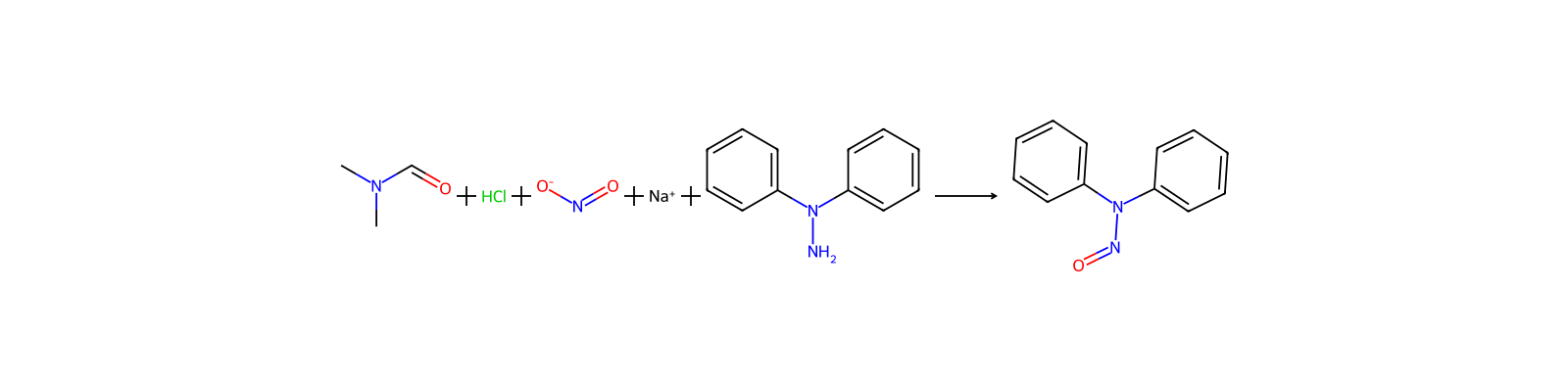
The ... evidence for in vitro metabolic conversion of a (carcinogen-mutagen) 1,1-disubstituted hydrazine to the corresponding nitrosamine is presented. The superoxide radical which is generated by reduced nicotinamide adenine dinucleotide-cytochrome c reductase is involved in the oxidation of 1,1-diphenylhydrazine to N-nitrosodiphenylamine catalyzed by rat liver microsomes.

A reductive pathway of N-nitroso cmpd may be an alternative mechanism for bioactivation. N-Nitrosodiphenylamine ... could be metabolized to 1,1-diphenylhydrazine, diphenylamine, and probably 1,1,4,4-tetraphenyltetrazane under anaerobic conditions by the following enzyme systems: (1) guinea pig liver 9000 x g supernatant supplemented with reduced nicotinamide adenine dinucleotide and FAD, (2) guinea pig liver microsomes supplemented with reduced nicotinamide adenine dinucleotide, FAD, and a 30-45% ammonium sulfate fraction from guinea pig liver cytosol (sol factor), and (3) xanthine oxidase supplemented with hypoxanthine, FAD, and the sol factor.

For more Metabolism/Metabolites (Complete) data for N-Nitrosodiphenylamine (11 total), please visit the HSDB record page.

MeSH Pharmacological ClassificationSubstances that increase the risk of NEOPLASMS in humans or animals. Both genotoxic chemicals, which affect DNA directly, and nongenotoxic chemicals, which induce neoplasms by other mechanism, are included.
Absorption, Distribution and Excretion · 2 items

Results from a study of rats, rabbits, and guinea pigs receiving 50 mg/kg N-nitrosodiphenylamine through intraperitoneal injection suggested that the rate of excretion of N-nitrosodiphenylamine into the bile and elimination of the chemical from the bile varies among species. Guinea pigs showed the most rapid excretion of N-nitrosodiphenylamine into the bile. Rabbits had the slowest excretion of N-nitrosodiphenylamine into the bile, but the most rapid elimination of the chemical from the bile. Both excretion to and elimination from bile were comparatively slow in the rat. The half-lives for N-nitrosodiphenylamine elimination from bile for these species are as follows: 95 minutes for rabbits, 240 minutes for guinea pigs, and 510 minutes for rats.

The appearance of metabolites in the urine of rats and in the serum of rats and guinea pigs following oral administration provides indirect evidence of gastrointestinal absorption of N-nitrosodiphenylamine. Furthermore, the occurrence of systemic effects in rats and mice in oral studies suggests that N-nitrosodiphenylamine is absorbed through the gastrointestinal tract in these animals

Uses & manufacturing

Uses · 4 items

In the early 1980s, most U.S. rubber manufacturers replaced it with more efficient chemicals. Only one manufacturer in the United States produces N-nitrosodiphenylamine. [ATSDR ToxProfiles]

N-Nitrosodiphenylamine is an effective radical scavenger, and can be used to stabilize monomers, polymers and petroleum products. ln rubber processing, its major use is believed to be as an anti-scorching agent, or vulcanization retarder, during rubber compounding. It works effectively at levels of 0.5-1.0% in a variety of rubbers at processing temperatures, and does not interfere with the action of the organic accelerators at vulcanizing temperatures.

... Used as a staining retarder for natural and synthetic rubbers.

... Intermediate in the manufacture of para-nitrosodiphenylamine and as a rubber processing chemical. The Fischer-Hepp rearrangement of N-nitrosodiphenylamine can be used to produce para-nitrosodiphenylamine, which can be reduced to N-phenyl-para-phenylenediamine, a rubber-processing chemical itself and an intermediate in the manufacture of other rubber-processing chemicals.

U.S. Production · 4 items

(1977) 6.67X10+8 G

(1982) GREATER THAN 4.54X10+5 G

Synthetic production of N-nitrosamines is limited to small quantities, and the only nitrosamine produced in quantities greater than 450 kg/yr is N-nitrosodiphenylamine.

Non-confidential 2016 Chemical Data Reporting (CDR) information on the production and use of chemicals manufactured or imported into the United States. Chemical: Benzenamine, N-nitroso-N-phenyl-: National Aggregate Production Volumes: 92,298 lbs (2011).

Methods of Manufacturing... Prepared by the reaction of nitrous acid with diphenylamine; this is believed to be the method for its commercial production.
Formulations/PreparationsN-Nitrosodiphenylamine is available in the USA as an orange-brown, amorphous solid typically containing 96% active ingredient, 0.1% ash, and with a melting range of 64-67 /deg C/.
Use ClassificationChemical Classes -> Nitrosamines/ethers/alcohols
General Manufacturing Information · 2 items

Benzenamine, N-nitroso-N-phenyl-: ACTIVE

N-Nitrosodiphenylamine has been reported to synergize the effects of halogen-containing flame retardants used in polymers but no evidence was found that it is used commercially for that purpose.

Applications · 2 items

UsesN-Nitrosodiphenylamine is the N-nitroso analogue of diphenylamine that was once used as a rubber additive but is no longer due to undesirable carcinogenic effects (1). N-Nitrosodiphenylamine may have potential carcinogenic activity and is currently classified as a probable carcinogen by EPA with genetic toxicity (2,3). Drinking water contaminant candidate list 3 (CCL 3) compound as per United States Environmental Protection Agency (EPA), environmental, and food contaminants.

General DescriptionN-nitrosodiphenylamine appears as yellow to brown or orange powder or flakes or a black solid. Insoluble in water and denser in water. Hence sinks in water. (NTP, 1992)

Upstream & downstream products

Upstream raw materials

Diphenylamine

Downstream products

4-Aminodiphenylamine4-Aminodiphenylamine

Additional notes

DefinitionChEBI: N-Nitrosodiphenylamine is a member of phenylhydrazines. It is an industrial compound that formerly used as a vulcanization retarder in the rubber industry.