
1,2,3-Trifluoro-4-nitrobenzene
Completing data — refresh the page later to see the latest

Basic information
- CAS
771-69-7- Standard SMILES
O=[N+]([O-])c1ccc(F)c(F)c1F- InChIKey
ARCACZWMYGILNI-UHFFFAOYSA-N- Molecular formula
- C6H2F3NO2
- Average molar mass
- 177.08 g/mol
- Monoisotopic mass
- 177.00376296
Names & identifiers
- Preferred name
- 1,2,3-Trifluoro-4-nitrobenzene
- IUPAC
- 1,2,3-trifluoro-4-nitrobenzene
- English name
- 1,2,3-Trifluoro-4-nitrobenzene
- Molecular formula
- C6H2F3NO2
- Molecular weight
- 177.08
Names & synonyms
1,2,3-Trifluoro-4-nitrobenzene771-69-72,3,4-Trifluoronitrobenzene4-Nitro-1,2,3-trifluorobenzene2,3,4-trifluoro-1-nitrobenzeneBenzene, 1,2,3-trifluoro-4-nitro-NKN86LZ8MMEINECS 212-238-4ARCACZWMYGILNI-UHFFFAOYSA-DTXSID30227889RefChem:71426DTXCID30150380
Show more names
1,2,3-Trifluoro-4-ni4-chloro-2-fluroaniline4-Trifluoronitrobenzene3,4,5 TRIFLUORONITROBENZEN2,3,4-TRIFLUORONITROBRNZENE1,2,3-Trifluor-4-nitrobenzol2,3-Trifluoro-4-nitrobenzene1,2,3-Trifluoro-4-nitrobenzen
212-238-4ARCACZWMYGILNI-UHFFFAOYSA-NInChI=1/C6H2F3NO2/c7-3-1-2-4(10(11)12)6(9)5(3)8/h1-2HMFCD00041546Trifluoronitrobenzene1,2,3-trifluoro-4-nitro-benzene2,3,4-TrifluornitrobenzeneUNII-NKN86LZ8MM
Database identifiers
- CAS
771-69-7- PubChem CID
- 69871
- DTXSID
DTXSID30227889- UNII
- NKN86LZ8MM
- EC Number
- 212-238-4
- Nikkaji
- J106.079A
Properties
Computed structural propertiesFilling in
- XLogP
- 2.1
- Topological polar surface area
- 45.8 Ų
- Hydrogen bond donors
- 0
- Hydrogen bond acceptors
- 5
- Rotatable bonds
- 0
- Heavy atoms
- 12
- Formal charge
- 0
- Complexity
- 184
Physicochemical properties
- Boiling point
- 92 °C/20 · 92 °C/20 mmHg (lit.)
- Density
- 1.541 g/mL · 1.541 g/mL at 25 °C (lit.)
- refractive index
- 20 · n20/D 1.492(lit.)
- Flash point
- 200 °F · 200 °F
- storage temp.
- Sealed in dry,Room Temperature
- form
- clear liquid
- color
- Light yellow to Yellow to Orange
- Specific Gravity
- 1.541 · 1.541
- BRN
- 2449746 · 2449746
- InChI
- InChI=1S/C6H2F3NO2/c7-3-1-2-4(10(11)12)6(9)5(3)8/h1-2H
- InChIKey
- ARCACZWMYGILNI-UHFFFAOYSA-N
- SMILES
- C1(F)=CC=C([N+]([O-])=O)C(F)=C1F
- CAS DataBase Reference
- 771 · 771-69-7(CAS DataBase Reference)
- FDA UNII
- 86 LZ8MM · NKN86LZ8MM
- UNSPSC Code
- 12352100 · 12352100
Safety & regulation
Safety information is for reference only and does not replace the supplier’s Safety Data Sheet (SDS), applicable regulations, or professional assessment.
GHS classification
GHS Classification
Danger
H302 (100%): Harmful if swallowed [Warning Acute toxicity, oral]
P260, P261, P262, P264, P264+P265, P270, P271, P272, P280, P301+P317, P302+P352, P304+P340, P305+P351+P338, P316, P317, P319, P321, P330, P332+P317, P333+P317, P337+P317, P361+P364, P362+P364, P403+P233, P405, and P501 (click each P-code to see the statement)
Aggregated GHS information provided per 83 reports by companies from 7 notifications to the ECHA C&L Inventory. Each notification may be associated with multiple companies.
Hazard information
Hazard Classes and CategoriesAcute Tox. 4 (100%)
Safety data
- PPE
- Eyeshields, Faceshields, Gloves, type ABEK (EN14387) respirator filter
- wgk
- 3
- ridadr
- UN2810
- hs_code
- 29042090
- risk_code
- 20/21/22-36/37/38
- Signal word
- Warning
- Symbol(GHS)
- GHS07
- hazard_code
- Xn,Xi
- hazard_note
- Irritant
- safety_code
- 26-36/37/39-24/25
- hazard_class
- 6.1
- Storage Class
- 10 - Combustible liquids
- packing_group
- III
- target organs
- Respiratory system
Chemistry & industry
Applications
Uses2,3,4-Trifluoronitrobenzene is a useful research chemical.
Uses2,3,4-Trifluoronitrobenzene was employed as starting reagent in the synthesis of ofloxacin. It was also used in the synthesis of the third generation quinolones antibacterial drugs.
General Description2,3,4-Trifluoronitrobenzene is a fluoronitrobenzene and its biotransformation under methanogenic conditions has been studied by semicontinuous and batch tests. 2,3,4-Trifluoronitrobenzene is an important pharmaceutical intermediate.
Upstream & downstream products
Upstream raw materials
Related reactions
119 records


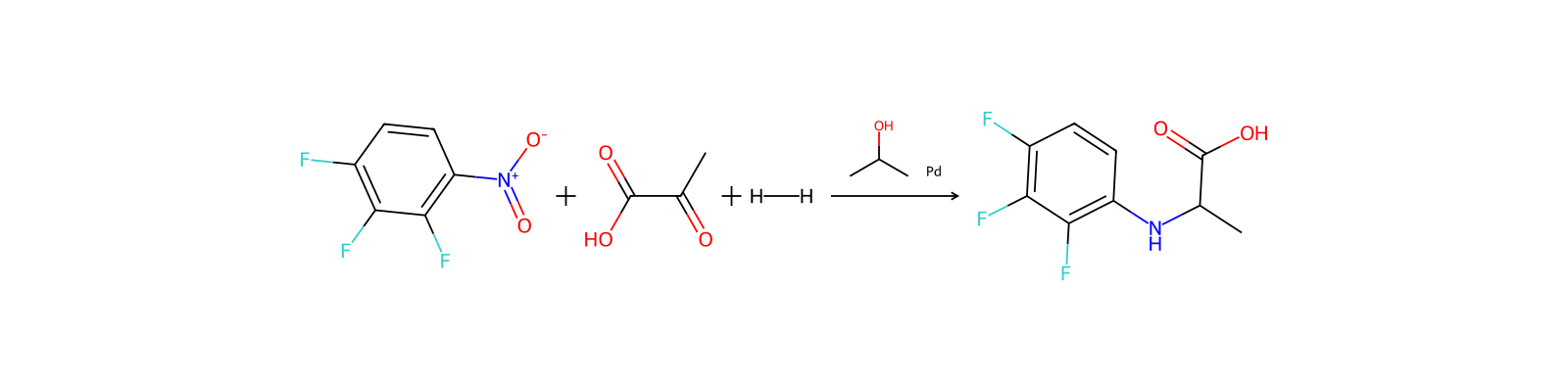


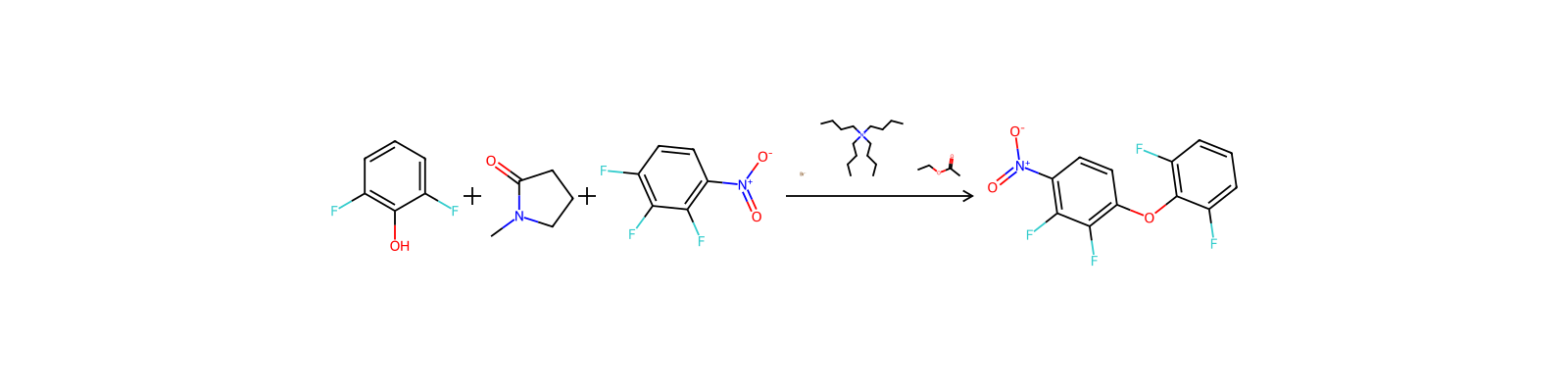
Compound notes
Loading…