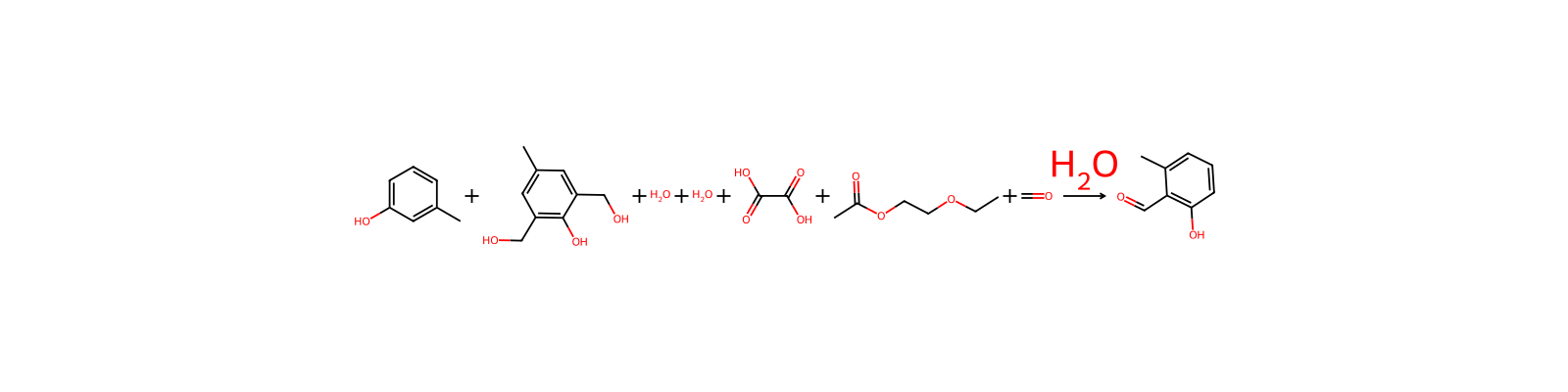
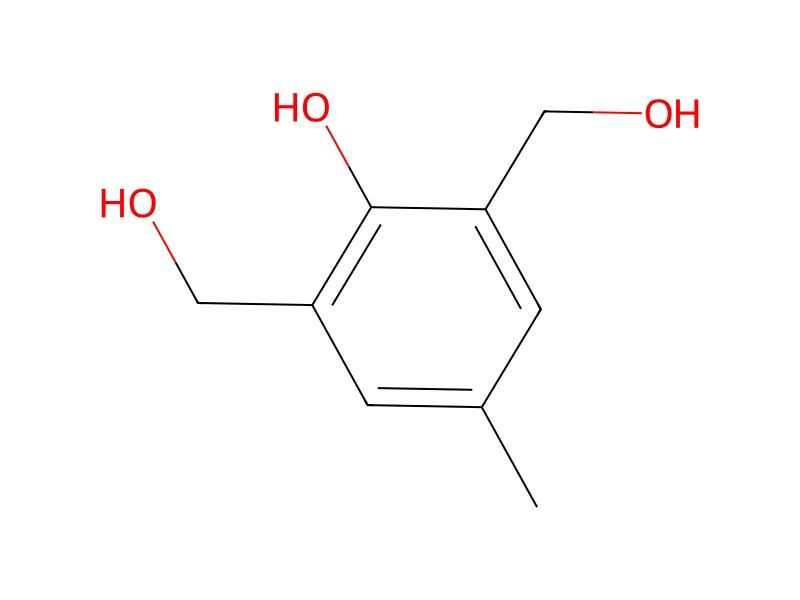
Basic information
- CAS
91-04-3- Standard SMILES
Cc1cc(CO)c(O)c(CO)c1- InChIKey
KUMMBDBTERQYCG-UHFFFAOYSA-N- Molecular formula
- C9H12O3
- Average molar mass
- 168.19 g/mol
- Monoisotopic mass
- 168.07864424
Names & identifiers
- Preferred name
- 2,6-Dimethylol-p-cresol
- IUPAC
- 2,6-bis(hydroxymethyl)-4-methylphenol
- English name
- 2,6-Bis(hydroxymethyl)-p-cresol
- Molecular formula
- C9H12O3
- Molecular weight
- 168.19
Names & synonyms
2,6-Bis(hydroxymethyl)-p-cresol91-04-32,6-Bis(hydroxymethyl)-4-methylphenol2,6-Dimethylol-p-cresol2-Hydroxy-5-methyl-1,3-benzenedimethanol1,3-BENZENEDIMETHANOL, 2-HYDROXY-5-METHYL-2,6-Dimethylol-4-methylphenol2,6-Di(hydroxymethyl)-p-cresolNSC 15838alpha1,alpha,2-TrihydroxymesityleneEINECS 202-036-4BRN 1240237
Show more names
(2-Hydroxy-5-Methyl-1,3-phenylene)diMethanol2,6-BIS(HYDROXYMETHYL)-4-CRESOL3,5-bis(hydroxymethyl)-p-cresolAKOS BC-1882AKOS BBS-00000256RARECHEM AL BD 0246
Q99HT08S5NDML-PC.alpha.1,.alpha.3-Mesitylenediol, 2-hydroxy-NSC-1583826DMPCalpha(sup 1),alpha(sup 3),2-Trihydroxymesitylenealpha1,alpha3-Mesitylenediol, 2-hydroxy-DTXSID2059017
Database identifiers
- CAS
91-04-3- PubChem CID
- 7039
- DTXSID
DTXSID2059017- UNII
- Q99HT08S5N
- EC Number
- 202-036-4
- Nikkaji
- J182.075C
Properties
Computed structural properties
- XLogP
- 0.7
- Topological polar surface area
- 60.7 Ų
- Hydrogen bond donors
- 3
- Hydrogen bond acceptors
- 3
- Rotatable bonds
- 2
- Heavy atoms
- 12
- Formal charge
- 0
- Complexity
- 124
Experimental & physicochemical properties
SpringerMaterials PropertiesChemical shift
Physicochemical properties
- Melting point
- 128 · 128-130 °C(lit.)
- Boiling point
- 237.12 °C · 237.12°C (rough estimate)
- Density
- 1.0812 · 1.0812 (rough estimate)
- vapor density
- 5.8 · 5.8 (vs air)
- refractive index
- 1.4371 · 1.4371 (estimate)
- storage temp.
- Sealed in dry,Room Temperature
- solubility
- very faint turbidity in THF
- form
- powder to crystal
- pka
- 10.2 · 10.20±0.23(Predicted)
- color
- White to Yellow to Orange
- BRN
- 1240237 · 1240237
- InChI
- InChI=1S/C9H12O3/c1-6-2-7(4-10)9(12)8(3-6)5-11/h2-3,10-12H,4-5H2,1H3
- InChIKey
- KUMMBDBTERQYCG-UHFFFAOYSA-N
- SMILES
- C1(CO)=CC(C)=CC(CO)=C1O
- CAS DataBase Reference
- 91 · 91-04-3(CAS DataBase Reference)
- EWG's Food Scores
- 1 · 1
- FDA UNII
- 99 HT08S5N · Q99HT08S5N
- NIST Chemistry Reference
- 1 · A1,a3-mesityllenediol, 2-hydroxy-(91-04-3)
- EPA Substance Registry System
- 1 · 1,3-Benzenedimethanol, 2-hydroxy-5-methyl- (91-04-3)
- UNSPSC Code
- 12352100 · 12352100
- NACRES
- 22 · NA.22
- Symbol(GHS)
- 7 · GHS07
- Signal word
- Warning
- Hazard statements
- 315 · H315-H319-H335
- Precautionary statements
- 261 · P261-P264-P271-P280-P302+P352-P305+P351+P338
- target organs
- Respiratory system
- PPE
- 95 · dust mask type N95 (US), Eyeshields, Gloves
- Hazard Codes
- Xi
- Risk Statements
- 36 · 36/37/38
- Safety Statements
- 26 · 26-37/39
- WGK Germany
- 3 · 3
- RTECS
- 6440000 · CZ6440000
- Hazard Note
- Irritant
- TSCA
- TSCA listed
- HS Code
- 29072990 · 29072990
- Storage Class
- 11 · 11 - Combustible Solids
- Hazard Classifications
- 2 Skin · Eye Irrit. 2Skin Irrit. 2STOT SE 3
Safety & regulation
GHS classification
GHS Classification
This chemical does not meet GHS hazard criteria for 2.1% (1 of 47) of reports.
Warning
H315 (97.9%): Causes skin irritation [Warning Skin corrosion/irritation]
P261, P264, P264+P265, P271, P280, P302+P352, P304+P340, P305+P351+P338, P319, P321, P332+P317, P337+P317, P362+P364, P403+P233, P405, and P501 (click each P-code to see the statement)
Aggregated GHS information provided per 47 reports by companies from 6 notifications to the ECHA C&L Inventory. Each notification may be associated with multiple companies.
Hazard information
Regulatory InformationChemical: 1,3-Benzenedimethanol, 2-hydroxy-5-methyl-
Hazard Classes and CategoriesSkin Irrit. 2 (97.9%)
Safety data
- PPE
- dust mask type N95 (US), Eyeshields, Gloves
- wgk
- 3
- tsca
- TSCA listed
- rtecs
- CZ6440000
- hs_code
- 29072990
- risk_code
- 36/37/38
- Signal word
- Warning
- Symbol(GHS)
- GHS07
- hazard_code
- Xi
- hazard_note
- Irritant
- safety_code
- 26-37/39
- Storage Class
- 11 - Combustible Solids
- target organs
- Respiratory system
- Hazard statements
- H315-H319-H335
- Hazard Classifications
- Eye Irrit. 2Skin Irrit. 2STOT SE 3
- Precautionary statements
- P261-P264-P271-P280-P302+P352-P305+P351+P338
Chemistry & industry
Uses & manufacturing
General Manufacturing Information1,3-Benzenedimethanol, 2-hydroxy-5-methyl-: ACTIVE
Applications
Uses2,6-Bis(hydroxymethyl)-p-cresol was used as a bridging ligand in binuclear oxovanadium(V) compound, which on exposure to white light and aerial oxygen forms an oligomeric compound.
Preparation methods
PreparationThe synthesis method for 2,6-Bis(hydroxymethyl)-p-cresol is as follows:Aqueous formaldehyde (21.5 g, 37%) is added to a solution of p-cresol (10.8 g, 0.1 mol) and NaOH (5.0 g) in HO (20 mL).The mixture is stirred at room temperature for 24 hours.The mixture is filtered and washed with saturated aqueous NaCl (100 mL).The resulting salt is dissolved in water (400 mL) and neutralized with acetic acid.Pale pink crystals are obtained and filtered.The crystals are washed with H2O and dissolved in hot ethyl acetate (40 mL).The solution is dried over Na2SO4 and filtered while still hot.The solution is concentrated to 27 mL and recrystallized overnight.The product crystals are filtered and washed with cold ethyl acetate.The crystals are air dried.
Upstream & downstream products
Upstream raw materials
Downstream products
Suppliers100 total
梯希爱(上海)化成工业发展有限公司021-67121386 · [email protected]
武汉敬康恩生物医药科技有限公司13720134139 086-15871494362 13720134139 · [email protected]
成都彼样生物科技有限公司18108052721 · [email protected]
上海腾准生物科技有限公司19821570922 · [email protected]
温州共赢化学有限公司+86-0086-577-64498589 +86-15355981851 · [email protected]
普善实业(陕西)有限公司029-81310890 18165209495 · [email protected]
武汉问津化学科技有限公司13517196568 · [email protected]
湖北云镁科技有限公司027-59206672 18995657604 · [email protected]
Dayang Chem (Hangzhou) Co.,Ltd.+86-0571-88938639 17705817739 · [email protected]
毕佳索(上海毕得医药科技股份有限公司)400-6005915 · [email protected]
Syntechem Co.,Ltd[email protected]
上海迈瑞尔生化科技有限公司4006356688 18621169109 · [email protected]
北京华威锐科化工有限公司0757-86329057 18934348241 · [email protected]
武汉易泰科技有限公司上海分公司18930552037 · [email protected]
阿法埃莎(中国)化学有限公司400-6106006 · [email protected]
安耐吉化学&3A(安徽泽升科技股份有限公司)400-0056266 · [email protected]
广东元丰化学试剂有限公司0751-2829979 13318593351 · [email protected]
欧利希(湖北)医药科技有限公司17316404525 17316404525 · [email protected]
广东方信生物科技有限公司0751-2838688 13376594225 · [email protected]
上海钰康生物科技有限公司+86-18930848214 +86-021-56762820 · [email protected]
上海相辉医药科技有限公司13761987713; 13761987713 · [email protected]
深圳药缘研发中心有限公司23284190 13421666688 · [email protected]
嘉兴市艾森化工有限公司0573-85285100 18627885956 · [email protected]
上海忝晴化工有限公司+8613816254020 · [email protected]
湖北广奥生物科技有限公司027-02702759223056 18162699093 · [email protected]
常州鹏森福新材料科技有限公司18961278960 · [email protected]
湖北恩星生物科技有限公司16621771607 · [email protected]
云南西力生物技术股份有限公司0871-65217109 · [email protected]
山东西亚化学有限公司13355009207 13355009207 · [email protected]
玛雅试剂+86 (573) 82222445 (0)18006601000 452520369 · [email protected]
天津希恩思生化科技有限公司400 638 7771 · [email protected]
TargetMol 中国(陶术生物)400-821-0310 15002144251 · [email protected]
上海遐瑞医药科技有限公司+86 21 61551611
江苏艾康生物医药研发有限公司025-66113011 13913916777 · [email protected]
TCI AMERICA800-4238616 · [email protected]
TOKYO CHEMICAL INDUSTRY CO., LTD.03-36680489 · [email protected]
TCI Europe320-37350700 · [email protected]
HBCChem, Inc.+1-510-219-6317 · [email protected]
上海毕得医药科技股份有限公司400-164-7117 18317119277 · [email protected]
北京奥秘佳得医药科技有限公司+86-13522808617 · [email protected]
重庆星灿医药科技有限公司13594048950 19923294409 · [email protected]
天津普西唐生物医药科技有限公司010-60605840 · [email protected]
杭州宇昊化工科技有限公司0571-82693216 · [email protected]
上海鑫圭生物科技有限公司15121041756 · [email protected]
上海麦克林生化科技股份有限公司15221275939 15221275939 · [email protected]
上海嵩爰化工科技有限公司010-1234567 18521000990 · [email protected]
上海拓目化工有限公司13391076197 · [email protected]
武汉海昕药物研究有限公司027-81525288 18086100502 · [email protected]
Sigma-Aldrich西格玛奥德里奇(上海)贸易有限公司021-61415566 800-8193336 · [email protected]
佛山市贝司化工有限公司19584229548 15218144393 · [email protected]
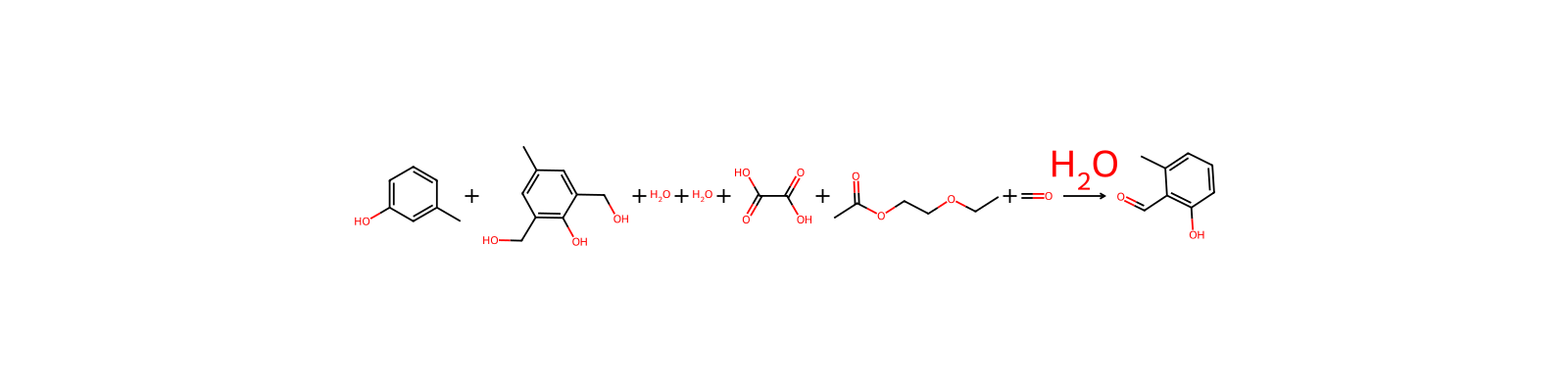
Related reactions
45 records


Compound notes
Loading…