Reaction equation
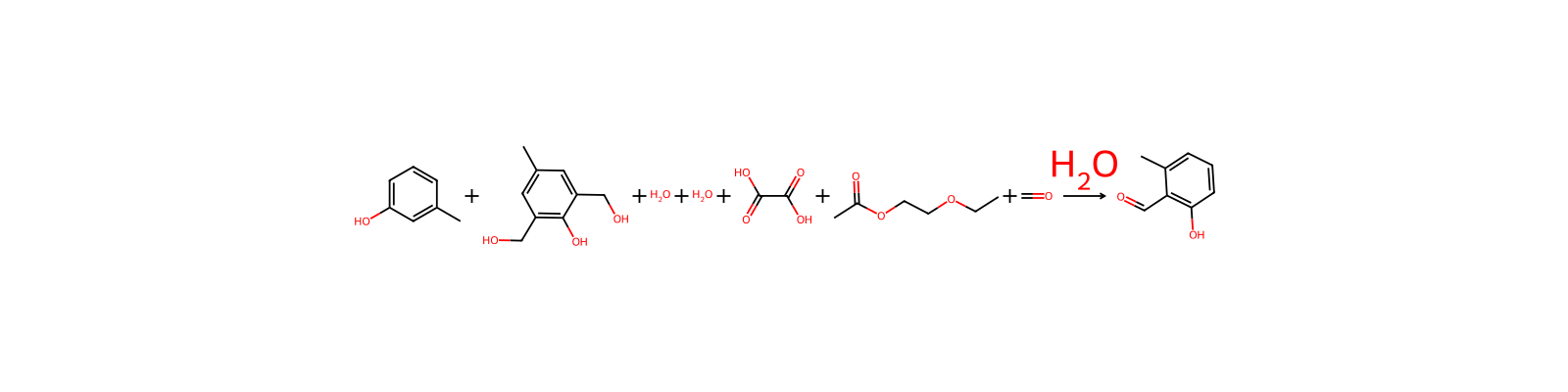
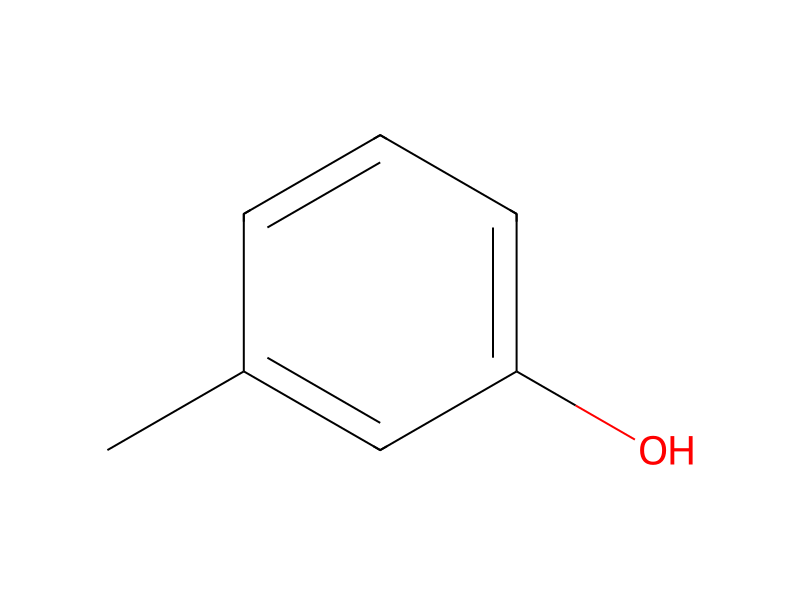
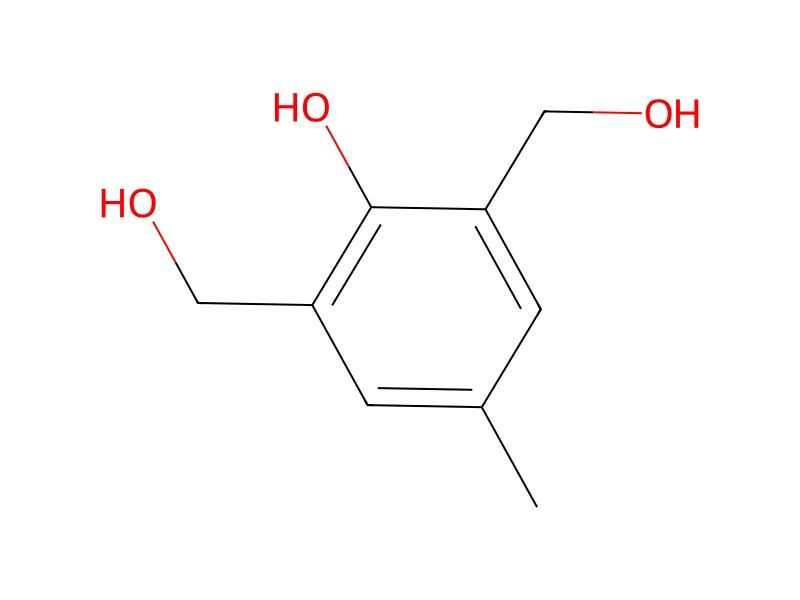
[CH:1]1[C:6]([OH:7])=[CH:5][CH:4]=[CH:3][C:2]=1[CH3:8].[OH:9][CH2:10]C1C(O)=C(CO)C=C(C)C=1.O.O.C(O)(=O)C(O)=O.CCOCCOC(C)=O.C=O>O>[C:1]1([CH:10]=[O:9])[C:2]([CH3:8])=[CH:3][CH:4]=[CH:5][C:6]=1[OH:7]Participants
Reactant 5



Product 1

Reagents, catalysts & solvents 1

Conditions
- Temperature
- 70 °C
Procedure
A phenolic resin rich in alternating phenolic copolymer block segments was formed by reacting a mixture of 519.0 g of 99 percent pure m-cresol, 538.2 g of 97 percent pure 2,6-bis(hydroxymethyl)-p-cresol and 20 g oxalic acid dihydrate in a solvent mixture of 40 ml deionized water and 200 ml ethyl cellosolve acetate. The reaction mixture was heated to about 70° C. to initiate the reaction forming the alternating copolymer. At 102° C., 32.6 g of 36.9 percent formaldehyde was added in 8 minutes to the reaction mixture to form substantially m-cresol formaldehyde block segments and to chemically bond these segments to the previously formed alternating copolymer. After heating the mixture at reflux for three hours, the amount of heat was increased to remove the water and solvent by distillation. Partial vacuum was applied at about 220° C. and gradually increased to 4 mm Hg to remove the unreacted monomers. Maximum mixture temperature during vacuum stripping was about 226° C. The copolymer was poured from the reaction kettle and allowed to cool. About 840 g of a block copolymer having a number average molecular weight number, Mn, of 1241 Daltons and a Tg of 112° C. were obtained.
Workup
- customwas formed
- additionin a solvent mixture of 40 ml
- customforming the alternating copolymer
Sources & evidence
- ORD record
- ord-ddf67391f0ff4ca08b0e3124c9c5cf53
- Source dataset
- uspto-grants-1998_03
- Patent number
- US05723254
Linked notes
Loading…