HomeMCPWorkbenchSkills
HomeWorkbenchNotificationsMe
llms.txt · MCP GuidePrivacy Policy · Terms of Service · Supportv1.8.3
  1. Home
  2. /Reaction

Potassium Phosphate, Tribasic → (S)-2-[4-(3-cyclopropyl-2-fluoro-phenoxy)-2-oxo-2,5-dihydro-pyrrol-1-yl]-4-methyl-pentanoic acid ethyl ester

HRID 19167
Print

Reaction equation

HRID 19167 reaction equation
CC1(C)O[C@H](CN2C=CC(N[C:14](=[O:35])[C@@H:15]([N:20]3[CH2:24][C:23]([O:25][C:26]4[CH:31]=[CH:30][CH:29]=[C:28](Br)[C:27]=4[F:33])=[CH:22][C:21]3=[O:34])[CH2:16][CH:17]([CH3:19])[CH3:18])=N2)CO1.C1(P([CH:50]2[CH2:55][CH2:54]CCC2)C2CCCCC2)CCCCC1.P([O-])([O-])([O-])=[O:57].[K+].[K+].[K+].[CH:64]1(B(O)O)[CH2:66]C1>C1(C)C=CC=CC=1.C(OCC)(=O)C.C([O-])(=O)C.[Pd+2].C([O-])(=O)C.O>[CH2:66]([O:57][C:14](=[O:35])[C@@H:15]([N:20]1[CH2:24][C:23]([O:25][C:26]2[CH:31]=[CH:30][CH:29]=[C:28]([CH:54]3[CH2:55][CH2:50]3)[C:27]=2[F:33])=[CH:22][C:21]1=[O:34])[CH2:16][CH:17]([CH3:18])[CH3:19])[CH3:64]
ParticipantsConditionsProcedureWorkupSources & evidenceReaction notes

Participants

9

Reactant 4

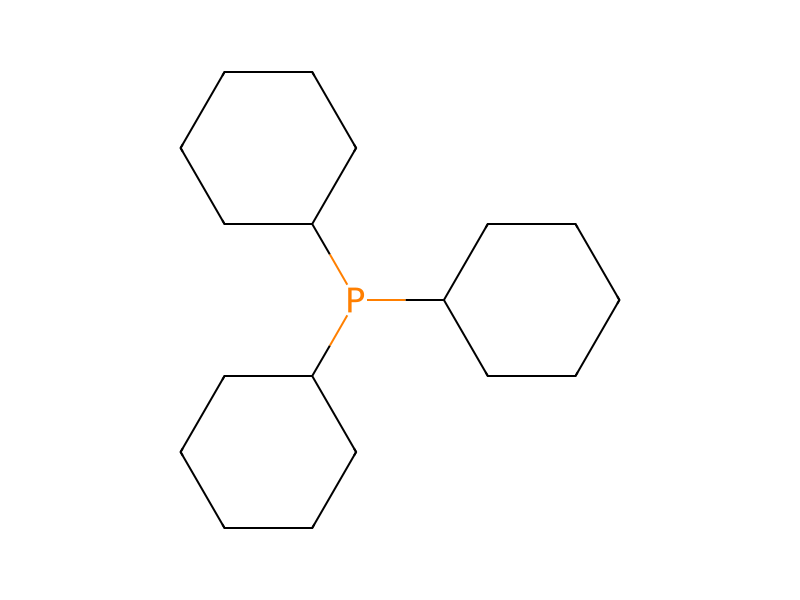
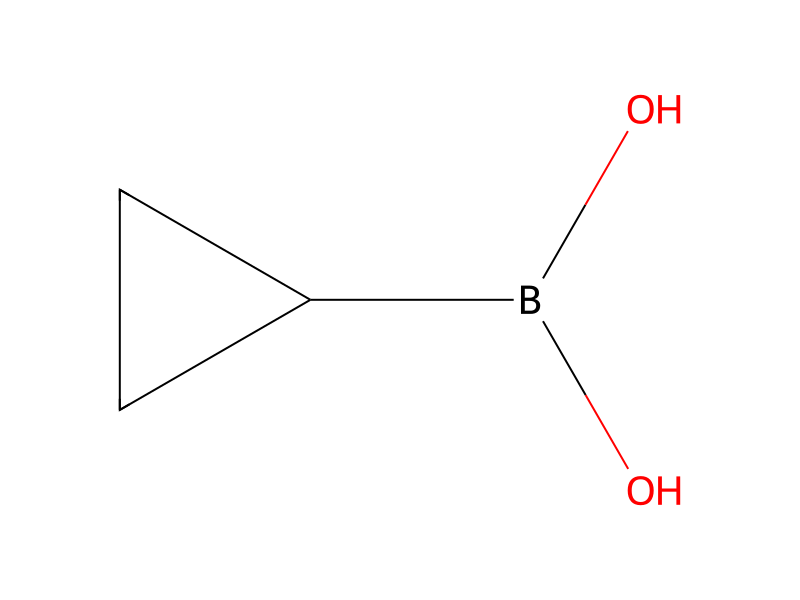
HCID 62657Potassium Phosphate, TribasicHCID 75806TricyclohexylphosphineHCID 2760897Cyclopropylboronic acidHCID 44252757(S)-2-[4-(3-bromo-2-fluoro-phenoxy)-2-oxo-2,5-dihydro-pyrrol-1-yl]-4-methyl-pentanoic acid [1-((R)-2,2-dimethyl-[1,3]dioxolan-4-yl-methyl)-1 H-pyrazol-3-yl]-amide

Product 1

HCID 66895408
(S)-2-[4-(3-cyclopropyl-2-fluoro-phenoxy)-2-oxo-2,5-dihydro-pyrrol-1-yl]-4-methyl-pentanoic acid ethyl ester
Yield 710.3%

Reagents, catalysts & solvents 4

HCID 167845palladium(II) acetateCatalystHCID 962WaterSolventHCID 1140TolueneSolventHCID 8857Ethyl AcetateSolvent

Conditions

Temperature
130 °C

Procedure

To a mixture of (S)-2-[4-(3-bromo-2-fluoro-phenoxy)-2-oxo-2,5-dihydro-pyrrol-1-yl]-4-methyl-pentanoic acid ethyl ester (prepared as in Example 128, 1.2 g, 2.9 mmol), palladium(II) acetate (0.035 g, 0.15 mmol), tricyclohexylphosphine (0.084 g, 0.30 mmol), and tripotassium phosphate (2.0 g, 9.0 mmol) in toluene (8 mL) was added cyclopropylboronic acid (0.325 g, 3.8 mmol) and water (0.2 mL) and the resulting mixture was sparged with nitrogen and transferred to an Emry Optimizer microwave reaction vessel and heated at 130° C., for 2.5 h. The mixture was taken up in ethyl acetate and dilute hydrochloric acid and separated. The organic phase was washed with a saturated sodium bicarbonate solution, a saturated sodium chloride solution and dried over sodium sulfate. The mixture was filtered and evaporated and the residue purified by ISCO flash chromatography (Teledyne Isco RediSep Flash Column 80 g, 0% to 50% ethyl acetate/hexanes) which afforded (S)-2-[4-(3-cyclopropyl-2-fluoro-phenoxy)-2-oxo-2,5-dihydro-pyrrol-1-yl]-4-methyl-pentanoic acid ethyl ester (0.80 g, 74%) as a pale yellow solid.

Workup

  1. customthe resulting mixture was sparged with nitrogen
  2. customtransferred to an Emry Optimizer microwave reaction vessel
  3. customdilute hydrochloric acid and separated
  4. washThe organic phase was washed with a saturated sodium bicarbonate solution
  5. dry with materiala saturated sodium chloride solution and dried over sodium sulfate
  6. filtrationThe mixture was filtered
  7. customevaporated
  8. customthe residue purified by ISCO flash chromatography (Teledyne Isco RediSep Flash Column 80 g, 0% to 50% ethyl acetate/hexanes) which

Sources & evidence

ORD record
ord-b771612cc67d44dfa8803230e4435e56
Source dataset
uspto-grants-2010_06
DOI
10.6084/m9.figshare.5104873.v1
Patent number
US07741327B2

Reaction notes

On this pageParticipantsConditionsProcedureWorkupSources & evidenceReaction notes