Reaction equation

Br[C:2]1[CH:3]=[C:4]([NH2:9])[CH:5]=[CH:6][C:7]=1[F:8].[CH:10]1(B(O)O)[CH2:12][CH2:11]1.P([O-])([O-])([O-])=O.[K+].[K+].[K+].C1(P(C2CCCCC2)C2CCCCC2)CCCCC1>C1(C)C=CC=CC=1.O.C([O-])(=O)C.[Pd+2].C([O-])(=O)C>[CH:10]1([C:2]2[CH:3]=[C:4]([NH2:9])[CH:5]=[CH:6][C:7]=2[F:8])[CH2:12][CH2:11]1Participants
8
Reactant 4

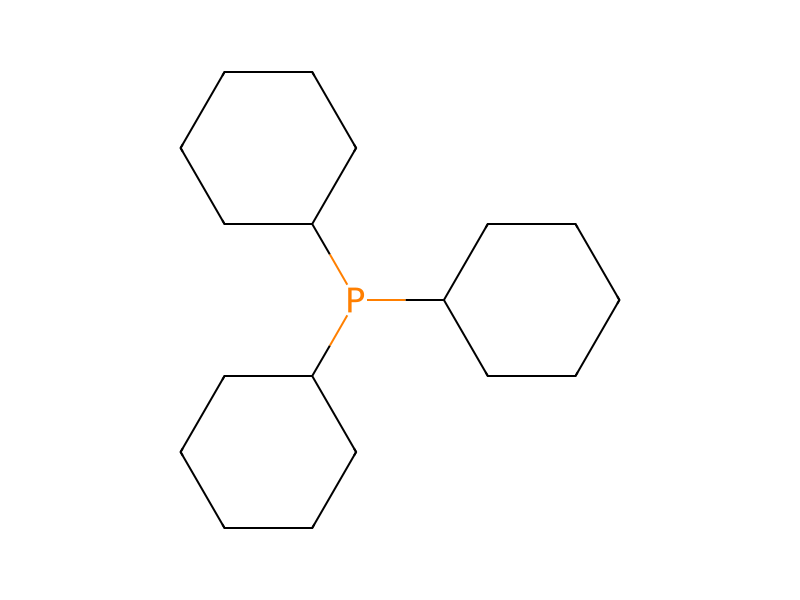
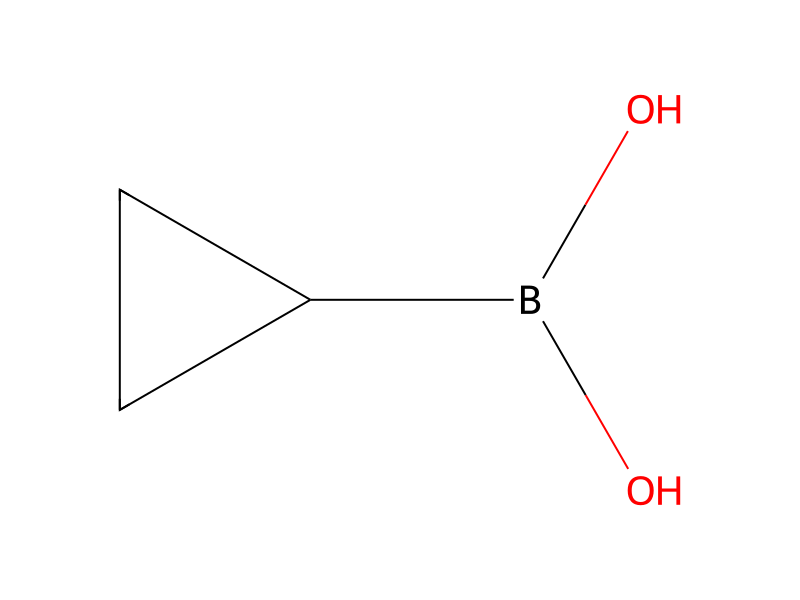

Product 1

Reagents, catalysts & solvents 3



Conditions
- Temperature
- 100 °C
Procedure
To a solution of 3-bromo-4-fluorophenylamine (synthesized as described in J. Org. Chem. 1981, 46, 2280-2286) (415 mg, 2.18 mmol), cyclopropyl boronic acid (244 mg, 2.84 mmol), potassium phosphate (1.62 g, 7.64 mmol), and tricyclohexyl phosphine (61 mg, 0.22 mmol) in toluene (10 ml) and water (0.5 ml) was added palladium acetate (25 mg, 0.11 mmol) and the reaction mixture was heated to 100° C. overnight. The mixture was then cooled to RT and diluted with water and extracted with ether. The organic phases were combined, washed with brine, dried (MgSO4), filtered and concentrated in vacuo to give a residue which was purified by flash column chromatography to give 3-cyclopropyl-4-fluorophenylamine (210 mg, 64%). MS (ISP) 152.2 (M+H)+.
Workup
- temperatureThe mixture was then cooled to RT
- extractionextracted with ether
- washwashed with brine
- dry with materialdried (MgSO4)
- filtrationfiltered
- concentrationconcentrated in vacuo
- customto give a residue which
- customwas purified by flash column chromatography
Sources & evidence
- ORD record
- ord-14b57bd0666e45aab253ce6c60b843fa
- Source dataset
- uspto-grants-2010_06
- Patent number
- US07745477B2
Linked notes
Loading…