Glutaric anhydride
Completing data — refresh the page later to see the latest

Basic information
- CAS
108-55-4- Standard SMILES
O=C1CCCC(=O)O1- InChIKey
VANNPISTIUFMLH-UHFFFAOYSA-N- Molecular formula
- C5H6O3
- Average molar mass
- 114.1 g/mol
- Monoisotopic mass
- 114.03169405
Overview
Glutaric anhydride is a cyclic dicarboxylic anhydride that is oxane which carries oxo groups at positions 2 and 6. It is used as an intermediate in the production of pharmaceuticals, corrosion inhibitors, and polymers (E.g. epoxy polyesters). It is a cyclic dicarboxylic anhydride and a member of oxanes. It is functionally related to a glutaric acid.
Names & identifiers
- Preferred name
- Glutaric anhydride
- IUPAC
- oxane-2,6-dione
- English name
- Glutaric anhydride
- Molecular formula
- C5H6O3
- Molecular weight
- 114.1
Names & synonyms
GLUTARIC ANHYDRIDE108-55-4Dihydro-2H-pyran-2,6(3H)-dioneoxane-2,6-dionePentanedioic anhydrideGlutaric acid anhydridePyroglutaric acid2H-Pyran-2,6(3H)-dione, dihydro-Pentanedioic acid anhydrideAnhydrid kyseliny glutaroveDTXSID504436263OFI15S80
Show more names
GANGlutamic AnhydrideTETRAHYDROPYRAN-2,6-DIONEutaric anhydrideGlutaric anhydridpyroglutaricacidGlutarsureanhydrid
NSC-166402H-Pyran-2,6(3H)-dione, dihydroDTXCID3024362CHEBI:167482RefChem:143700203-593-6MFCD00006679dihydro-3H-pyran-2,6-dione
Database identifiers
- CAS
108-55-4- PubChem CID
- 7940
- DTXSID
DTXSID5044362- ChEMBL
CHEMBL3188341- ChEBI
CHEBI:167482- UNII
- 63OFI15S80
- EC Number
- 203-593-6
- Nikkaji
- J49.215I
Properties
Computed structural propertiesFilling in
- XLogP
- -0.1
- Topological polar surface area
- 43.4 Ų
- Hydrogen bond donors
- 0
- Hydrogen bond acceptors
- 3
- Rotatable bonds
- 0
- Heavy atoms
- 8
- Formal charge
- 0
- Complexity
- 114
Experimental & physicochemical properties
PolymersPlastics & Rubber -> Acid Anhydrides, Cyclic
SpringerMaterials PropertiesBoiling point
Physical Description
CBI; Dry Powder
Off-white flakes or crystals; [Alfa Aesar MSDS]
Physicochemical properties
- Melting point
- 50 · 50-55 °C (lit.)
- Boiling point
- 150 °C/10 · 150 °C/10 mmHg (lit.)
- Density
- 1 · 1,411 g/cm3
- bulk density
- 990 kg/m3 · 990kg/m3
- vapor pressure
- 0.05 hPa · 0.05 hPa (50 °C)
- refractive index
- 1.463 · 1.4630 (estimate)
- Flash point
- 230 °F · >230 °F
- storage temp.
- 30 °C · Store below +30°C.
- solubility
- Chloroform, Ethyl Acetate
- form
- Crystalline Powder or Crystals
- color
- White to off-white
- Water Solubility
- hydrolysis
- Sensitive
- Moisture Sensitive
- BRN
- 110051 · 110051
- InChI
- 1S/C5H6O3/c6-4-2-1-3-5(7)8-4/h1-3H2
- InChIKey
- VANNPISTIUFMLH-UHFFFAOYSA-N
- SMILES
- O=C1CCCC(=O)O1
- CAS DataBase Reference
- 108 · 108-55-4(CAS DataBase Reference)
- EWG's Food Scores
- 1 · 1
- FDA UNII
- 63 OFI15S80 · 63OFI15S80
- NIST Chemistry Reference
- 2 H-Pyran-2,6 · 2H-Pyran-2,6(3H)-dione, dihydro-(108-55-4)
- EPA Substance Registry System
- 2 H-Pyran-2,6 · 2H-Pyran-2,6(3H)-dione, dihydro- (108-55-4)
- UNSPSC Code
- 12352115 · 12352115
- NACRES
- 23 · NA.23
- Symbol(GHS)
- 5 · GHS05,GHS07
- Signal word
- Danger
- Hazard statements
- 302 · H302-H315-H318
- Precautionary statements
- 264 · P264-P270-P280-P301+P312-P302+P352-P305+P351+P338
- Hazard Codes
- Xn
- Risk Statements
- 21 · 21/22-37/38-41-36/37/38-20/21/22
- Safety Statements
- 26 · 26-36/39-36/37/39-36
- RIDADR
- 3261 · 3261
- WGK Germany
- 3 · 3
- RTECS
- 3850000 · MA3850000
- F
- 2 · 2-21
- Autoignition Temperature
- 320 °C · 320 °C
- TSCA
- TSCA listed
- HazardClass
- 8 · 8
- PackingGroup
- Ⅲ
- HS Code
- 29171990 · 29171990
- Storage Class
- 11 · 11 - Combustible Solids
- Hazard Classifications
- 4 OralEye · Acute Tox. 4 OralEye Dam. 1Skin Irrit. 2
- REACH Registrations
- Active
Safety & regulation
Safety information is for reference only and does not replace the supplier’s Safety Data Sheet (SDS), applicable regulations, or professional assessment.
GHS classification
GHS Classification
This chemical does not meet GHS hazard criteria for 0.4% (1 of 270) of reports.
Danger
H302 (98.5%): Harmful if swallowed [Warning Acute toxicity, oral]
P261, P264, P264+P265, P270, P271, P280, P301+P317, P302+P352, P304+P340, P305+P354+P338, P317, P319, P321, P330, P332+P317, P362+P364, P403+P233, P405, and P501 (click each P-code to see the statement)
Aggregated GHS information provided per 270 reports by companies from 13 notifications to the ECHA C&L Inventory. Each notification may be associated with multiple companies.
Hazard information
Regulatory Information
Chemical: 2H-Pyran-2,6(3H)-dione, dihydro-
2H-Pyran-2,6(3H)-dione, dihydro- is listed on the EPA's Chemical Data Reporting (CDR) system. Manufacturers and importers of 2H-Pyran-2,6(3H)-dione, dihydro- are required to report information about their production and use of this chemical to the EPA under the Toxic Substances Control Act (TSCA). (40 eCFR Part 711)
Status: Active Update: 27-09-2021 https://echa.europa.eu/registration-dossier/-/registered-dossier/11130
Glutaric anhydride: Does not have an individual approval but may be used under an appropriate group standard
Hazards Summary
Causes somnolence, necrotic gastrointestinal changes, and diffuse hepatitis in oral lethal-dose studies of rats; [RTECS] An irritant that may cause serious eye injury; Toxic by ingestion and skin absorption; [Alfa Aesar MSDS] See Acid Anhydrides.
Hazard Classes and CategoriesAcute Tox. 4 (98.5%)
Toxicology
Adverse EffectsOccupational hepatotoxin - Secondary hepatotoxins: the potential for toxic effect in the occupational setting is based on cases of poisoning by human ingestion or animal experimentation.
Safety data
- F
- 2-21
- wgk
- 3
- tsca
- TSCA listed
- rtecs
- MA3850000
- ridadr
- 3261
- hs_code
- 29171990
- risk_code
- 21/22-37/38-41-36/37/38-20/21/22
- Signal word
- Danger
- Symbol(GHS)
- GHS05,GHS07
- hazard_code
- Xn
- safety_code
- 26-36/39-36/37/39-36
- hazard_class
- 8
- Storage Class
- 11 - Combustible Solids
- packing_group
- Ⅲ
- Hazard statements
- H302-H315-H318
- REACH Registrations
- Active
- Hazard Classifications
- Acute Tox. 4 OralEye Dam. 1Skin Irrit. 2
- Autoignition Temperature
- 320 °C
- Precautionary statements
- P264-P270-P280-P301+P312-P302+P352-P305+P351+P338
Chemistry & industry
Uses & manufacturing
UsesUsed to make fine chemicals; [ExPub: ECHA REACH Registrations]
U.S. Production2023: 75,000 - <500,000 lb
Consumer UsesFragrance
Industry UsesNot Known or Reasonably Ascertainable
General Manufacturing Information
Not Known or Reasonably Ascertainable
2H-Pyran-2,6(3H)-dione, dihydro-: ACTIVE
Applications
UsesGlutaric anhydride is used in the production of glutaric acid family pharmaceuticals. Its derivatives are also used in certain corrosion inhibitors, some surfactants and metal finishing compounds. It is also used in the production of polymers, particularly modified unsaturated linear (epoxy) polyesters and as a raw material in the manufacture of flavors. It is also used in improvement of electrode/electrolyte interfaces in High-Voltage Spinel Lithium-Ion batteries as an electrolyte additive.
Upstream & downstream products
Upstream raw materials
Downstream products
Additional notes
DefinitionChEBI: Glutaric anhydride is a cyclic dicarboxylic anhydride that is oxane which carries oxo groups at positions 2 and 6. It is used as an intermediate in the production of pharmaceuticals, corrosion inhibitors, and polymers (E.g. epoxy polyesters). It is a cyclic dicarboxylic anhydride and a member of oxanes. It is functionally related to a glutaric acid.
Related reactions
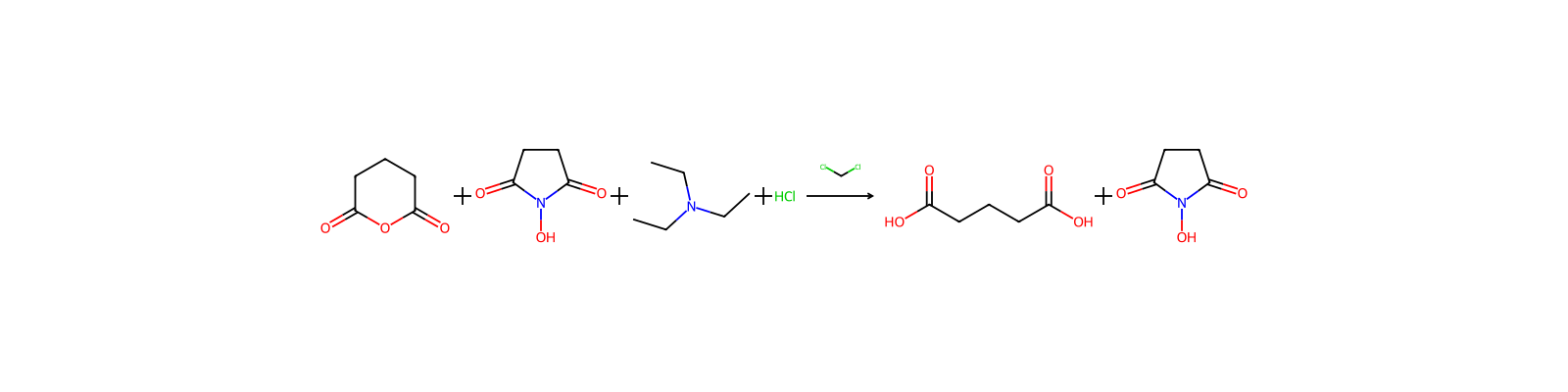
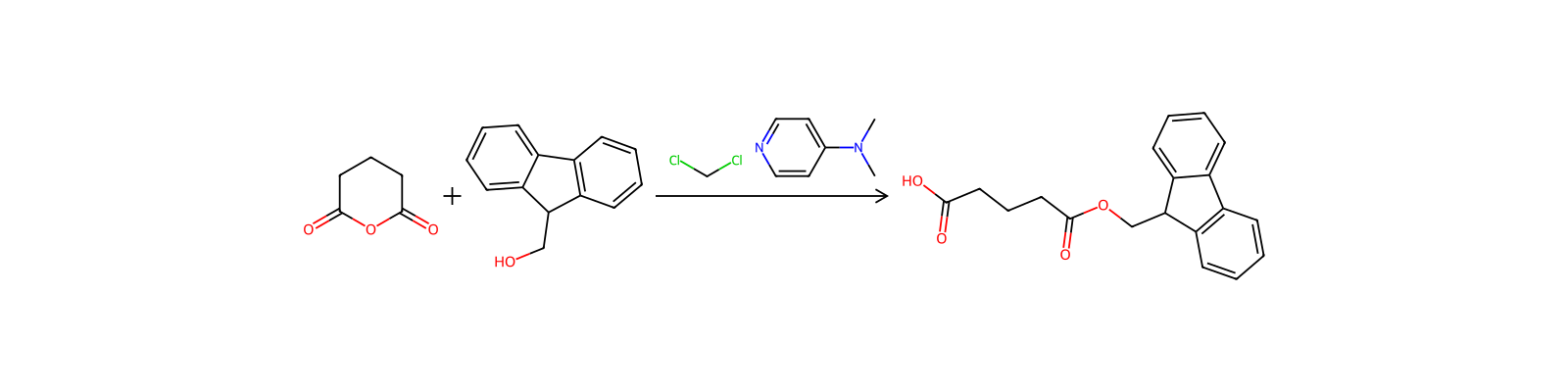
292 records



Compound notes
Loading…