
Cyclohexyl bromide

Basic information
- CAS
108-85-0- Standard SMILES
BrC1CCCCC1- InChIKey
AQNQQHJNRPDOQV-UHFFFAOYSA-N- Molecular formula
- C6H11Br
- Average molar mass
- 163.06 g/mol
- Monoisotopic mass
- 162.00441
Names & identifiers
- Preferred name
- Cyclohexyl bromide
- IUPAC
- bromocyclohexane
- English name
- Bromocyclohexane
- Molecular formula
- C6H11Br
- Molecular weight
- 163.06
Names & synonyms
BROMOCYCLOHEXANE108-85-0Cyclohexyl bromideCyclohexane, bromo-1-BromocyclohexaneYA0UMS4RNYEINECS 203-622-2NSC 11207AI3-28585NSC-11207CYCLOHEXYL BROMIDE [MI]DTXSID1044148
Show more names
CyclohexylbromidBromocylohexanebromo-cyclohexanBroMocyclohexanceCyclohexane,bromo-Cyelohexyl bromideBromocyclohexane>
1BromocyclohexaneCyclohexane, bromoRefChem:580805DTXCID9024148203-622-2InChI=1/C6H11Br/c7-6-4-2-1-3-5-6/h6H,1-5Hbromo-cyclohexaneMFCD00003819
Database identifiers
- CAS
108-85-0- PubChem CID
- 7960
- DTXSID
DTXSID1044148- UNII
- YA0UMS4RNY
- EC Number
- 203-622-2
- Nikkaji
- J5.082B
Properties
Computed structural properties
- XLogP
- 3.2
- Topological polar surface area
- 0 Ų
- Hydrogen bond donors
- 0
- Hydrogen bond acceptors
- 0
- Rotatable bonds
- 0
- Heavy atoms
- 7
- Formal charge
- 0
- Complexity
- 46.1
Experimental & physicochemical properties
Chemical ClassesOther Classes -> Halogenated Cyclic Hydrocarbons
SpringerMaterials PropertiesCoriolis coupling
LogP3.2
Vapor Pressure3.62 [mmHg]
Physical DescriptionLiquid with a penetrating odor; [Merck Index] Colorless liquid with an unpleasant odor; [Acros Organics MSDS]
Physicochemical properties
- Melting point
- 57 °C · −57 °C (−71 °F; 216 K)
- Boiling point
- 166 to · 166 to 167 °C (331 to 333 °F; 439 to 440 K)
- Density
- 1.324 g/cm3 · 1.324 g/cm3
- vapor density
- 5.62 · 5.62 (vs air)
- refractive index
- 1.5 · 1.50
- Flash point
- 62.8 °C · 62.8 °C (145.0 °F; 335.9 K)
- storage temp.
Safety & regulation
Safety information is for reference only and does not replace the supplier’s Safety Data Sheet (SDS), applicable regulations, or professional assessment.
GHS classification
GHS Classification
This chemical does not meet GHS hazard criteria for 22.2% (2 of 9) of reports.
Warning
H227 (11.1%): Combustible liquid [Warning Flammable liquids]
P210, P261, P264, P264+P265, P271, P273, P280, P302+P352, P304+P340, P305+P351+P338, P319, P321, P332+P317, P337+P317, P362+P364, P370+P378, P391, P403, P403+P233, P405, and P501 (click each P-code to see the statement)
Aggregated GHS information provided per 9 reports by companies from 5 notifications to the ECHA C&L Inventory. Each notification may be associated with multiple companies.
Hazard information
Regulatory Information
Chemical: Cyclohexane, bromo-
REACH registered substance: Bromocyclohexane (EC: 203-622-2)
Cyclohexane, bromo-: Does not have an individual approval but may be used under an appropriate group standard
Hazards SummaryMay cause irritation; [Acros Organics MSDS] See Chlorocyclohexane. See 1-Bromohexane.
Hazard Classes and CategoriesFlam. Liq. 4 (11.1%)
Safety data
- F
- 8
- PPE
- Eyeshields, Gloves, type ABEK (EN14387) respirator filter
- wgk
- 3
- tsca
- TSCA listed
- rtecs
- GU7171700
- hs_code
- 2903890090
- risk_code
- 36/37/38-20-18-52
- Signal word
- Warning
Chemistry & industry
Uses & manufacturing
UsesUsed as an intermediate; [REPROTOX]
General Manufacturing InformationCyclohexane, bromo-: ACTIVE
Applications
UsesBromocyclohexane has been used to study the ionization of equatorial and axial conformational isomers of the chair-bromocyclohexane using vacuum ultraviolet mass-analyzed threshold ionization spectroscopy.
General DescriptionAxial conformer of bromocyclohexane forms inclusion complexes with 9,9′-bianthryl and exhibits a weak 1,3 diaxial Cl...H interaction. It participates in the alkylation reaction of of para-xylene in the presence of graphite as catalyst to yield hydrocarbon.
Preparation methods
PreparationBromocyclohexane is synthesized by the reaction of cycloethanol and hydrobromic acid.
Upstream & downstream products
Upstream raw materials
Downstream products
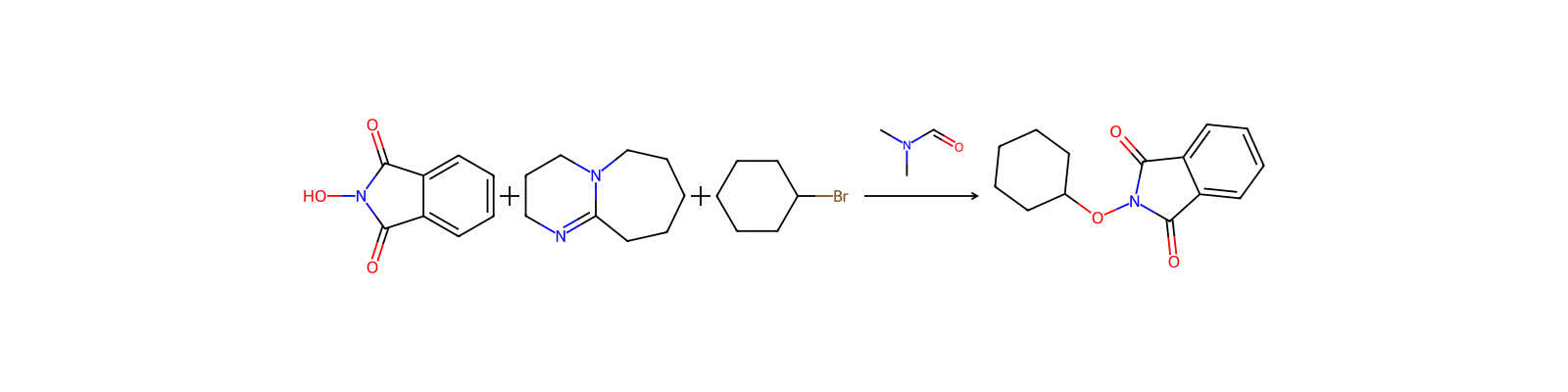
Related reactions
224 records



Compound notes
Loading…