
2,5-Dimethyl-2,5-hexanediol
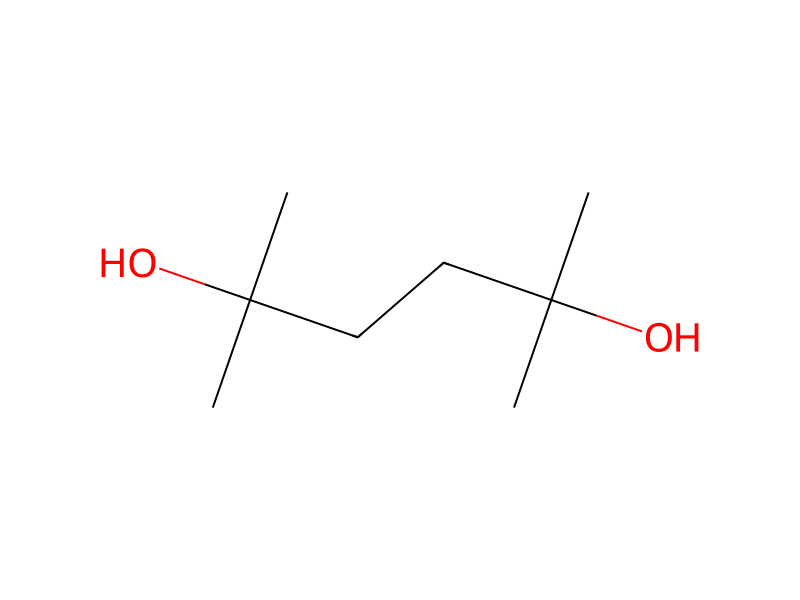
Basic information
- CAS
110-03-2- Standard SMILES
CC(C)(O)CCC(C)(C)O- InChIKey
ZWNMRZQYWRLGMM-UHFFFAOYSA-N- Molecular formula
- C8H18O2
- Average molar mass
- 146.23 g/mol
- Monoisotopic mass
- 146.13067981
Names & identifiers
- Preferred name
- 2,5-Dimethyl-2,5-hexanediol
- IUPAC
- 2,5-dimethylhexane-2,5-diol
- English name
- 2,5-Dimethyl-2,5-hexanediol
- Molecular formula
- C8H18O2
- Molecular weight
- 146.23
Names & synonyms
2,5-DIMETHYL-2,5-HEXANEDIOL110-03-22,5-Dimethylhexane-2,5-diol2,5-Hexanediol, 2,5-dimethyl-Dimethylhexanediol2,5-DIHYDROXY-2,5-DIMETHYLHEXANEDTXSID0026830UNII-3PNB2S8721HSDB 5395NSC 5595NSC-5595EINECS 203-731-5
Show more names
1,1,4,4-Tetramethyl-1,4-butanediolnsc55955-hexanediol-2,5-hexanedioLDiMethyl-2,5-hexan2,5-Dimethyl-2,5-hex
AI3-20685DTXCID1068302,5-DIMETHYL-2,5-HEXANEDIOL [HSDB]EC 203-731-5RefChem:829362,5Dimethylhexane2,5diol2,5Hexanediol, 2,5dimethyl1,1,4,4Tetramethyl1,4butanediol
Database identifiers
- CAS
110-03-2- PubChem CID
- 8031
- DTXSID
DTXSID0026830- ChEMBL
CHEMBL1476371- UNII
- 3PNB2S8721
- EC Number
- 203-731-5
- Nikkaji
- J126.489C
Properties
Computed structural properties
- XLogP
- 0.8
- Topological polar surface area
- 40.5 Ų
- Hydrogen bond donors
- 2
- Hydrogen bond acceptors
- 2
- Rotatable bonds
- 3
- Heavy atoms
- 10
- Formal charge
- 0
- Complexity
- 91.8
Experimental & physicochemical properties
PolymersOther Classes -> Alcohols and Polyols, Other
Density0.898 G/ML @ 20 °C
Color/Form
PRISMS FROM ETHYL ACETATE, FLAKES FROM PETROLEUM ETHER
WHITE CRYSTALS
Solubility
SOL IN WATER; VERY SOL IN ALCOHOL, HOT BENZENE, CHLOROFORM
SOL IN ACETONE; INSOL IN CARBON TETRACHLORIDE, KEROSENE
Boiling Point118 °C @ 15 MM HG
Melting Point92 °C
Physical Description
Large Crystals; CBI
White solid; [HSDB] Crystalline flakes; [MSDSonline]
Physicochemical properties
- Melting point
- 86 · 86-90 °C (lit.)
- Boiling point
- 214 · 214-215 °C (lit.)
- Density
- 0 · 0,898 g/cm3
- vapor pressure
- 0.18 Pa · 0.18Pa at 20℃
- refractive index
- 1.4429 · 1.4429 (estimate)
- Flash point
- 126 °C · 126 °C
- storage temp.
- Keep in dark place,Sealed in dry,Room Temperature
- form
- Crystalline Flakes
- pka
- 15.07 · 15.07±0.29(Predicted)
- color
- White
- Odor
- mild camphor
- Water Solubility
- SOLUBLE
- BRN
- 1361437 · 1361437
- Henry's Law Constant
- 1.4 · 1.4×101 mol/(m3Pa) at 25℃, Zhang et al. (2010)
- InChI
- 1S/C8H18O2/c1-7(2,9)5-6-8(3,4)10/h9-10H,5-6H2,1-4H3
- InChIKey
- ZWNMRZQYWRLGMM-UHFFFAOYSA-N
- SMILES
- CC(C)(O)CCC(C)(C)O
- LogP
- 0.21 at · 0.21 at 23℃
- CAS DataBase Reference
- 110 · 110-03-2(CAS DataBase Reference)
- FDA UNII
- 3 PNB2S8721 · 3PNB2S8721
- NIST Chemistry Reference
- 2 · 2,5-Hexanediol, 2,5-dimethyl-(110-03-2)
- EPA Substance Registry System
- 2 · 2,5-Hexanediol, 2,5-dimethyl- (110-03-2)
- UNSPSC Code
- 12352100 · 12352100
- NACRES
- 22 · NA.22
- Symbol(GHS)
- 7 · GHS07
- Signal word
- Warning
- Hazard statements
- 319 · H319
- Precautionary statements
- 264 · P264-P280-P305+P351+P338-P337+P313
- PPE
- 95 · Eyeshields, Gloves, type N95 (US)
- Safety Statements
- 22 · 22-24/25
- WGK Germany
- 3 · 3
- TSCA
- TSCA listed
- HS Code
- 29053980 · 29053980
- Storage Class
- 11 · 11 - Combustible Solids
- Hazard Classifications
- 2 · Eye Irrit. 2
- Hazardous Substances Data
- 110 · 110-03-2(Hazardous Substances Data)
- REACH Registrations
- Active
Safety & regulation
Safety information is for reference only and does not replace the supplier’s Safety Data Sheet (SDS), applicable regulations, or professional assessment.
GHS classification
GHS Classification
Danger
H315 (16.5%): Causes skin irritation [Warning Skin corrosion/irritation]
P264, P264+P265, P280, P302+P352, P305+P354+P338, P317, P321, P332+P317, and P362+P364 (click each P-code to see the statement)
Aggregated GHS information provided per 133 reports by companies from 4 notifications to the ECHA C&L Inventory. Each notification may be associated with multiple companies.
Hazard information
Regulatory Information
Chemical: 2,5-Hexanediol, 2,5-dimethyl-
2,5-Hexanediol, 2,5-dimethyl- is listed on the EPA's Chemical Data Reporting (CDR) system. Manufacturers and importers of 2,5-Hexanediol, 2,5-dimethyl- are required to report information about their production and use of this chemical to the EPA under the Toxic Substances Control Act (TSCA). (40 eCFR Part 711)
SP - indicates a substance that is identified in a proposed Significant New Use Rule.
REACH registered substance: 2,5-dimethylhexane-2,5-diol (EC: 203-731-5)
2,5-Dimethyl-2,5-hexanediol: Does not have an individual approval but may be used under an appropriate group standard
Hazards SummaryMay cause irritation; [MSDSonline]
Hazard Classes and CategoriesSkin Irrit. 2 (16.5%)
Safety data
- PPE
- Eyeshields, Gloves, type N95 (US)
- wgk
- 3
- tsca
- TSCA listed
- hs_code
- 29053980
- Signal word
- Warning
- Symbol(GHS)
- GHS07
- safety_code
- 22-24/25
- Storage Class
- 11 - Combustible Solids
- Hazard statements
- H319
- REACH Registrations
- Active
- Hazard Classifications
- Eye Irrit. 2
- Precautionary statements
- P264-P280-P305+P351+P338-P337+P313
- Hazardous Substances Data
- 110-03-2(Hazardous Substances Data)
Chemistry & industry
Uses & manufacturing
Uses
Used as a chemical intermediate; [HSDB]
CHEMICAL INTERMEDIATE
U.S. Production2023: 400,000 - <550,000 lb
Industry UsesCatalyst
Methods of ManufacturingPROBABLY BY REDUCTION OF 2,5-DIMETHYL-3-HEXYNE-2,5-DIOL IN THE PRESENCE OF A PALLADIUM OR PLATINUM CATALYST
General Manufacturing Information
All Other Chemical Product and Preparation Manufacturing
2,5-Hexanediol, 2,5-dimethyl-: ACTIVE
Applications
Uses2,5-Dimethyl-2,5-hexanediol is used as an intermediate in the preparation of 2.5-Dimethyl-2.5-bis(tertbutyl-peroxy)hexane to produce polyethylene copolymers and polyethylene rubbers. It is also could be used to prepared nickel-containing Complex Reducing Agents (termed NiCRA)[1].
Uses2,5-Dimethyl-2,5-hexanediol was used in the synthesis of six- and seven-membered heterocyclic boron compounds containing intramolecular N-B bond.
General Description2,5-Dimethyl-2,5-hexanediol on heteropoly acid catalyzed dehydration yields cyclic ethers via stereospecific intramolecular SN2 mechanism. It reacts with nitriles in concentrated sulfuric acid to yield Δ1-pyrrolines.
Preparation methods
PreparationThe raw materials 2,5-Dimethyl-3-hexyne-2,5-diol (37.4 g, 263 mmol), ethyl acetate (60 mL), and Pd/C catalyst (0.285 g, 2.63 mmol, 1 mol %) were added to an autoclave. The hydrogen gas was slowly added to 10 bar. When the hydrogenation reaction was performed for 12 hours and then removed the hydrogen gas. Finally, 2,5-Dimethyl-2,5-hexanediol is obtained by purification.
Upstream & downstream products
Upstream raw materials
Downstream products
Related reactions
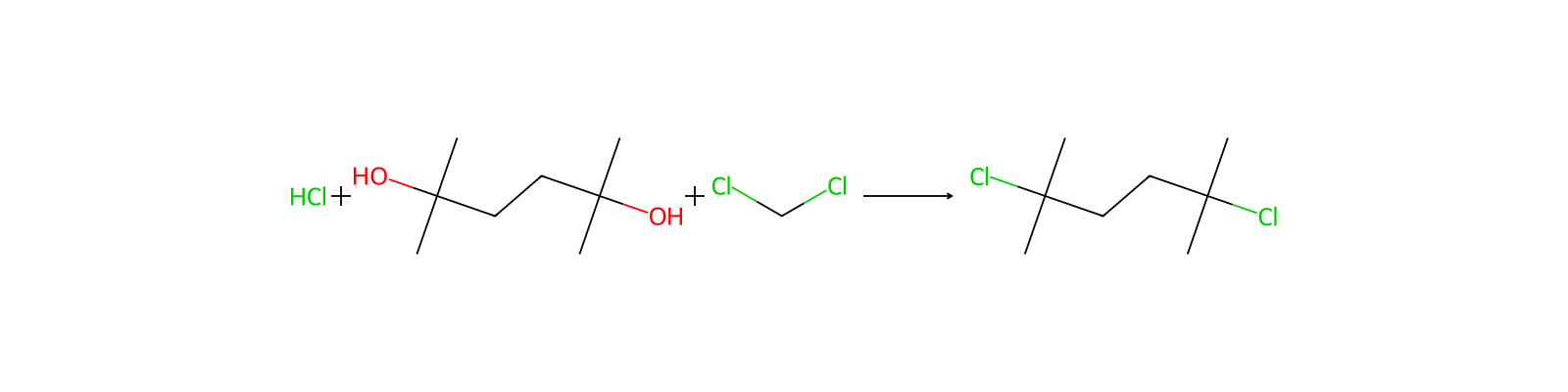
10 records





Compound notes
Loading…