Reaction equation

[CH3:1][C:2]([OH:10])([CH2:4][CH2:5][C:6]([CH3:9])([OH:8])[CH3:7])[CH3:3].[CH:11](=O)[C:12]([CH3:15])([CH3:14])[CH3:13].C1(C)C=CC=CC=1>C1(C)C=CC(S(O)(=O)=O)=CC=1.O>[C:12]([CH:15]1[O:10][C:2]([CH3:3])([CH3:1])[CH2:4][CH2:5][C:6]([CH3:9])([CH3:7])[O:8]1)([CH3:14])([CH3:13])[CH3:11]Participants

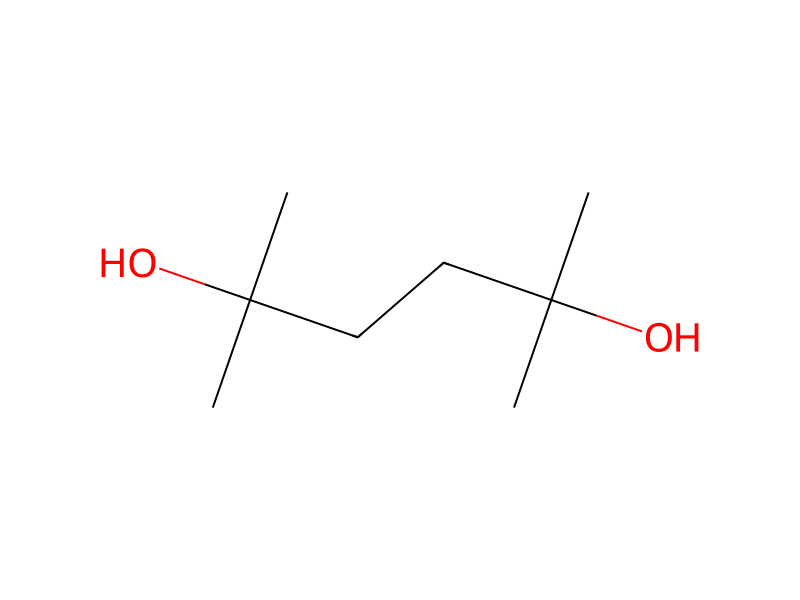




Procedure
A mixture of 730 g (5 mol) of 2,5-dimethylhexane-2,5-diol, 3 g of p-toluenesulfonic acid, 430 g (5 mol) of pivalaldehyde and 1 l of toluene was refluxed for 4 hours (h) during which the water of reaction produced (90 ml) was removed. The reaction mixture was then cooled down to room temperature (RT) and stirred up with 10 ml of 25% strength aqueous sodium hydroxide solution, the phases were separated, the organic phase was washed with a little water until neutral, and the toluene was then removed at 50°-60° C. The residue obtained was fractionated under reduced pressure affording 909 g (4.25 mol) of 2-tert.-butyl-4,4,7,7,-tetramethyl-1,3-dioxacycloheptane (boiling point 54° C./0.2 mbar). This corresponds to a yield of 85% of theory.
Workup
- temperaturewas refluxed for 4 hours (h) during which
- customproduced (90 ml)
- customwas removed
- customthe phases were separated
- washthe organic phase was washed with a little water until neutral, and the toluene
- customwas then removed at 50°-60° C
- customThe residue obtained
Sources & evidence
- ORD record
- ord-03ed008d92b34129a4600f2fd633702e
- Source dataset
- uspto-grants-1987_11
- Patent number
- US04707302
Linked notes
Loading…