
Methylcarbamoyl chloride
Completing data — refresh the page later to see the latest
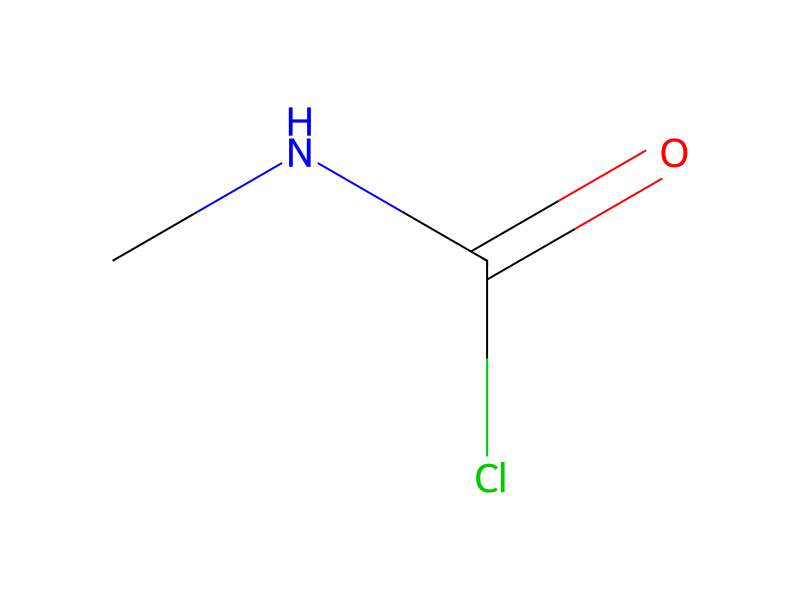
Basic information
- CAS
6452-47-7- Standard SMILES
CNC(=O)Cl- InChIKey
GRRYSIXDUIAUGY-UHFFFAOYSA-N- Molecular formula
- C2H4ClNO
- Average molar mass
- 93.51 g/mol
- Monoisotopic mass
- 92.99814143
Names & identifiers
- Preferred name
- Methylcarbamoyl chloride
- IUPAC
- N-methylcarbamoyl chloride
- English name
- Methylaminoformyl chloride
- Molecular formula
- C2H4ClNO
- Molecular weight
- 93.51
Names & synonyms
6452-47-7Methylcarbamoyl chlorideEINECS 229-253-7NSC 133003DTXSID60214787RefChem:158151DTXCID90137278229-253-7Methylaminoformyl chlorideN-methylcarbamoyl chloridemethylcarbamic chlorideMethylcarbamoylchloride
Show more names
N-MethylchloroformamidemethylamineylformylchloroN-(Chloroformyl)methylamineMethylcarbamic acid chloride
Carbamic chloride, methyl-N-Methylaminoformyl chlorideMethylcarbamic Chloride; N-Methylcarbamoyl Chloride; NSC 133003methylcarbamicchloridemethylcarbamyl chlorideMethylaminoformylchlorideethylaminoformyl chlorideN-Methylcarbamic chloride
Database identifiers
- CAS
6452-47-7- PubChem CID
- 80931
- DTXSID
DTXSID60214787- EC Number
- 229-253-7
- Nikkaji
- J23.393E
Properties
Computed structural propertiesFilling in
- XLogP
- 0.6
- Topological polar surface area
- 29.1 Ų
- Hydrogen bond donors
- 1
- Hydrogen bond acceptors
- 1
- Rotatable bonds
- 0
- Heavy atoms
- 5
- Formal charge
- 0
- Complexity
- 44.9
Physicochemical properties
- Melting point
- 45 °C · 45°C
- Boiling point
- 93 °C · 93°C (dec.)
- Density
- 1.185 · 1.185±0.06 g/cm3(Predicted)
- storage temp.
- 2 · under inert gas (nitrogen or Argon) at 2-8°C
- solubility
- Acetonitrile, Chloroform (Slightly), DMSO
- pka
- 10.67 · 10.67±0.46(Predicted)
- form
- Solid
- color
- White to Off-White
- Stability
- Air Sensitive, Hygroscopic, Moisture Sensitive, Volatile
- InChI
- InChI=1S/C2H4ClNO/c1-4-2(3)5/h1H3,(H,4,5)
- InChIKey
- GRRYSIXDUIAUGY-UHFFFAOYSA-N
- SMILES
- C(Cl)(=O)NC
- CAS DataBase Reference
- 6452 · 6452-47-7(CAS DataBase Reference)
- UNSPSC Code
- 12352200 · 12352200
- NACRES
- 21 · NA.21
Safety & regulation
Safety information is for reference only and does not replace the supplier’s Safety Data Sheet (SDS), applicable regulations, or professional assessment.
GHS classification
GHS Classification
Warning
H302 (100%): Harmful if swallowed [Warning Acute toxicity, oral]
P264, P270, P301+P317, P330, and P501 (click each P-code to see the statement)
Aggregated GHS information provided per 40 reports by companies from 2 notifications to the ECHA C&L Inventory.
Hazard information
Hazard Classes and CategoriesAcute Tox. 4 (100%)
Safety data
- wgk
- WGK 3
- risk_code
- 22
- Signal word
- Warning
- Symbol(GHS)
- GHS07
- hazard_code
- Xn
- Storage Class
- 11 - Combustible Solids
- Hazard statements
- H302
- Hazard Classifications
- Acute Tox. 4 Oral
- Precautionary statements
- P264-P270-P301+P312-P501
Chemistry & industry
Applications
DescriptionMethylcarbamoyl Chloride is used as a reagent in the synthesis of acylprolinamides as a new class of peptide deformylase inhibitors with in vivo antibacterial activity. Methylcarbamoyl Chloride is also used as a reagent in the synthesis of carbamate derivatives as potential dual-binding site acetylcholinesterase inhibitors. The decomposition tail gas hydrogen chloride of Methylaminoformyl chloride is also useful during the cartap synthesis.
UsesMethylaminoformyl chloride can be widely used as an intermediate of carbamate insecticides such as Zhongdingwei, carbofuran, isoprocarb, methomyl, chlorhexidine and carbaryl. Methylaminoformyl chloride is also used as a reagent in the synthesis of carbamate derivatives as potential dual-binding site acetylcholinesterase inhibitors. The decomposition tail gas hydrogen chloride of Methylaminoformyl chloride is also useful during the cartap synthesis.
UsesMethylcarbamoyl Chloride is used as a reagent in the synthesis of acylprolinamides as a new class of peptide deformylase inhibitors with in vivo antibacterial activity. Methylcarbamoyl Chloride is also used as a reagent in the synthesis of carbamate derivatives as potential dual-binding site acetylcholinesterase inhibitors.
Preparation methods
PreparationMethylaminoformyl chloride is prepared by reacting methylamine with phosgene. Reaction equation: CH3NH2+COCl2→CH3NHCOCl. A 40% aqueous solution of methylamine is vaporized, and after drying, it is combined with phosgene at a ratio of 1:1.3 (methanol), methylamine at 4 m3/h, and phosgene at a rate of 8.6 m3/h (content 60%-70%). Preheating into the preheater, the preheating temperature of methylamine is controlled at 220-260°C, and the phosgene is controlled at 200-240°C. The preheated two gases enter the test tube and are synthesized at 280-300°C to obtain gaseous methaqualyl chloride. Then, carbon tetrachloride (or chlorobenzene solution) is circulated and absorbed at 0-20°C to obtain a solution of about 10% of carbamoyl chloride (or chlorobenzene), or cooled to a liquid product after 35-40°C or lower[2,3].
Upstream & downstream products
Related reactions
14 records


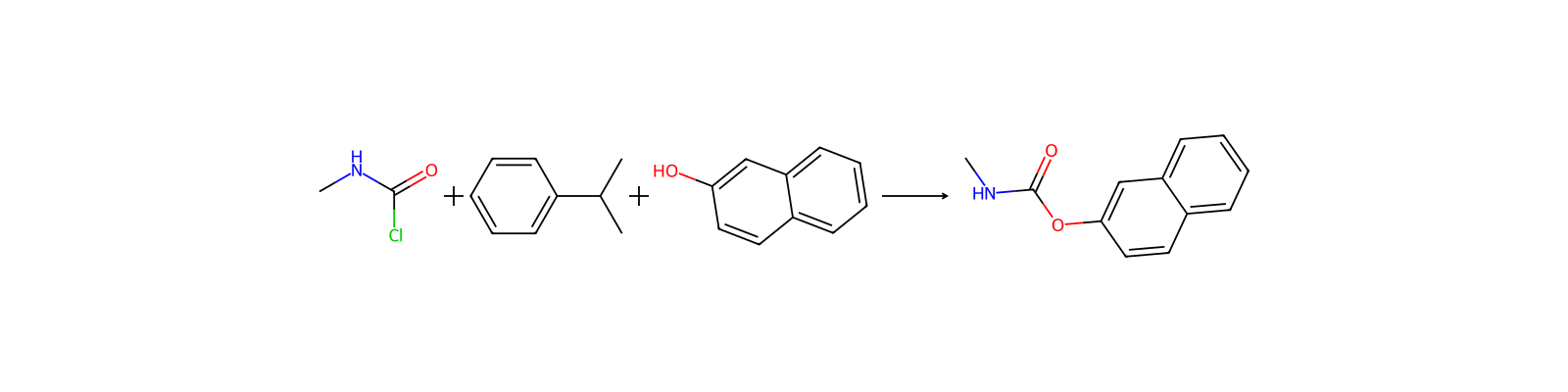


Compound notes
Loading…