
Basic information
- Standard SMILES
O=C(CCCC[C@@H]1SC[C@@H]2NC(=O)N[C@@H]21)NCCCCCC(=O)ON1C(=O)CCC1=O- InChIKey
UVGHPGOONBRLCX-NJSLBKSFSA-N- Molecular formula
- C20H30N4O6S
- Average molar mass
- 454.5 g/mol
- Monoisotopic mass
- 454.18860568
Names & identifiers
- Preferred name
- Nhs-LC-biotin
- IUPAC
- (2,5-dioxopyrrolidin-1-yl) 6-[5-[(3aS,4S,6aR)-2-oxo-1,3,3a,4,6,6a-hexahydrothieno[3,4-d]imidazol-4-yl]pentanoylamino]hexanoate
- English name
- Succinimidyl 6-(biotinamido)hexanoate
- Molecular formula
- C20H30N4O6S
- Molecular weight
- 454.54
Names & synonyms
Succinimidyl 6-(biotinamido)hexanoateNhs-LC-biotinRefChem:853804615-709-672040-63-22,5-Dioxopyrrolidin-1-yl 6-(5-((3aS,4S,6aR)-2-oxohexahydro-1H-thieno[3,4-d]imidazol-4-yl)pentanamido)hexanoateBACHSSuccinimidyl-6-(biotinamido) HexanoateBiotin-X, succinimidyl esterBiotin-C5-NHS EsterMFCD00065502(+)-Biotin-LC-NHS Ester
Show more names
BIOTIN-X-NHSBiotin-LC-NHSBIOTIN-X, SENHS-X-BiotinD-BiotiamideBIOTIN-LC-OSUBiotin-NHS LCNHS-Biotin LC
N-Succinimidyl 6-BiotinamidohexanoateSuccinimidyl-6-biotinamide hexanoateBiotinamidohexanoic acid N-hydroxysuccinimide ester(2,5-dioxopyrrolidin-1-yl) 6-[5-[(3aS,4S,6aR)-2-oxo-1,3,3a,4,6,6a-hexahydrothieno[3,4-d]imidazol-4-yl]pentanoylamino]hexanoateBiotin-amidocaproate-N-hydroxysuccinimide esterBiotinyl-6-aminocaproic acid N-hydroxysuccinimide esterC20H30N4O6SBiotinyl-epsilon-aminohexanoic acid N-hydroxysuccinimide ester
Database identifiers
- CAS
72040-63-2- PubChem CID
- 83874
- DTXSID
DTXSID90992728- EC Number
- 615-709-6
- Nikkaji
- J671.769A
Properties
Computed structural properties
- XLogP
- 0.1
- Topological polar surface area
- 159 Ų
- Hydrogen bond donors
- 3
- Hydrogen bond acceptors
- 7
- Rotatable bonds
- 13
- Heavy atoms
- 31
- Formal charge
- 0
- Complexity
- 702
Physicochemical properties
- Melting point
- 169 · 169-171 °C
- Density
- 1.35 · 1.35±0.1 g/cm3(Predicted)
- storage temp.
- -20 °C · -20°C
- solubility
- 2 O: · H2O: ≤2 mg/mL with sonication
- form
- powder
- pka
- 13.9 · 13.90±0.40(Predicted)
- color
- White to Off-White
- Appearance
- white solid
- Water Solubility
- 2 O: · H2O: ≤2mg/mL (with sonication)DMF: 50mg/mL (Stable up to 2 months in dry DMF.)
- BRN
- 3577403 · 3577403
- Stability
- Moisture Sensitive
- InChIKey
- UVGHPGOONBRLCX-NJSLBKSFSA-N
- SMILES
- C(ON1C(=O)CCC1=O)(=O)CCCCCNC(=O)CCCC[C@H]1[C@@]2([H])NC(=O)N[C@@]2([H])CS1
- CAS DataBase Reference
- 72040 · 72040-63-2(CAS DataBase Reference)
- UNSPSC Code
- 41116133 · 41116133
- NACRES
- 46 · NA.46
- Symbol(GHS)
- 7 · GHS07
- Signal word
- Warning
- Hazard statements
- 302 · H302-H315-H319-H332-H335
- Precautionary statements
- 261 · P261-P280-P305+P351+P338
- PPE
- 95 · Eyeshields, Gloves, type N95 (US)
- Safety Statements
- 24 · 24/25
- WGK Germany
- 3 · 3
- F
- 10 · 10-21
- HS Code
- 29349990 · 29349990
- Storage Class
- 11 · 11 - Combustible Solids
Safety & regulation
GHS classification
GHS Classification
Warning
H302 (100%): Harmful if swallowed [Warning Acute toxicity, oral]
P261, P264, P264+P265, P270, P271, P280, P301+P317, P302+P352, P304+P340, P305+P351+P338, P317, P319, P321, P330, P332+P317, P337+P317, P362+P364, P403+P233, P405, and P501 (click each P-code to see the statement)
The GHS information provided by 1 company from 1 notification to the ECHA C&L Inventory.
Hazard information
Hazard Classes and CategoriesAcute Tox. 4 (100%)
Safety data
- F
- 10-21
- PPE
- Eyeshields, Gloves, type N95 (US)
- wgk
- 3
- hs_code
- 29349990
- Signal word
- Warning
- Symbol(GHS)
- GHS07
- safety_code
- 24/25
- Storage Class
- 11 - Combustible Solids
- Hazard statements
- H302-H315-H319-H332-H335
- Precautionary statements
- P261-P280-P305+P351+P338
Chemistry & industry
Applications
DescriptionBiotin-LC-NHS Ester has an extended spacer arm which helps to minimize steric hindrance. The membrane permeability of this reagent allows it to be used for intracellular labeling. It can react efficiently with primary amino (-NH2) to form stable, irreversible amide bonds.
UsesSuccinimidyl 6-(biotinamido)hexanoate is a biotinylation reagent incorporating an aminocaproyl “spacer”. This can reduce the steric hindrance in binding avidin to some biotinylated compounds when used to biotinylate both the antibody and the carrier in the Protein Avidin-Biotin Capture System. This system avoids the direct interaction of a captured antibody with solid surfaces, such as plastics, which may reduce antigenicity. It has also been used to enhance the detection of DNA on nitrocellulose. Has also been used as a cell surface labelling reagent
UsesA biotinylation reagent incorporating an aminocaproyl pacer This can reduce the steric hindrance in binding avidin to some biotinylated compounds when used to biotinylate both the antibody and the carrier in the Protein Avidin-Biotin Capture Sy
UsesHas been used to biotinylate both the antibody and the carrier in the Protein Avidin-Biotin solid surfaces, such as plastics, which may reduce antigenicity. It has also been used to enhance the detection of DNA on nitrocellulose. Spacer Arm:
Suppliers50 total
北京华美互利生物化工010-56205725 · [email protected]
梯希爱(上海)化成工业发展有限公司021-67121386 · [email protected]
上海阿拉丁生化科技股份有限公司400-6206333 13167063860 · [email protected]
湖南韵邦生物科技股份有限公司85561037 15386497078 · [email protected]
Shochem(Shanghai) Co.,Ltd86-21-50800795 · [email protected]
武汉英诺医药科技有限公司+86-027-59232304 15387063101 · [email protected]
艾吉析科技(上海)有限公司17717235263 · [email protected]
上海麦克林生化科技股份有限公司021-50706066 15221275939 · [email protected]
上海遐瑞医药科技有限公司+86-021-61551413 · [email protected]
江苏星科元信息科技有限公司400-605-7200 15335295587
广州鸿远生物科技有限公司15817493340 · [email protected]
T&W GROUP021-61551611 13296011611 · [email protected]
湖北科乐精细化工有限公司027-59101668 19945030958 · [email protected]
Dayang Chem (Hangzhou) Co.,Ltd.+86-0571-88938639 17705817739 · [email protected]
北京安司莫森技术有限公司010-82954736 13391601435 · [email protected]
北京华威锐科化工有限公司0757-86329057 18934348241 · [email protected]
武汉易泰科技有限公司上海分公司18930552037 · [email protected]
Hangzhou Sage Chemical Co., Ltd.+86057186818502 13588463833 · [email protected]
上海柏卡化学技术有限公司400-026-1533/(021) 6478-0600 · [email protected]
常州科化生物科技有限公司0519-68985668 13685222090 · [email protected]
北京绿百草科技发展有限公司010-61136123 · [email protected]
上海瀚鸿科技股份有限公司021-54306202 13764082696 · [email protected]
MedBio脉铂医药021-69568360 18916172912 · [email protected]
上海浦洛凯医药科技有限公司17269768198 · [email protected]
南京诺利斯医药科技有限公司13901585132 · [email protected]
济南德迈医药科技有限公司18669728830 15806766175 · [email protected]
上海泰坦科技股份有限公司400-6009262 15618770481 · [email protected]
ChemPep, Inc.+1 (888) 615-9178 / (561) 791-8787 · [email protected]
天津希恩思生化科技有限公司400 638 7771 · [email protected]
南京维奥化工有限公司Please Send Email 18652950785 · [email protected]
斯百全化学(上海)有限公司021-021-021-67601398-809-809-809 15221380277 · [email protected]
AdooQ BioScience, LLC+1 (866) 930-6790 · [email protected]
浙江瑞奥生物科技有限公司82087565 15757883359 · [email protected]
南京诺利斯医药科技有限公司13901585132 · [email protected]
TOKYO CHEMICAL INDUSTRY CO., LTD.03-36680489 · [email protected]
台州南峰药物研究所[email protected] 18616377689 · [email protected]
南京杜莱生物技术有限公司025-84699383-8003;025-846993838003-8003 18013301590 · [email protected]
ApexBio Technology LLC+1-832-696-8203 · [email protected]
上海将来实业股份有限公司400-0066400 13621662912 · [email protected]
上海将来实业股份有限公司021-61552785 · [email protected]
上海毕得医药科技股份有限公司400-164-7117 18317119277 · [email protected]
北京奥秘佳得医药科技有限公司+86-13522808617 · [email protected]
CovaChem, LLC.+1815.714.8421 (direct) · [email protected]
北京福源坊科技有限公司010-57903446 15869909019 · [email protected]
湖南华腾制药有限公司400-8592883 · [email protected]
天津普西唐生物医药科技有限公司010-60605840 · [email protected]
赫利森(厦门)生物科技有限公司0592-5667290 18649641090
杭州杰恒化工有限公司0571-87396432 · [email protected]
南京百鑫德诺生物科技有限公司025-58849295 · [email protected]
深圳市奇美克生物科技有限公司13692196024 · [email protected]
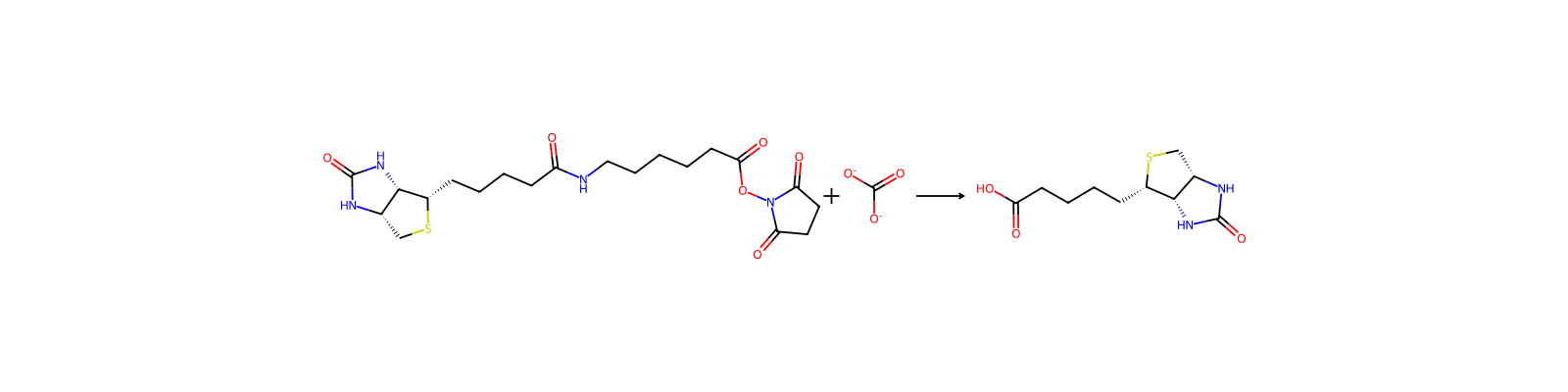
Related reactions
5 records


Linked notes
Loading…