Reaction equation

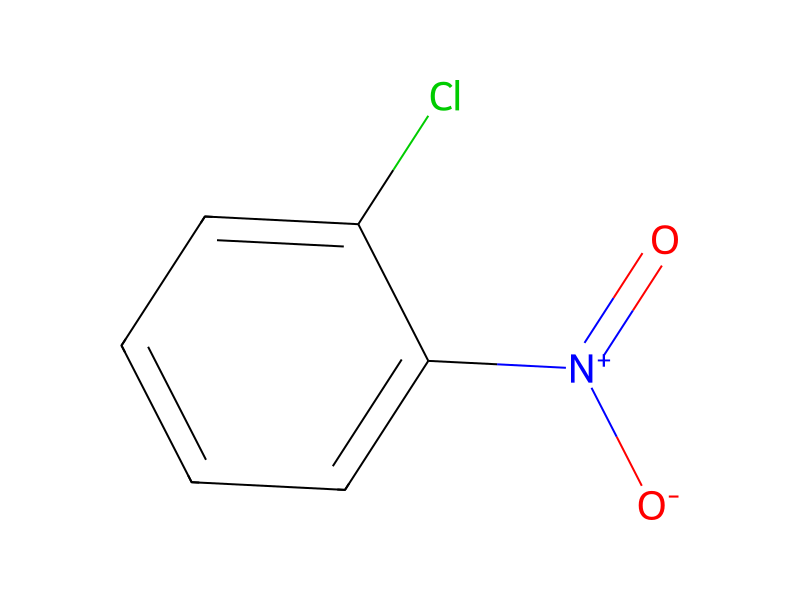
Cl[C:2]1[CH:7]=[CH:6][CH:5]=[CH:4][C:3]=1[N+:8]([O-:10])=[O:9].[NH2:11][C:12]1[CH:17]=[CH:16][CH:15]=[CH:14][CH:13]=1>>[CH:15]1[CH:16]=[CH:17][C:12]([NH:11][C:2]2[C:3]([N+:8]([O-:10])=[O:9])=[CH:4][CH:5]=[CH:6][CH:7]=2)=[CH:13][CH:14]=1Participants
3


Procedure
As is known, a nitro group activates halogen substituents in both the ortho- and the para-positions. For example, if 2-chloronitrobenzene is reacted with aniline at from 175 to 205° C., 2-nitrodiphenylamine is obtained in quantitative yield. By contrast, 4-chloronitrobenzene does not react at all with aniline at from 175 to 205° C.(Houben-Weyl, Methoden der Organischen Chemie [Methods of Organic Chemistry], IVth Edition, Volume XI/1, pages 63 and 64). This behavior shows that the nitro group activates the chlorine in the ortho- position to a very great extent, while its activating effect on the chlorine in the para-position is insufficient to permit the substitution reaction.
Sources & evidence
- ORD record
- ord-f9f5f7e3169b422888e5cd6ff614ee1d
- Source dataset
- uspto-grants-1999_11
- Patent number
- US05990309
Linked notes
Loading…