HomeMCPWorkbenchSkills
HomeWorkbenchNotificationsMe
llms.txt · MCP GuidePrivacy Policy · Terms of Service · Supportv1.8.0
  1. Home
  2. /Compound

Hexadecylamine

HCID 8926
New noteNew reactionRequest quotes
Print preview
Basic informationOverviewNames & identifiersPropertiesSafety & regulationChemistry & industryRelated reactionsCompound notes
Substructure searchFind similar structures

Basic information

CAS
143-27-1
Standard SMILES
CCCCCCCCCCCCCCCCN
InChIKey
FJLUATLTXUNBOT-UHFFFAOYSA-N
Molecular formula
C16H35N
Average molar mass
241.46 g/mol
Monoisotopic mass
241.27695012

Overview

Hexadecylamine is a white solid. (NTP, 1992)

Names & identifiers

Preferred name
Hexadecylamine
IUPAC
hexadecan-1-amine
English name
1-Hexadecylamine
Molecular formula
C16H35N
Molecular weight
241.46

Names & synonyms

Hexadecylamine1-HexadecylamineCetylamine143-27-1hexadecan-1-amine1-Hexadecanamine1-AminohexadecaneN-HEXADECYLAMINEPalmitaminen-CetylamineHexyldecylaminePalmitylamine
Show more names
HDAHADArmeen 16
Armeen 16DMonohexadecylamineAlamine 6Palmityl amineNissan amine PBCetylaminAlamine 6D1-Hexadecanylamine

Database identifiers

CAS
143-27-1、68037-95-6
PubChem CID
8926
DTXSID
DTXSID7025390
ChEMBL
CHEMBL1534653
ChEBI
CHEBI:165594
UNII
O2H0Q02M4P
EC Number
205-596-8
Nikkaji
J6.125E

Properties

Computed structural properties

XLogP
7.4
Topological polar surface area
26 Ų
Hydrogen bond donors
1
Hydrogen bond acceptors
1
Rotatable bonds
14
Heavy atoms
17
Formal charge
0
Complexity
123

Experimental & physicochemical properties

Chemical ClassesNitrogen Compounds -> Amines, Aliphatic
CosmeticsAntistatic
SpringerMaterials PropertiesBoiling point
Density · 2 items

0.8129 at 68 °F (NTP, 1992) - Less dense than water; will float

0.8129 @ 20°C

Solubilityless than 1 mg/mL at 72 °F (NTP, 1992)
Flash Point285 °F (NTP, 1992)
Boiling Point · 2 items

613 °F at 760 mmHg (NTP, 1992)

322.5 °C @760 [mm Hg]

Melting Point115.2 °F (NTP, 1992)
Physical Description · 2 items

Hexadecylamine is a white solid. (NTP, 1992)

White waxy solid with an ammoniacal odor; [CAMEO] White crystalline solid with a weak odor; [Alfa Aesar MSDS]

Safety & regulation

Safety information is for reference only and does not replace the supplier’s Safety Data Sheet (SDS), applicable regulations, or professional assessment.

GHS classification

GHS Classification · 6 items

Danger

H314 (98%): Causes severe skin burns and eye damage [Danger Skin corrosion/irritation]

P260, P264, P264+P265, P273, P280, P301+P330+P331, P302+P361+P354, P304+P340, P305+P354+P338, P316, P317, P321, P363, P391, P405, and P501 (click each P-code to see the statement)

Aggregated GHS information provided per 50 reports by companies from 8 notifications to the ECHA C&L Inventory. Each notification may be associated with multiple companies.

Danger

H302: Harmful if swallowed [Warning Acute toxicity, oral]

Hazard information

Regulatory Information · 3 items

Chemical: 1-Hexadecanamine

Status: Active Update: 30-09-2020 https://echa.europa.eu/registration-dossier/-/registered-dossier/29504

Hexadecylamine: Does not have an individual approval but may be used under an appropriate group standard

Other Safety InformationIMAP assessments - Primary aliphatic (C12-22) and fatty amines: Human health tier II assessment
DOT LabelCorrosive
Fire HazardsThis chemical is combustible. (NTP, 1992)
Health HazardsExcerpt from ERG Guide 154 [Substances - Toxic and/or Corrosive (Non-Combustible)]:
Hazards SummaryMay cause skin, eye, and mucous membrane irritation; [CAMEO] Causes burns; Inhalation may cause corrosive injuries to upper respiratory tract and lungs; [Alfa Aesar MSDS] See Decylamine.
Reactive GroupAmines, Phosphines, and Pyridines

Chemistry & industry

Uses & manufacturing

UsesUsed to make other chemicals; [CAMEO]
Use ClassificationCosmetics -> Antistatic
General Manufacturing Information1-Hexadecanamine: ACTIVE
Applications · 3 items

UsesDental caries prophylactic.

Uses1-Hexadecylamine is used for producing resin, senior detergent, anti-caking agent.

General DescriptionA white waxy solid with an ammonia-like odor. Insoluble in water and less dense than water. Hence floats on water. Contact may irritate skin, eyes and mucous membranes. May be toxic by ingestion, inhalation or skin absorption. Used to make other chemicals.

Upstream & downstream products

Upstream raw materials

Sodium oxideDilute hydrochloric acidHexadecanamide, N-hydroxy-1H-Isoindole-1,3(2H)-dione, 2-hexadecyl-Hexadecane, 1-azido-dihexadecylamine1-ChlorohexadecaneHexadecanamidehexadecanenitrile

Related reactions

46 records
New reaction record
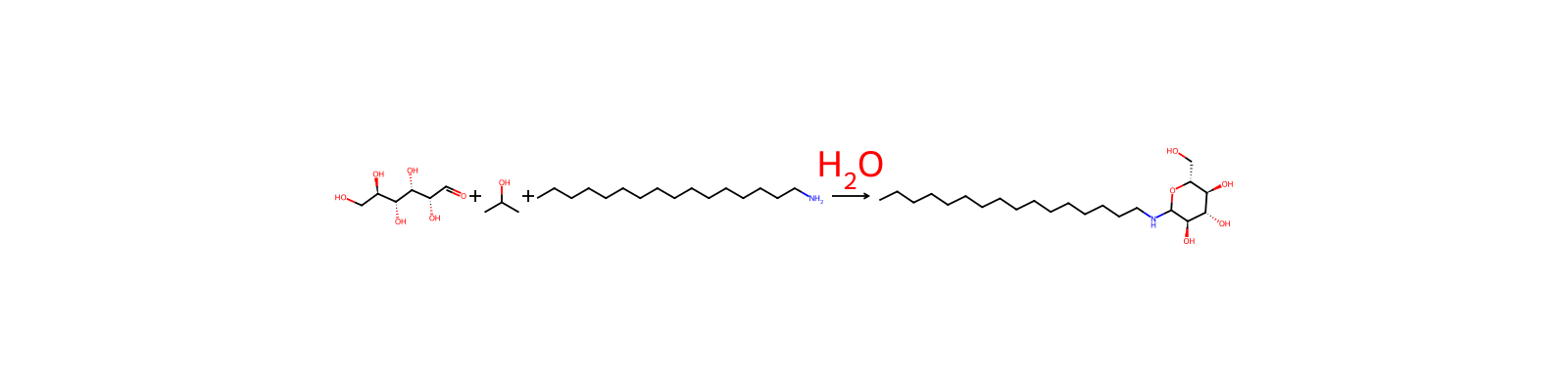
HRID 26352 reaction equation
HRID 26352As reactantuspto-grants-1979_04
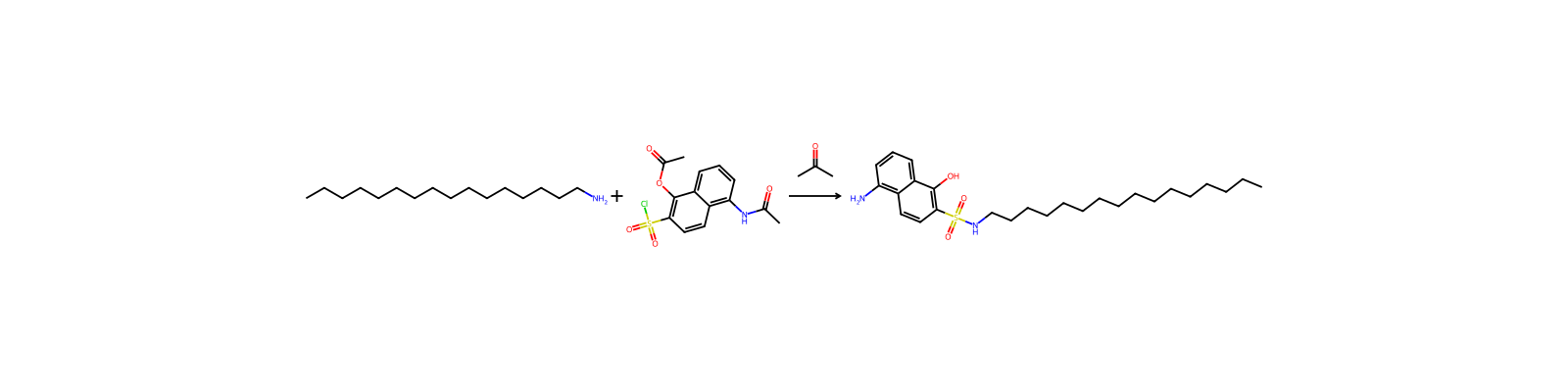
HRID 94648 reaction equation
HRID 94648As reactantTraining data from https://doi.org/10.1039/C8SC04228D (2/10)
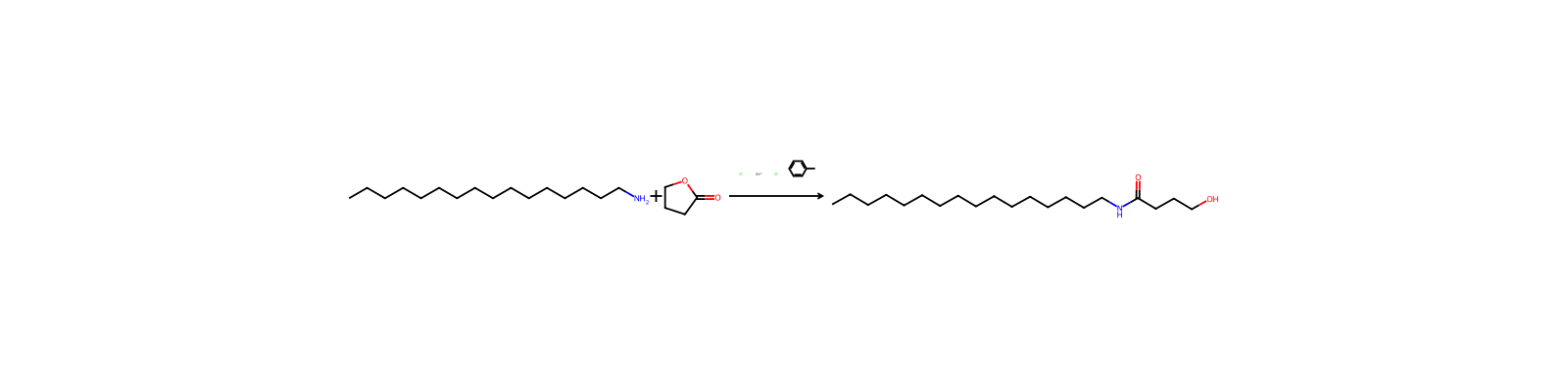
HRID 97010 reaction equation
HRID 97010As reactantTraining data from https://doi.org/10.1039/C8SC04228D (2/10)
HRID 362766 reaction equation
HRID 362766As reactantuspto-grants-1999_02
HRID 363974 reaction equation
HRID 363974As reactantuspto-grants-1986_08
HRID 371894 reaction equation
HRID 371894As reactantuspto-grants-1978_05
HRID 477430 reaction equation
HRID 477430As reactantuspto-grants-1989_12
HRID 543113 reaction equation
HRID 543113As reactantuspto-grants-1987_04
Page 1 of 6

Compound notes

Loading…

On this pageBasic informationOverviewNames & identifiersPropertiesSafety & regulationChemistry & industryRelated reactionsCompound notes
More actions
New noteNew reactionRequest quotes

Physicochemical properties

Melting point
43 · 43-45 °C (lit.)
Boiling point
330 °C · 330 °C (lit.)
Density
0 · 0,813 g/cm3
vapor pressure
1 mm · <1 mm Hg ( 20 °C)
refractive index
1.4496 · 1.4496
Flash point
285 °F · 285 °F
storage temp.
30 °C · Store below +30°C.
pka
10.63 · 10.63(at 25℃)
form
Low Melting Crystalline Mass or Chunks
color
White
Water Solubility
insoluble
BRN
1634065 · 1634065
Cosmetics Ingredients Functions
ANTISTATIC
InChI
1S/C16H35N/c1-2-3-4-5-6-7-8-9-10-11-12-13-14-15-16-17/h2-17H2,1H3
InChIKey
FJLUATLTXUNBOT-UHFFFAOYSA-N
SMILES
CCCCCCCCCCCCCCCCN
LogP
6.73 at · 6.73 at 25℃
CAS DataBase Reference
143 · 143-27-1(CAS DataBase Reference)
EWG's Food Scores
1 · 1-2
FDA UNII
2 H0Q02M4P · O2H0Q02M4P
NIST Chemistry Reference
1 · 1-Hexadecanamine(143-27-1)
EPA Substance Registry System
Hexadecylamine (143-27-1)
UNSPSC Code
12352116 · 12352116
NACRES
22 · NA.22
Symbol(GHS)
8 · GHS08,GHS09
Signal word
Danger
Hazard statements
304 · H304-H373-H410
Precautionary statements
273 · P273-P301+P310+P331-P314
target organs
Gastrointestinal tract,Liver,Immune system
PPE
3 · Eyeshields, Faceshields, Gloves, type P3 (EN 143) respirator cartridges
Hazard Codes
C,Hazard
Risk Statements
34 · 34
Safety Statements
26 · 26-36/37/39-45
RIDADR
3259 · UN 3259 8/PG 2
WGK Germany
2 · 2
RTECS
9100000 · ML9100000
F
34 · 34
TSCA
TSCA listed
HazardClass
8 · 8
PackingGroup
III
HS Code
29211980 · 29211980
Storage Class
8 A · 8A - Combustible corrosive hazardous materials
Hazard Classifications
1 Aquatic · Aquatic Acute 1Aquatic Chronic 1Asp. Tox. 1Eye Dam. 1Skin Corr. 1ASTOT RE 2
Toxicity
50 · mouse,LD50,intraperitoneal,200mg/kg (200mg/kg),National Technical Information Service. Vol. AD691-490,
REACH Registrations
Active
Limited Quantities
1 L · 1.0 L (0.3 gallons) (liquid) or 1 Kg (2.2 lbs) (solid)
Excepted Quantities
Max Inner Pack (30g or 30ml) and Max Outer Pack (500g or 500ml)
Reactivity Profile · 1 item

HEXADECYLAMINE may react with oxidizing agents (NTP, 1992). Readily neutralizes acids in exothermic reactions to form salts plus water. May be incompatible with isocyanates, halogenated organics, peroxides, phenols (acidic), epoxides, anhydrides, and acid halides. Flammable gaseous hydrogen may be generated in combination with strong reducing agents, such as hydrides.

Air and Water ReactionsThis compound may be sensitive to prolonged exposure to air. Insoluble in water.
Hazard Classes and Categories · 2 items

Skin Corr. 1 (98%)

Acute toxicity - category 4

Safety & protection

Fire FightingFires involving this chemical can be controlled with a CO2, dry chemical, or Halon extinguisher. (NTP, 1992)
First Aid · 1 item

EYES: First check the victim for contact lenses and remove if present. Flush victim's eyes with water or normal saline solution for 20 to 30 minutes while simultaneously calling a hospital or poison control center. Do not put any ointments, oils, or medication in the victim's eyes without specific instructions from a physician. IMMEDIATELY transport the victim after flushing eyes to a hospital even if no symptoms (such as redness or irritation) develop.

Nonfire Spill Response · 1 item

SMALL SPILLS AND LEAKAGE: Should a spill occur while you are handling this chemical, you should dampen the solid spill material with alcohol, then transfer the dampened material to a suitable container. Use absorbent paper dampened with alcohol to pick up any remaining material. Seal the absorbent paper, and any of your clothes, which may be contaminated, in a vapor-tight plastic bag for eventual disposal. Solvent wash all contaminated surfaces with alcohol followed by washing with a strong soap and water solution. Do not reenter the contaminate area until the Safety Officer (or other responsible person) has verified that the area has been properly cleaned.

Isolation and EvacuationExcerpt from ERG Guide 154 [Substances - Toxic and/or Corrosive (Non-Combustible)]:
Protective Action Criteria (PAC) · 3 items

0.66 [mg/m3]

7.2 [mg/m3]

43 [mg/m3]

Personal Protective Equipment (PPE)MINIMUM PROTECTIVE CLOTHING: If Tyvek-type disposable protective clothing is not worn during handling of this chemical, wear disposable Tyvek-type sleeves taped to your gloves.

Toxicology

Adverse EffectsDermatotoxin - Skin burns.

Safety data

F
34
PPE
Eyeshields, Faceshields, Gloves, type P3 (EN 143) respirator cartridges
wgk
2
tsca
TSCA listed
rtecs
ML9100000
ridadr
UN 3259 8/PG 2
hs_code
29211980
Toxicity
mouse,LD50,intraperitoneal,200mg/kg (200mg/kg),National Technical Information Service. Vol. AD691-490,
risk_code
34
Signal word
Danger
Symbol(GHS)
GHS08,GHS09
hazard_code
C,Hazard
safety_code
26-36/37/39-45
hazard_class
8
Storage Class
8A - Combustible corrosive hazardous materials
packing_group
III
target organs
Gastrointestinal tract,Liver,Immune system
Hazard statements
H304-H373-H410
Limited Quantities
1.0 L (0.3 gallons) (liquid) or 1 Kg (2.2 lbs) (solid)
Excepted Quantities
Max Inner Pack (30g or 30ml) and Max Outer Pack (500g or 500ml)
REACH Registrations
Active
Hazard Classifications
Aquatic Acute 1Aquatic Chronic 1Asp. Tox. 1Eye Dam. 1Skin Corr. 1ASTOT RE 2
Precautionary statements
P273-P301+P310+P331-P314
7,7,8,8-Tetracyanoquinodimethane
Octadecanamine

Downstream products

3-(N,N-Dimethylpalmitylammonio)propanesulfonatehexadecyl(2-hydroxyethyl)dimethylammonium chlorideN-hexadecylacrylamidehexadecylammonium chloride3-(Hexadecylamino)-1-propanesulfonic acidN-Hexadecyltrimethylammonium chloride

Additional notes

DefinitionChEBI: 1-Hexadecylamine is an alkylamine.