Reaction equation

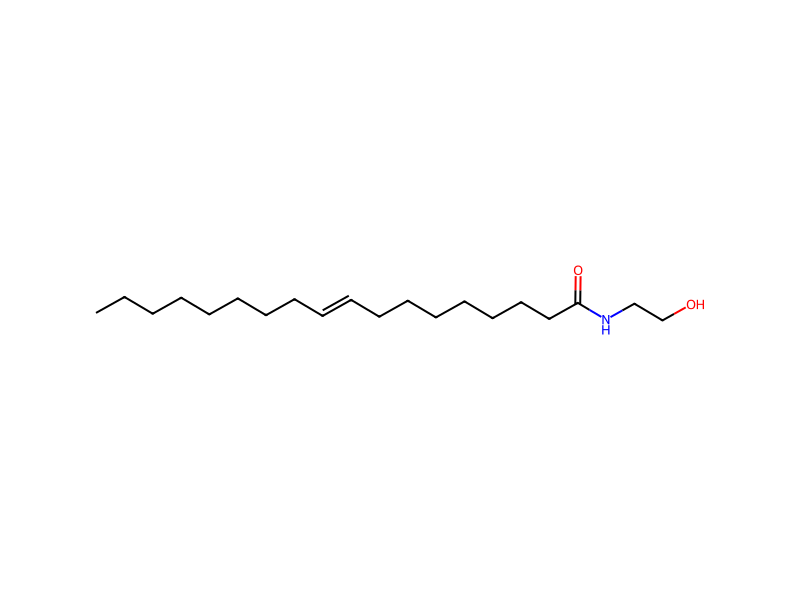
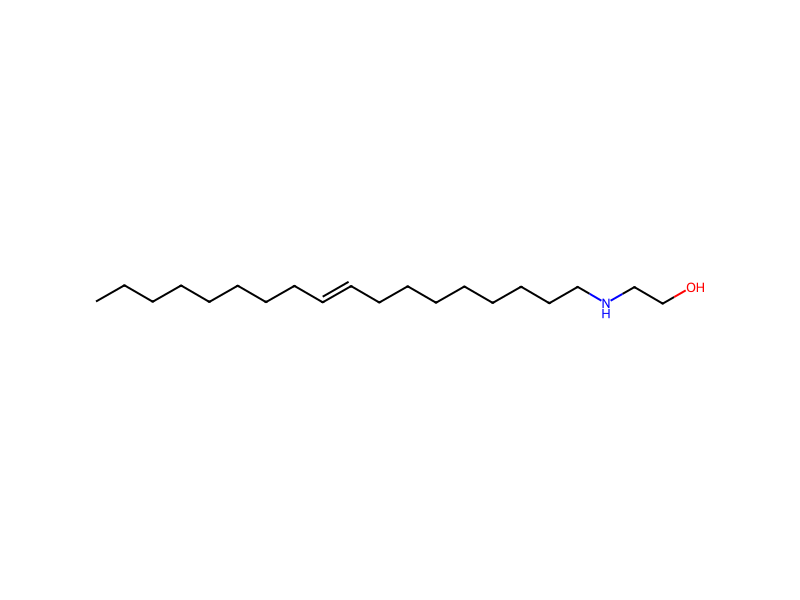
[H-].[H-].[H-].[H-].[Li+].[Al+3].N#N.[C:9]([NH:28][CH2:29][CH2:30][OH:31])(=O)[CH2:10][CH2:11][CH2:12][CH2:13][CH2:14][CH2:15][CH2:16][CH:17]=[CH:18][CH2:19][CH2:20][CH2:21][CH2:22][CH2:23][CH2:24][CH2:25][CH3:26].[OH-].[K+]>O1CCCC1>[CH2:9]([NH:28][CH2:29][CH2:30][OH:31])[CH2:10][CH2:11][CH2:12][CH2:13][CH2:14][CH2:15][CH2:16][CH:17]=[CH:18][CH2:19][CH2:20][CH2:21][CH2:22][CH2:23][CH2:24][CH2:25][CH3:26]Participants
6




Conditions
- Temperature
- 60 °C
Procedure
A 100-ml eggplant type flask equipped with a stirrer was charged with 1.40 g (37.2 mmol) of LiAlH4 and 30 ml of tetrahydrofuran. While heating and stirring the contents at room temperature in an N2 atmosphere, a tetrahydrofuran solution of 1.67 g (5.12 mmol) of N-(9-octadecenoyl)ethanolamine was added dropwise over 10 minutes. After the mixture was heated to 60° C. and stirred for 16 hours, the resultant reaction mixture was cooled to room temperature, and 14 g of 5% aqueous KOH. After a salt deposited was separated by filtration, the filtrate was concentrated under reduced pressure, and the resultant residue was purified by column chromatography on silica gel, thereby obtaining 0.96 g (yield: 65%) of the title compound (IIc-6).
Workup
- customA 100-ml eggplant type flask equipped with a stirrer
- temperatureWhile heating
- customthe resultant reaction mixture
- temperaturewas cooled to room temperature
- customAfter a salt deposited was separated by filtration
- concentrationthe filtrate was concentrated under reduced pressure
- customthe resultant residue was purified by column chromatography on silica gel
Sources & evidence
- ORD record
- ord-70a4eebe93b24ba3bd4111e18405dbfa
- Source dataset
- uspto-grants-1998_03
- Patent number
- US05723497
Linked notes
Loading…