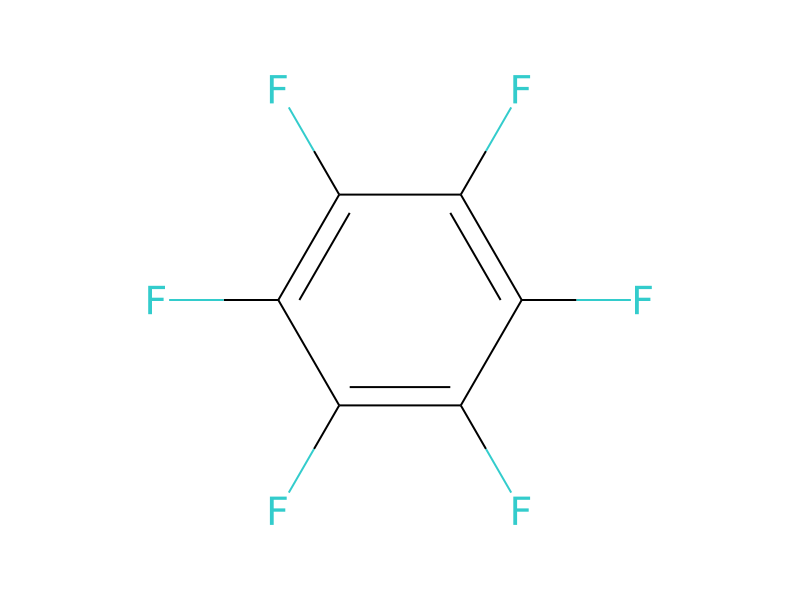
[H-].[Na+].[OH:3][C:4]1([C:10]2[CH:15]=[CH:14][CH:13]=[CH:12][CH:11]=2)[CH2:9][CH2:8][NH:7][CH2:6][CH2:5]1.[F:16][C:17]1[C:22](F)=[C:21]([F:24])[C:20]([F:25])=[C:19]([F:26])[C:18]=1[F:27].O>CN(C)C=O>[F:16][C:17]1[C:18]([F:27])=[C:19]([F:26])[C:20]([F:25])=[C:21]([F:24])[C:22]=1[O:3][C:4]1([C:10]2[CH:15]=[CH:14][CH:13]=[CH:12][CH:11]=2)[CH2:9][CH2:8][NH:7][CH2:6][CH2:5]1To a suspension of sodium hydride (60% in oil, 6.4 g) in 50 ml of dry dimethylformamide was added, over a period of ten minutes, a solution of 25 g of 4-hydroxy-4-phenylpiperidine in 100 ml of dry dimethylformamide. After stirring at 50° C., for thirty minutes, the reaction mixture was cooled to ice bath temperature (5° C.). A solution of 18.6 ml of hexafluorobenzene in 100 ml of dry dimethylformamide was then added over a period of thirty minutes, and the resulting mixture stirred at ambient temperature for twenty hours. The mixture was poured into 500 ml water, stirred for five minutes, and extracted with ethyl acetate. The organic layer was washed with water followed by a saturated sodium chloride solution and dried over anhydrous magnesium sulfate. After filtering, evaporation of the solvents afforded a residue which was purified by means of high pressure liquid chromatography (silica gel; elution with 20% methanol/dichloromethane) to afford 21 g (44%) of 4-(2,3,4,5,6-pentafluorophenoxy)-4-phenylpiperidine as an oil.
Loading…