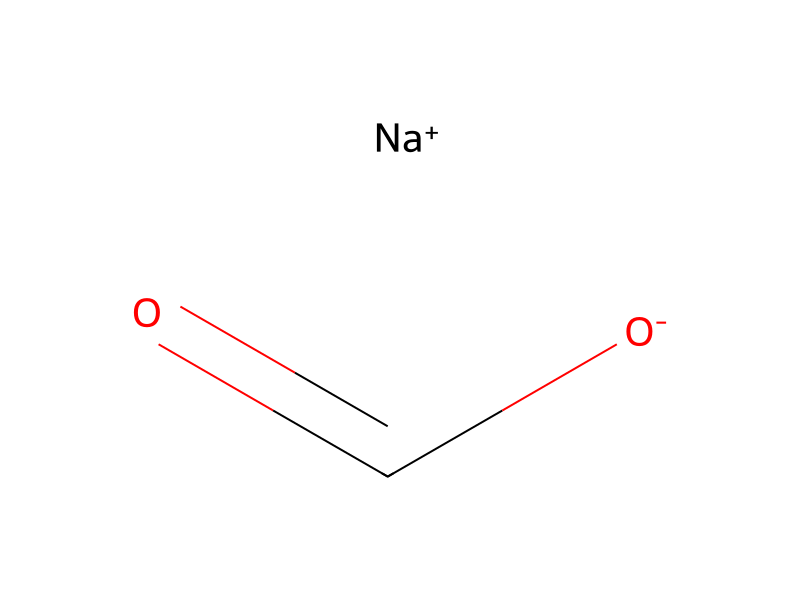
[CH:1]([O-])=[O:2].[Na+].C(Cl)(=O)C(C)(C)C.[S:12]1[CH:16]=[CH:15][C:14]2[CH:17]=[C:18]([CH2:21][CH2:22][O:23][CH2:24][CH2:25][NH:26][CH:27]([CH3:30])[CH2:28][OH:29])[CH:19]=[CH:20][C:13]1=2.[OH-].[Na+]>CC(C)=O.C(OCC)(=O)C.O>[S:12]1[CH:16]=[CH:15][C:14]2[CH:17]=[C:18]([CH2:21][CH2:22][O:23][CH2:24][CH2:25][N:26]([CH:27]([CH3:30])[CH2:28][OH:29])[CH:1]=[O:2])[CH:19]=[CH:20][C:13]1=2In 2.4 mL of acetone is suspended 0.38 g of sodium formate, to which is added 0.37 mL of pivaloyl chloride. The mixture is stirred at ambient temperature for 2 hours. Then, at an ice-cooled temperature, 4 mL of a solution of 0.50 g of 2-{[2-(2-benzo[b]thiophen-5-ylethoxy)ethyl]-amino}-1-propanol in acetone is added, and the resulting mixture is stirred at ambient temperature for 2 hours. Water and ethyl acetate are added to the reaction mixture, pH is adjusted to 8.5 with 2 mol/L aqueous solution of sodium hydroxide, and the organic layer is separated. The organic layer is washed with saturated aqueous solution of sodium chloride and dried over anhydrous magnesium sulfate, the solvent is distilled off under reduced pressure, and the residue is purified by column chromatography (eluent: chloroform). Thus, 0.46 g of N-[2-(2-benzo[b]thiophen-5-ylethoxy)ethyl]-N-(2-hydroxy-1-methylethyl)-formamide (is obtained as an oily product.
Loading…