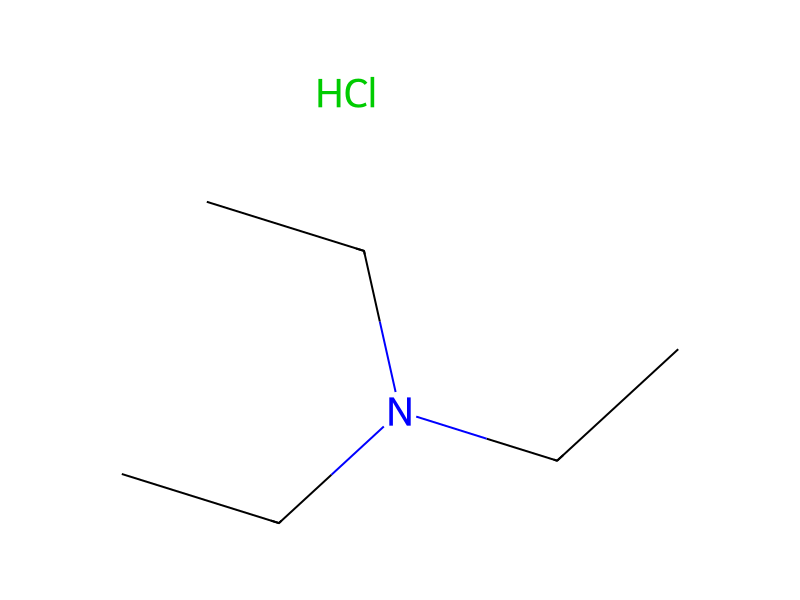
[CH2:1]([N:3]1[C:11]2[C:6](=[CH:7][CH:8]=[C:9]([O:12][CH3:13])[CH:10]=2)[C:5]([C:14]#[N:15])=[CH:4]1)[CH3:2].Cl.C(N(CC)CC)C.[N-:24]=[N+:25]=[N-:26].[Na+]>C1(C)C=CC=CC=1.C([O-])(O)=O.[Na+]>[CH2:1]([N:3]1[C:11]2[C:6](=[CH:7][CH:8]=[C:9]([O:12][CH3:13])[CH:10]=2)[C:5]([C:14]2[NH:26][N:25]=[N:24][N:15]=2)=[CH:4]1)[CH3:2]A mixture of 1-ethyl-6-methoxy-1H-indole-3-carbonitrile (1.00 g, 5.00 mmol) in toluene (30 mL) is treated with triethylamine hydrochloride (1.03 g, 7.50 mmol) and sodium azide (0.49 g, 7.50 mmol) and is heated at reflux for 16 h. After cooling to room temperature, the reaction mixture is diluted with saturated NaHCO3 and extracted with EtOAc. The organic layer is then washed with additional NaHCO3 (2×). The combined aqueous phases are acidified to pH 2 with 6N HCl. The resultant thick precipitate is extracted with hot EtOAc (3×) and the combined organic phases are washed with saturated NaCl and dried and concentrated to give 0.55 g (45%) of 1-ethyl-6-methoxy-3-(1H-tetrazol-5-yl)-1H-indole as a yellow solid.