Reaction equation

[Cl:1][C:2]1[C:3]([CH2:9][CH3:10])=[N:4][CH:5]=[CH:6][C:7]=1Cl.[Cl:11][C:12]1[CH:25]=[C:24]([Cl:26])[CH:23]=[CH:22][C:13]=1[CH:14]=[C:15]1[CH2:20][CH2:19][CH:18]([NH2:21])[CH2:17][CH2:16]1.[Cl-].[NH4+].C(=O)(O)[O-].[Na+]>CN1CCCC1=O>[Cl:1][C:2]1[C:3]([CH2:9][CH3:10])=[N:4][CH:5]=[CH:6][C:7]=1[NH:21][CH:18]1[CH2:17][CH2:16][C:15](=[CH:14][C:13]2[CH:22]=[CH:23][C:24]([Cl:26])=[CH:25][C:12]=2[Cl:11])[CH2:20][CH2:19]1Participants
6
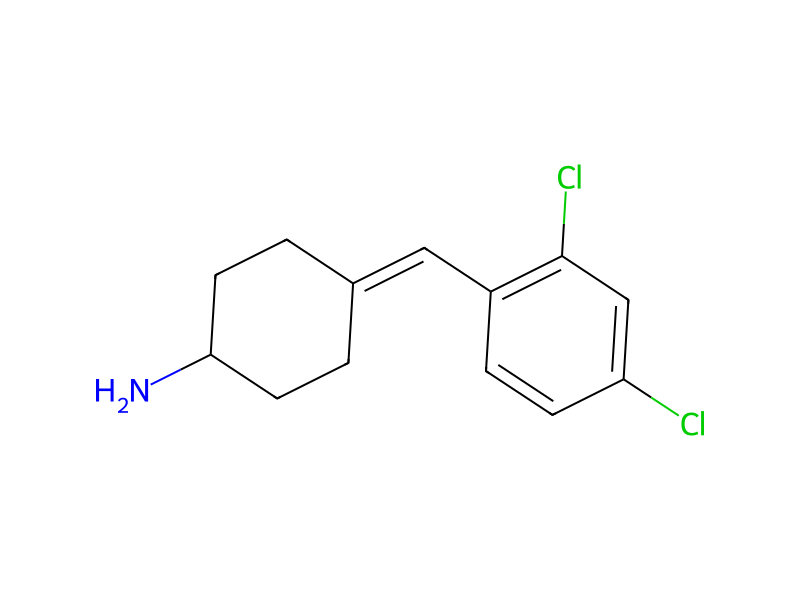
Reactant 4



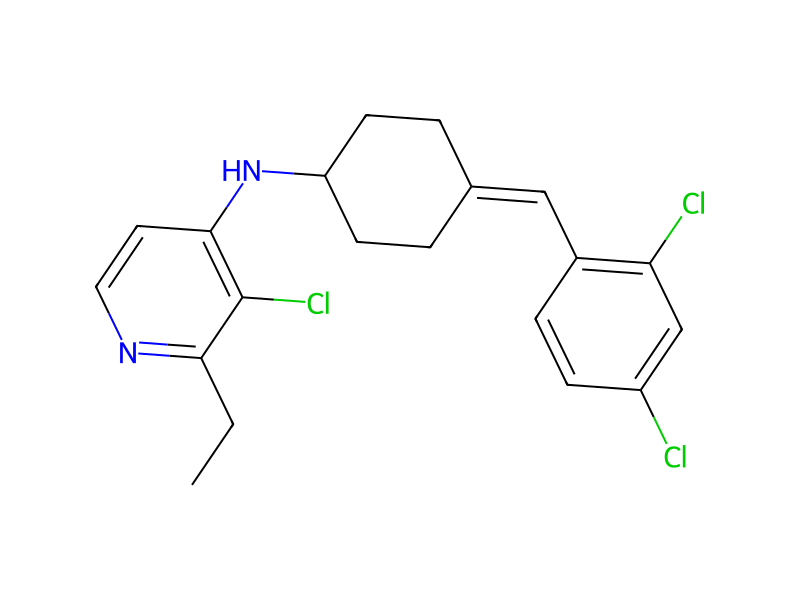
Product 1
Reagents, catalysts & solvents 1

Procedure
1.6 g of 3,4-dichloro-2-ethylpyridine and 2.5 g of 4-(2,4-dichlorobenzylidene)cyclohexylamine are heated at 180° C. for 3.5 hours together with 55 g of ammonium chloride in 9 ml of N-methylpyrrolidone. After cooling, the mixture is poured into saturated sodium bicarbonate solution and extracted with ethyl acetate. The product is purified by chromatography on silica gel using ethyl acetate/heptane 1:4. Yield: 7%
Workup
- temperatureAfter cooling
- extractionextracted with ethyl acetate
- customThe product is purified by chromatography on silica gel
Sources & evidence
- ORD record
- ord-c0062b7363ec4154b00b2b22681d2f1d
- Source dataset
- uspto-grants-1998_03
- Patent number
- US05723450
Linked notes
Loading…