HomeMCPWorkbenchSkills
HomeWorkbenchNotificationsMe
llms.txt · MCP GuidePrivacy Policy · Terms of Service · Supportv1.8.3
  1. Home
  2. /Reaction

3,4-dihydro-2H-pyran → 2-(4-bromo-2-fluoro-5-((tetrahydro-2H-pyran-2-yloxy)methyl)phenoxy)tetrahydro-2H-pyran

HRID 1020788
Print

Reaction equation

HRID 1020788 reaction equation
[Br:1][C:2]1[C:7]([CH2:8][OH:9])=[CH:6][C:5]([OH:10])=[C:4]([F:11])[CH:3]=1.[O:12]1[CH:17]=[CH:16][CH2:15][CH2:14][CH2:13]1>C(Cl)Cl.C12(CS(O)(=O)=O)C(C)(C)C(CC1)CC2=O>[Br:1][C:2]1[C:7]([CH2:8][O:9][CH:13]2[CH2:14][CH2:15][CH2:16][CH2:17][O:12]2)=[CH:6][C:5]([O:10][CH:17]2[CH2:16][CH2:15][CH2:14][CH2:13][O:12]2)=[C:4]([F:11])[CH:3]=1
ParticipantsProcedureWorkupSources & evidenceReaction notes

Participants

5

Reactant 2

HCID 80803,4-dihydro-2H-pyranHCID 667264354-Bromo-2-fluoro-5-(hydroxymethyl)phenol2×

Product 1

HCID 667266902-(4-bromo-2-fluoro-5-((tetrahydro-2H-pyran-2-yloxy)methyl)phenoxy)tetrahydro-2H-pyranYield 83%

Reagents, catalysts & solvents 2

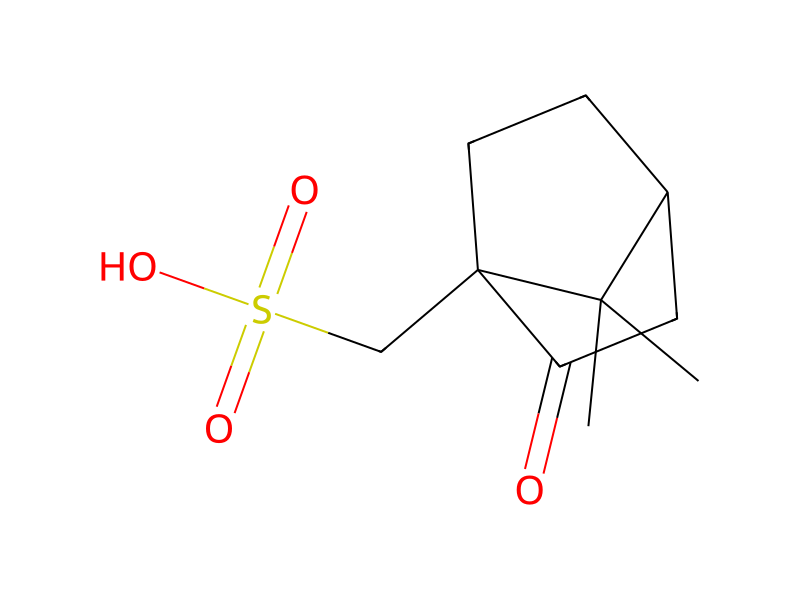
HCID 18462Bicyclo[2.2.1]heptane-1-methanesulfonic acid, 7,7-dimethyl-2-oxo-, (1S)-Catalyst
HCID 6344
Dichloromethane
Solvent

Procedure

Protection of the alcohol was carried out by making a solution of 4-bromo-2-fluoro-5-(hydroxymethyl)phenol (1.37 g, 6.19 mmol), 3,4 dihydro-2H-pyran (1.4 mL, 15 mmol) in 20 mL of CH2Cl2. The reaction mixture was then treated with camphor sulfonic acid (58 mg, 0.25 mmol) before stirring at room temperature for 21 hr. The reaction mixture was then quenched with equal volumes of 0.2 M NaOH and EtOAc (1:1, 20 mL) before the layers were separated. The water phase was further extracted with equal volume of EtOAc before the organic layers were combined and dried over anhydrous Na2SO4 and filtered. The solvent was removed under reduced pressure. The residue was purified by silica gel column using Combiflash to give 2-(4-bromo-2-fluoro-5-((tetrahydro-2H-pyran-2-yloxy)methyl)phenoxy)tetrahydro-2H-pyran (2.0 g, 83%).

Workup

  1. customThe reaction mixture was then quenched with equal volumes of 0.2 M NaOH and EtOAc (1:1, 20 mL) before the layers
  2. customwere separated
  3. extractionThe water phase was further extracted with equal volume of EtOAc before the organic layers
  4. dry with materialdried over anhydrous Na2SO4
  5. filtrationfiltered
  6. customThe solvent was removed under reduced pressure
  7. customThe residue was purified by silica gel column

Sources & evidence

ORD record
ord-d4cffa10eaea432395b6dc135ccde3d4
Source dataset
uspto-grants-2014_05
DOI
10.6084/m9.figshare.5104873.v1
Patent number
US08716478B2

Reaction notes

On this pageParticipantsProcedureWorkupSources & evidenceReaction notes