HomeMCPWorkbenchSkills
HomeWorkbenchNotificationsMe
llms.txt · MCP GuidePrivacy Policy · Terms of Service · Supportv1.8.0
  1. Home
  2. /Reaction

3,4-dihydro-2H-pyran → 2-(4-bromo-3-methyl-5-((tetrahydro-2H-pyran-2-yloxy)methyl)phenoxy)tetrahydro-2H-pyran

HRID 1020799
Notes
Print preview

Reaction equation

HRID 1020799 reaction equation
[Br:1][C:2]1[C:7]([CH3:8])=[CH:6][C:5]([O:9][CH:10]2[CH2:15][CH2:14][CH2:13][CH2:12][O:11]2)=[CH:4][C:3]=1[CH2:16][OH:17].[O:18]1[CH:23]=[CH:22][CH2:21][CH2:20][CH2:19]1>C(Cl)Cl.C12(CS(O)(=O)=O)C(C)(C)C(CC1)CC2=O>[Br:1][C:2]1[C:3]([CH2:16][O:17][CH:19]2[CH2:20][CH2:21][CH2:22][CH2:23][O:18]2)=[CH:4][C:5]([O:9][CH:10]2[CH2:15][CH2:14][CH2:13][CH2:12][O:11]2)=[CH:6][C:7]=1[CH3:8]
ParticipantsProcedureWorkupSources & evidenceReaction notes

Participants

5

Reactant 2

HCID 80803,4-dihydro-2H-pyranHCID 66726655(2-bromo-3-methyl-5-(tetrahydro-2H-pyran-2-yloxy)phenyl)methanol

Product 1

HCID 667266332-(4-bromo-3-methyl-5-((tetrahydro-2H-pyran-2-yloxy)methyl)phenoxy)tetrahydro-2H-pyranYield 90.2%

Reagents, catalysts & solvents 2

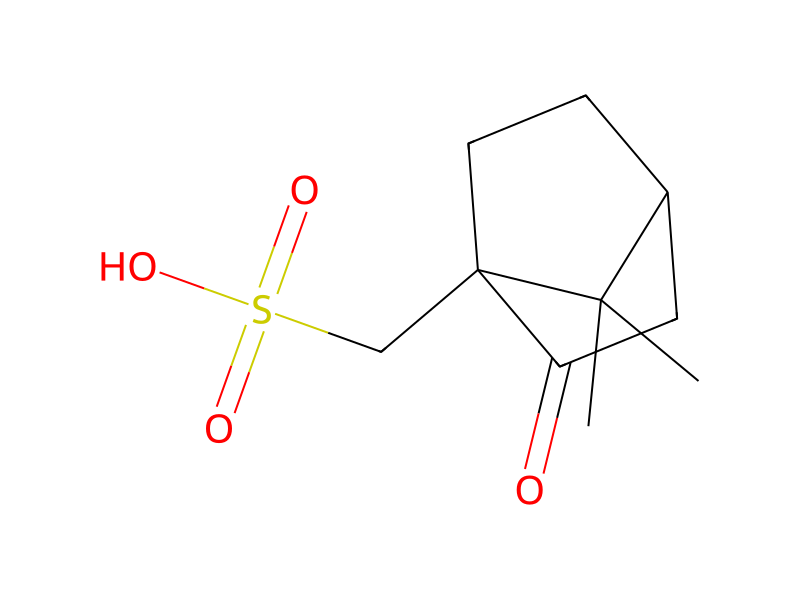
HCID 18462Bicyclo[2.2.1]heptane-1-methanesulfonic acid, 7,7-dimethyl-2-oxo-, (1S)-Catalyst
HCID 6344
Dichloromethane
Solvent

Procedure

To a solution of (2-bromo-3-methyl-5-(tetrahydro-2H-pyran-2-yloxy)phenyl)methanol (2.54 g, 8.43 mmol) and 3,4 dihydro-2H-pyran (0.92 mL, 10.12 mmol) in CH2Cl2 (8 mL) was added camphorsulfonic acid (40 mg, 0.17 mmol), and the mixture was stirred at room temperature for 21 h. The reaction mixture was then quenched with equal volumes of 0.2 M NaOH and EtOAc (1:1, 20 mL) before the layers were separated. The water phase was further extracted with equal volume of EtOAc before the organic layers were combined and dried over anhydrous Na2SO4 and filtered. The solvent was removed under reduced pressure. The residue was purified by silica gel column using Combiflash to give 2-(4-bromo-3-methyl-5-((tetrahydro-2H-pyran-2-yloxy)methyl)phenoxy)tetrahydro-2H-pyran (2.93 g, 90%).

Workup

  1. customThe reaction mixture was then quenched with equal volumes of 0.2 M NaOH and EtOAc (1:1, 20 mL) before the layers
  2. customwere separated
  3. extractionThe water phase was further extracted with equal volume of EtOAc before the organic layers
  4. dry with materialdried over anhydrous Na2SO4
  5. filtrationfiltered
  6. customThe solvent was removed under reduced pressure
  7. customThe residue was purified by silica gel column

Sources & evidence

ORD record
ord-490528e794064585840f9e8171a1c4ff
Source dataset
uspto-grants-2014_05
DOI
10.6084/m9.figshare.5104873.v1
Patent number
US08716478B2

Reaction notes

Loading…

On this pageParticipantsProcedureWorkupSources & evidenceReaction notes