HomeMCPWorkbenchSkills
HomeWorkbenchNotificationsMe
llms.txt · MCP GuidePrivacy Policy · Terms of Service · Supportv1.8.3
  1. Home
  2. /Reaction

Benzyl chloroformate → (S)-2-Biphenyl-4-ylmethyl-5-oxo-pyrrolidine-1-carboxylic acid benzyl ester

HRID 1021049
Print

Reaction equation

HRID 1021049 reaction equation
[C:1]1([C:14]2[CH:19]=[CH:18][CH:17]=[CH:16][CH:15]=2)[CH:6]=[CH:5][C:4]([CH2:7][C@H:8]2[NH:12][C:11](=[O:13])[CH2:10][CH2:9]2)=[CH:3][CH:2]=1.C([Li])CCC.Cl[C:26]([O:28][CH2:29][C:30]1[CH:35]=[CH:34][CH:33]=[CH:32][CH:31]=1)=[O:27]>C1COCC1.CCCCCC>[CH2:29]([O:28][C:26]([N:12]1[C:11](=[O:13])[CH2:10][CH2:9][C@H:8]1[CH2:7][C:4]1[CH:3]=[CH:2][C:1]([C:14]2[CH:15]=[CH:16][CH:17]=[CH:18][CH:19]=2)=[CH:6][CH:5]=1)=[O:27])[C:30]1[CH:35]=[CH:34][CH:33]=[CH:32][CH:31]=1
ParticipantsConditionsProcedureWorkupSources & evidenceReaction notes

Participants

6

Reactant 3

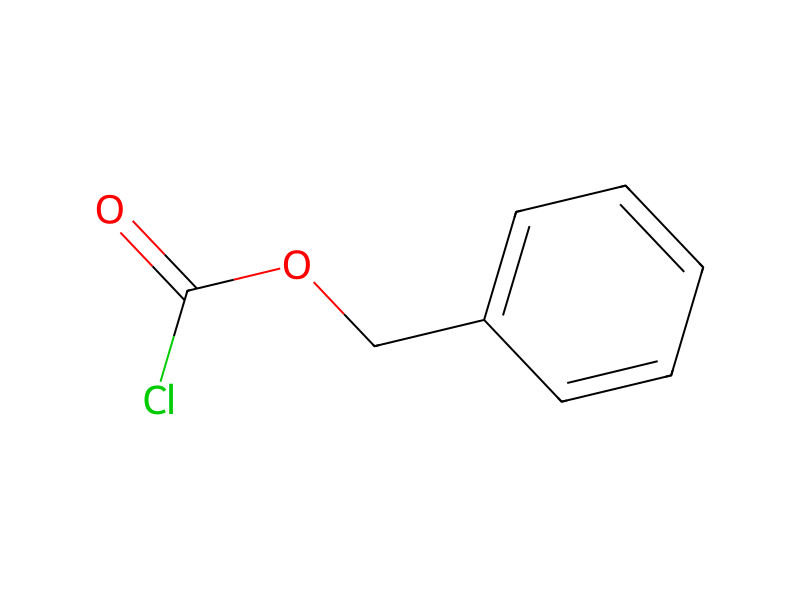
HCID 10387Benzyl chloroformateHCID 58160438(S)-5-[(Biphenyl-4-yl)methyl]pyrrolidin-2-oneHCID 178418339Butyllithium

Product 1

HCID 59318446(S)-2-Biphenyl-4-ylmethyl-5-oxo-pyrrolidine-1-carboxylic acid benzyl ester

Reagents, catalysts & solvents 2

HCID 8028TetrahydrofuranSolvent
HCID 8058
Hexane
Solvent

Conditions

Temperature
-78 °C

Procedure

1 g (4 mmol) (S)-5-biphenyl-4-ylmethylpyrrolidin-2-one (1-a, R1=H) is dissolved in 10 ml dry THF and cooled to −78° C. After the addition of 2.76 ml butyl lithium in hexane (1.59 M), the yellow solution is stirred at −78° C. for 30 min. Subsequently, 676 □l (820 mg, 4.8 mmol) benzyl chloroformate (Cbz-Cl) is added and stirring is continued at −78° C. for 2 h. The reaction is then quenched by addition of 12 ml saturated NH4Cl solution followed by 10 ml water and then extracted with 2×40 ml isopropyl acetate. The layers are separated and the organic layer is dried over MgSO4, filtered and evaporated. The resulting residue (1.73 g) is purified on column chromatography (dichloromethane:methanol=99.5:0.5) to give (S)-2-Biphenyl-4-ylmethyl-5-oxo-pyrrolidine-1-carboxylic acid benzyl ester (1-a, R1=Cbz) as off-white solid. NMR (400 MHz, DMSO-d6, □/ppm): 7.66 (m, 2 H); 7.60 (m, 2 H); 7.51-7.34 (m, 8 H); 7.26 (d, J=8.2, 2 H); 5.28 (s, 2 H); 4.37 (m, 1 H); 3.05 (dd, J=3.3, 13.1, 1 H); 2.88 (dd, J=9.0, 13.1, 1 H); 2.45 (m, 1 H); 2.28 (m, 1 H); 2.01 (m, 1 H); 1.77 (m, 1 H). MS (ESI, m/e) 386 [M+H]+, 788 [2M+NH4+]. IR (solution in CH2Cl2, □/cm−1): 3092; 2957; 1756; 1705; 1488; 1396; 1304; 1287; 1231; 1139; 1043; 952; 750.

Workup

  1. stirringstirring
  2. waitis continued at −78° C. for 2 h
  3. customThe reaction is then quenched by addition of 12 ml saturated NH4Cl solution
  4. extractionextracted with 2×40 ml isopropyl acetate
  5. customThe layers are separated
  6. dry with materialthe organic layer is dried over MgSO4
  7. filtrationfiltered
  8. customevaporated
  9. customThe resulting residue (1.73 g) is purified on column chromatography (dichloromethane:methanol=99.5:0.5)

Sources & evidence

ORD record
ord-480f08b3a3bc49d4bb7237c158ecc8d3
Source dataset
uspto-grants-2014_05
DOI
10.6084/m9.figshare.5104873.v1
Patent number
US08716495B2

Reaction notes

On this pageParticipantsConditionsProcedureWorkupSources & evidenceReaction notes


