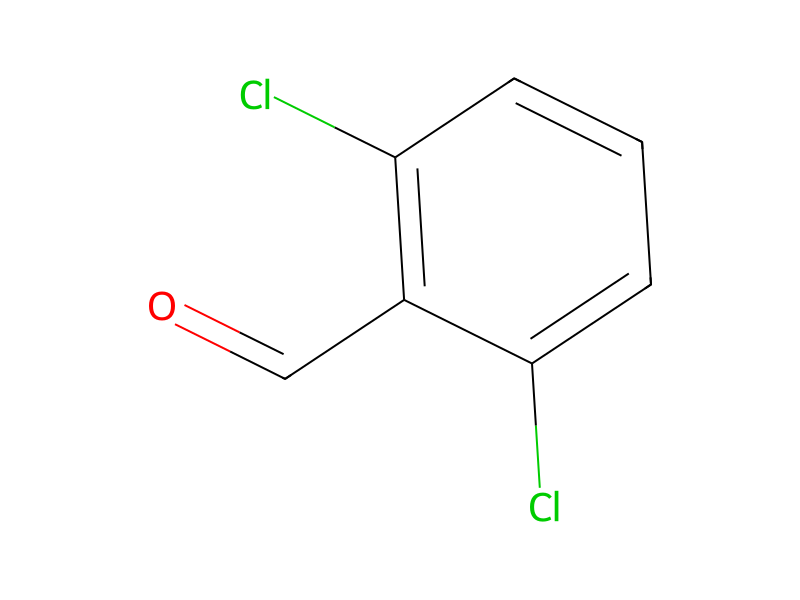
A stirred mixture of 2,6-dichlorobenzaldehyde (609 mmol, 106.5 g), cyanoacetic acid (609 mmol, 51.8 g), ammonium acetate (122 mmol, 9.38 g), pyridine (1065 mmol, 86 ml, 84 g) and toluene (468 ml) was stirred at reflux using a Dean-Stark apparatus until one equivalent of water was collected (NB Oil bath temperature should not exceed 120° C. to avoid decarboxylation at this stage—lag Dean-Stark well). The reaction mixture was allowed to cool and the solid precipitate filtered and stirred with 10% aqueous HCl. The solid was again collected by filtering to afford pure 2-cyano-3-(2,6-dichlorophenyl)acrylic acid (7.21 g). The filtrate was concentrated in vacuo to give the crude 2-cyano-3-(2,6-dichlorophenyl)acrylic acid (˜135 g). Recrystallisation from toluene afforded pure 2-cyano-3-(2,6-dichlorophenyl)acrylic acid (101 g).