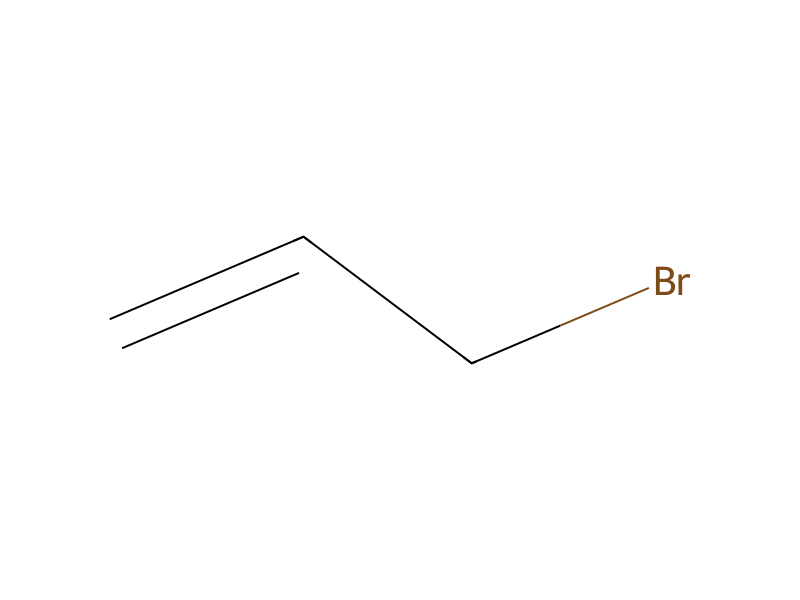
[F:1][C:2]1[CH:3]=[C:4]2[C:9](=[CH:10][C:11]=1[N:12]1[C:17](=[O:18])[CH:16]=[C:15]([C:19]([F:22])([F:21])[F:20])[N:14]([CH3:23])[C:13]1=[O:24])[NH:8][C:7](=[O:25])[CH:6]=[CH:5]2.Br[CH2:27][CH:28]=[CH2:29].C(=O)([O-])[O-].[K+].[K+]>CN(C)C=O>[CH2:29]([N:8]1[C:9]2[C:4](=[CH:3][C:2]([F:1])=[C:11]([N:12]3[C:17](=[O:18])[CH:16]=[C:15]([C:19]([F:21])([F:22])[F:20])[N:14]([CH3:23])[C:13]3=[O:24])[CH:10]=2)[CH:5]=[CH:6][C:7]1=[O:25])[CH:28]=[CH2:27]These compounds were prepared in a manner analogous to that of Step I of Example 1, using 0.5 gram (0.001 mole) of 3-(6-fluoroquinolin-2-on-7-yl)-1-methyl-6-trifluoromethyluracil (prepared in Step H of Example 1), 0.5 gram (0.003 mole) of 3-bromopropene, and 0.4 gram (0.003 mole) potassium carbonate in 40 mL of N,N-dimethylformamide. The crude reaction product was subjected to column chromatography on silica gel. Elution was accomplished using 1:1 ethyl acetate-heptane and ethyl acetate. The appropriate, product-containing fractions were combined and concentrated under reduced pressure, yielding 0.3 gram of 3-[1-(2-propen-1-yl)-6-fluoroquinolin-2-on-7-yl]-1-methyl-6-trifluoromethyluracil (Compound 26), mp 178°-179° C. Other product-containing fractions were combined and concentrated under reduced pressure, yielding 0.2 gram of the O-alkylated product, 3-[2-(2-propen-1-yloxy)-6-fluoroquinolin-2-on-7-yl]-1-methyl-6-trifluoromethyluracil (Compound 20A). The NMR spectra were consistent with the proposed structures.
Loading…