HomeMCPSkillsWorkbenchOpenChem
HomeWorkbenchNotificationsMe
llms.txt · skill.md · MCP GuidePrivacy Policy · Terms of Service · Supportv1.8.4
  1. Home
  2. /Reaction

Hydrogen Bromide → Methyl 2,6-dibromopyridine-4-carboxylate

HRID 1037515
Print

Reaction equation

P(Br)(Br)[Br:2].BrBr.O=P12OP3(OP(OP(O3)(O1)=O)(=O)O2)=O.[BrH:21].[CH:22]1[C:23](C(O)=O)=[CH:24][C:25](O)=[N:26][C:27]=1O.[C:33]([O-:36])(O)=O.[Na+].[CH3:38][OH:39]>O>[Br:21][C:25]1[CH:24]=[C:23]([CH:22]=[C:27]([Br:2])[N:26]=1)[C:38]([O:36][CH3:33])=[O:39]
ParticipantsProcedureWorkupSources & evidenceReaction notes

Participants

9

Reactant 7

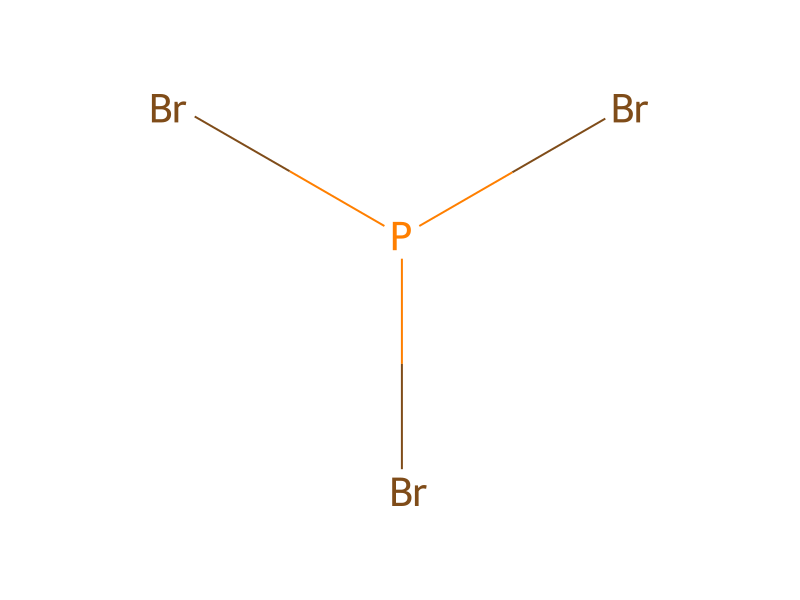
HCID 260Hydrogen BromideHCID 887Methanol3×HCID 14812Phosphorus oxide (P4O10)HCID 24408Bromine2×HCID 24614Phosphorus tribromide2×HCID 516892Sodium BicarbonateHCID 178524637
HCID 178524637, compound

Product 1

HCID 19261659Methyl 2,6-dibromopyridine-4-carboxylate

Reagents, catalysts & solvents 1

HCID 962WaterSolvent

Procedure

The compound PBr3 (21.8 ml, 0.232 mol) was loaded into a 250 ml three-neck flask cooled in a room temperature water bath under a flow of nitrogen. Br2 (11.9 ml, 0.231 mol) was then added dropwise with stirring to PBr3 to yield a yellow solid (PBr5). 30 minutes was taken for addition of Br2. P2O5 (12.0 g, 0.083 mol) was then added and the solid mixture was mixed well with a spatula under a flow of nitrogen. A reflux condenser was added via a connection to a water-filled bubbler, to trap evolved HBr. The mixture was heated to 98° C. for 2 hours and then cooled to room temperature. Citrazinic acid (20.0 g, 0.128 mol) was then added and the solid was mixed thoroughly with a spatula under a flow of nitrogen. The mixture was heated at 185° C. for 8 hours. The mixture was cooled back to room temperature. Methanol (150 ml) was slowly added (the reaction with methanol was exothermic, causing the solution to reflux). After the addition of methanol, the mixture was stirred until room temperature. Solid NaHCO3 was added slowly until bubbling stopped. After which, water (300 ml) was added and then additional NaHCO3 was added until the bubbling stopped. A brown solid product was collected with filtration. The solid was washed with water and dried at room temperature under air. The product was purified by silica gel column using hexanes/ethyl acetate (9:1) as a solvent. The final pure white product was obtained by recrystallization from methanol/water: 19.02 g (50.0%).


Workup

  1. customto yield a yellow solid (PBr5)
  2. additionthe solid mixture was mixed well with a spatula under a flow of nitrogen
  3. additionfilled bubbler
  4. customto trap evolved
  5. temperatureThe mixture was heated to 98° C. for 2 hours
  6. temperaturecooled to room temperature
  7. additionthe solid was mixed thoroughly with a spatula under a flow of nitrogen
  8. temperatureThe mixture was heated at 185° C. for 8 hours
  9. temperatureThe mixture was cooled back to room temperature
  10. temperatureto reflux)
  11. customuntil bubbling
  12. additionAfter which, water (300 ml) was added
  13. additionadditional NaHCO3 was added until the bubbling
  14. filtrationA brown solid product was collected with filtration
  15. washThe solid was washed with water
  16. customdried at room temperature under air
  17. customThe product was purified by silica gel column
  18. customThe final pure white product was obtained by recrystallization from methanol/water

Sources & evidence

ORD record
ord-66a92dba12564ef9be1b0c19529e2fcc
Source dataset
uspto-grants-2013_10
DOI
10.6084/m9.figshare.5104873.v1
Patent number
US08546505B2

Reaction notes

On this pageParticipantsProcedureWorkupSources & evidenceReaction notes