Reaction equation

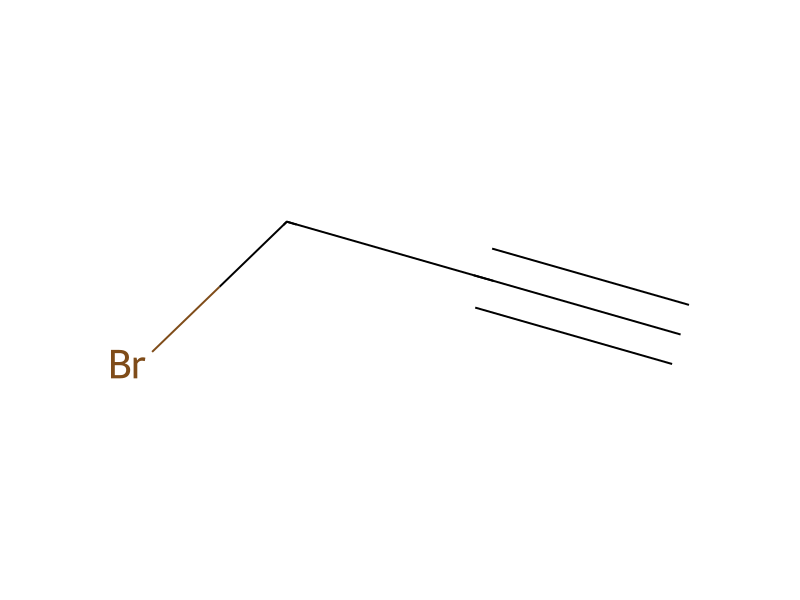
[CH3:1][O:2][C:3]([CH:5]1[CH2:9][CH2:8][N:7]([C:10]([O:12][C:13]([CH3:16])([CH3:15])[CH3:14])=[O:11])[CH2:6]1)=[O:4].[Li+].[CH3:18][CH:19]([N-]C(C)C)[CH3:20].C(Br)C#C>C1COCC1>[CH3:1][O:2][C:3]([C:5]1([CH2:20][C:19]#[CH:18])[CH2:9][CH2:8][N:7]([C:10]([O:12][C:13]([CH3:16])([CH3:15])[CH3:14])=[O:11])[CH2:6]1)=[O:4]Participants
5
Reactant 3


Product 1

Reagents, catalysts & solvents 1

Conditions
- Temperature
- -78 °C
Procedure
Pyrrolidine-1,3-dicarboxylic acid 1-tert-butyl ester 3-methyl ester 1 (6 mmol) was dissolved in THF (20 mL) and cooled down to −78° C. in a dry ice-acetone bath. LDA (5 mL, 2.0 M, 10 mmol) was then added dropwise. The mixture was stirred at −78° C. for 1 hr. Propargyl bromide (1.5 mL) was added in neat. The reaction was allowed to warm to rt naturally and stirred for 24 hrs. It was then quenched with sat. NH4Cl solution, extracted with ethyl acetate 2×50 mL. The organic layer was washed with brine, dried (MgSO4) and concentrated. The crude was purified on silica gel column using 4:1 hexanes/ethyl acetate to get the title compound (0.65 g) as an off-white gum. MS (267, M+H)
Workup
- temperatureto warm to rt naturally
- stirringstirred for 24 hrs
- customIt was then quenched with sat. NH4Cl solution
- extractionextracted with ethyl acetate 2×50 mL
- washThe organic layer was washed with brine
- dry with materialdried (MgSO4)
- concentrationconcentrated
- customThe crude was purified on silica gel column
Sources & evidence
- ORD record
- ord-958c55e717914987b3bb92a34f02a820
- Source dataset
- uspto-grants-2013_10
- Patent number
- US08546404B2
Linked notes
Loading…