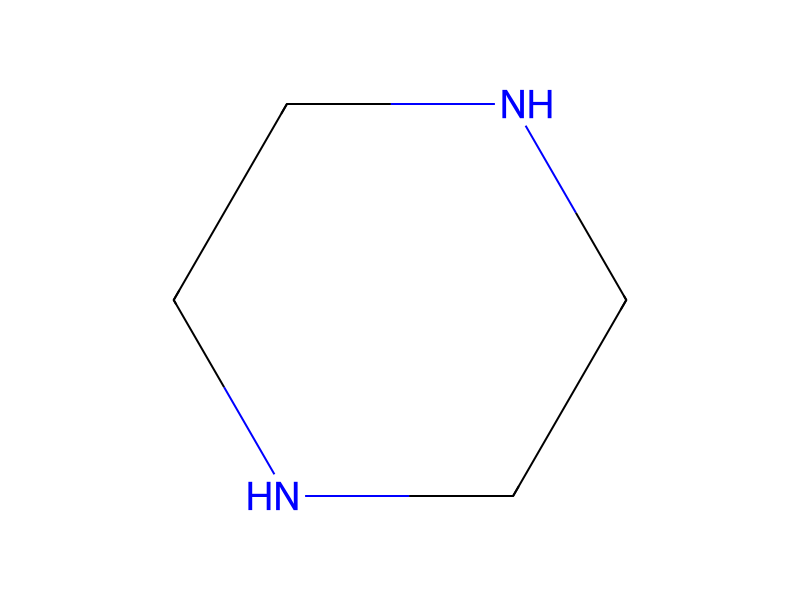
Cl.[Cl:2][C:3]1[N:4]=[C:5]([N:12]2[CH2:17][CH2:16][NH:15][CH2:14][CH2:13]2)[C:6]2[O:11][CH:10]=[CH:9][C:7]=2[N:8]=1.ClC1N=C(Cl)C2[O:27][CH:26]=[CH:25]C=2N=1.N1CCNCC1.C(Cl)(=O)C>C(Cl)Cl.CN(C=O)C>[Cl:2][C:3]1[N:4]=[C:5]([N:12]2[CH2:17][CH2:16][N:15]([C:26](=[O:27])[CH3:25])[CH2:14][CH2:13]2)[C:6]2[O:11][CH:10]=[CH:9][C:7]=2[N:8]=1To a flask was added 2-chloro-4-(piperazin-1-yl)furo[3,2-d]pyrimidine, hydrochloride salt (0.325 g, 1.18 mmol, prepared using A from 2,4-dichlorofuro[3,2-d]pyrimidine [Ark Pharm] with piperazine), DMF (10 mL), TEA (0.543 mL, 3.90 mmol) and acetyl chloride (0.185 mL, 2.60 mmol). The mixture was warmed to about 35° C. and stirred overnight. The mixture was cooled to rt and diluted with DCM (50 mL). The organic layer was washed with water (50 mL), saturated aqueous NaHCO3 (50 mL) and brine (50 mL), dried over MgSO4, filtered, concentrated in vacuo and dried in a vacuum oven at about 40° C. to give 1-(4-(2-chlorofuro[3,2-d]pyrimidin-4-yl)piperazin-1-yl)ethanone (0.214 g, 64%): LC/MS (Table 2, Method a) Rt=1.04 min; MS m/z 281.4 (M+H)+.