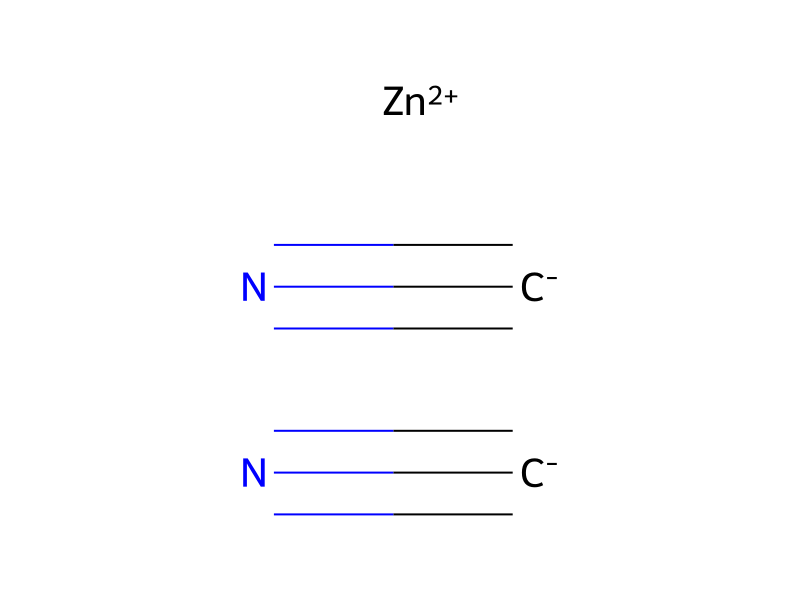
To an 8 mL screw-cap vial was added 6-chloro-8-iodo-quinazolin-4-amine (450 mg, 1.47 mmol), dimethylformamide (2 mL), zinc cyanide (0.65 equiv., 1.0 mmol, 115 mg), and palladium tetra is(triphenylphosphine), (0.1 equiv., 0.15 mmol), 179 mg). The reaction was capped and shaken at 110° C. overnight. The reaction was cooled to room temperature, diluted with 3 mL of dichloromethane, and 2 mL of water was added. The precipitate that followed was collected by filtration, and washed with water, then dichloromethane yielding 240 mg of 4-amino-6-chloro-quinazoline-8-carbonitrile as a light yellow solid. 1H NMR (400 MHz, DMSO) δ 8.72-8.67 (d, J=2.2 Hz, 1H), 8.54-8.50 (s, 1H), 8.50-8.46 (d, J=2.1 Hz, 1H), 8.29-8.22 (bs, 2H). LCMS M/Z (M+H)=205.