HomeMCPSkillsWorkbenchOpenChem
HomeWorkbenchNotificationsMe
llms.txt · skill.md · MCP GuidePrivacy Policy · Terms of Service · Supportv1.8.5
  1. Home
  2. /Reaction

Sodium Carbonate → 4,6-Diphenylpyrimidine

HRID 1050636
Print

Reaction equation

Cl[C:2]1[CH:7]=[C:6](Cl)[N:5]=[CH:4][N:3]=1.[C:9]1(B(O)O)[CH:14]=[CH:13][CH:12]=[CH:11][CH:10]=1.C(=O)([O-])[O-].[Na+].[Na+]>C1C=CC(P(C2C=CC=CC=2)C2C=CC=CC=2)=CC=1.C1C=CC(P(C2C=CC=CC=2)C2C=CC=CC=2)=CC=1.Cl[Pd]Cl.O.C(#N)C>[C:9]1([C:2]2[CH:7]=[C:6]([C:9]3[CH:14]=[CH:13][CH:12]=[CH:11][CH:10]=3)[N:5]=[CH:4][N:3]=2)[CH:14]=[CH:13][CH:12]=[CH:11][CH:10]=1
ParticipantsProcedureWorkupSources & evidenceReaction notes

Participants

8

Reactant 3

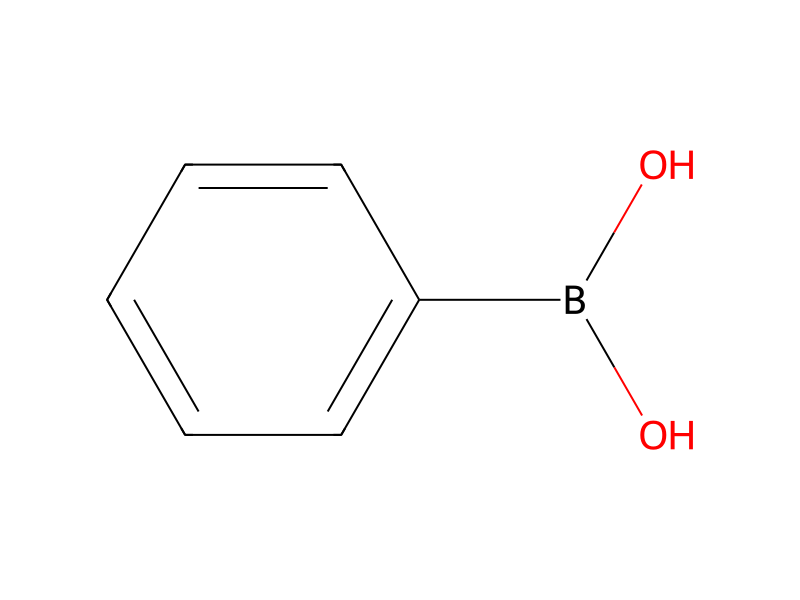
HCID 10340Sodium Carbonate2×HCID 66827Phenylboronic Acid2×HCID 709434,6-Dichloropyrimidine

Product 1

HCID 8175404,6-DiphenylpyrimidineYield 38%

Reagents, catalysts & solvents 4

HCID 6102075Dichlorobis(triphenylphosphine)palladiumCatalyst
HCID 178418476HCID 178418476, compoundCatalyst
HCID 962WaterSolvent3×
HCID 6342AcetonitrileSolvent2×

Procedure

First, 5.02 g of 4,6-dichloropyrimidine, 8.29 g of phenylboronic acid, 7.19 g of sodium carbonate, 0.29 g of bis(triphenylphosphine)palladium(II)dichloride (abbreviation: Pd(PPh3)2Cl2), 20 mL of water, and 20 mL of acetonitrile were put into a recovery flask equipped with a reflux pipe, and the air in the flask was replaced with argon. This reaction container was heated by irradiation with microwaves (2.45 GHz, 100 W) for 60 minutes. Here, there were further put 2.08 g of phenylboronic acid, 1.79 g of sodium carbonate, 0.070 g of Pd(PPh3)2Cl2, 5 mL of water, and 5 mL of acetonitrile into the flask, and the mixture was heated again by irradiation with microwaves (2.45 GHz, 100 W) for 60 minutes. After that, water was added to this solution and an organic layer was extracted with dichloromethane. The obtained solution of the extract was washed with water and dried with magnesium sulfate. The solution after drying was filtered. The solvent of this solution was distilled off, and then the obtained residue was purified by silica gel column chromatography using dichloromethane as a developing solvent, so that a pyrimidine derivative Hdppm (yellow white powder, yield of 38%) was obtained. Note that for the microwave irradiation, a microwave synthesis system (Discover, manufactured by CEM Corporation) was used. A synthesis scheme (e-1) of Step 1 is illustrated below.


Workup

  1. customequipped with a reflux pipe
  2. temperatureThis reaction container was heated by irradiation with microwaves (2.45 GHz, 100 W) for 60 minutes
  3. temperaturethe mixture was heated again by irradiation with microwaves (2.45 GHz, 100 W) for 60 minutes
  4. extractionan organic layer was extracted with dichloromethane
  5. washThe obtained solution of the extract was washed with water
  6. dry with materialdried with magnesium sulfate
  7. customThe solution after drying
  8. filtrationwas filtered
  9. distillationThe solvent of this solution was distilled off
  10. customthe obtained residue was purified by silica gel column chromatography

Sources & evidence

ORD record
ord-b3113333e823458892c8972b5c56511f
Source dataset
uspto-grants-2016_07
DOI
10.6084/m9.figshare.5104873.v1
Patent number
US09385328B2

Reaction notes

On this pageParticipantsProcedureWorkupSources & evidenceReaction notes