HomeMCPWorkbenchSkills
HomeWorkbenchNotificationsMe
llms.txt · MCP GuidePrivacy Policy · Terms of Service · Supportv1.8.0
  1. Home
  2. /Reaction

Ammonium Chloride → 5-[4-(1-hydroxycyclobutyl)phenyl]-6-methyl-1H-indole-3-carbaldehyde

HRID 1054657
Notes
Print preview

Reaction equation

HRID 1054657 reaction equation
[CH:1]1(P(C2CCCCC2)C2C=CC=CC=2C2C(OC)=CC=CC=2OC)CCCCC1.O.P([O-])([O-])([O-])=O.[K+].[K+].[K+].CB(O)O.Cl[C:44]1[CH:52]=[C:51]2[C:47]([C:48]([CH:53]=[O:54])=[CH:49][NH:50]2)=[CH:46][C:45]=1[C:55]1[CH:60]=[CH:59][C:58]([C:61]2([OH:65])[CH2:64][CH2:63][CH2:62]2)=[CH:57][CH:56]=1.[Cl-].[NH4+]>O1CCOCC1.C([O-])(=O)C.[Pd+2].C([O-])(=O)C>[OH:65][C:61]1([C:58]2[CH:57]=[CH:56][C:55]([C:45]3[CH:46]=[C:47]4[C:51](=[CH:52][C:44]=3[CH3:1])[NH:50][CH:49]=[C:48]4[CH:53]=[O:54])=[CH:60][CH:59]=2)[CH2:64][CH2:63][CH2:62]1
ParticipantsProcedureWorkupSources & evidenceReaction notes

Participants

8

Reactant 5

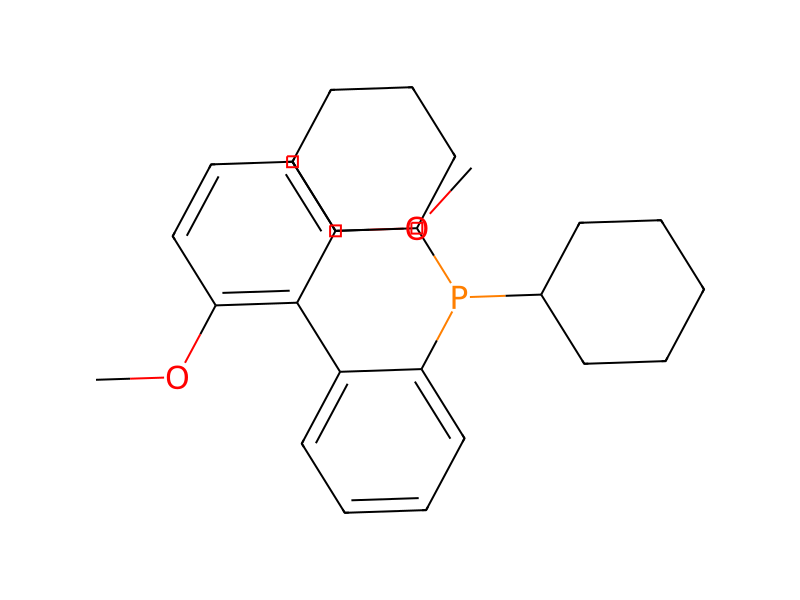
HCID 25517Ammonium ChlorideHCID 139377Methylboronic AcidHCID 112698722-Dicyclohexylphosphino-2',6'-dimethoxybiphenylHCID 22031701Potassium phosphate, tribasic, monohydrateHCID 866985686-Chloro-5-(4-(1-hydroxycyclobutyl)phenyl)-1H-indole-3-carbaldehyde

Product 1

HCID 86698661
5-[4-(1-hydroxycyclobutyl)phenyl]-6-methyl-1H-indole-3-carbaldehyde

Reagents, catalysts & solvents 2

HCID 167845palladium(II) acetateCatalystHCID 312751,4-DioxaneSolvent

Procedure

A mixture of dicyclohexyl(2′,6′-dimethoxybiphenyl-2-yl)phosphane (62.8 mg, 0.153 mmol), palladium acetate (13.7 mg, 0.061 mmol), tribasic potassium phosphate monohydrate (566 mg, 2.46 mmol), and methyl boronic acid (184 mg, 3.07 mmol) was sealed in a microwave tube and evacuated and backfilled with nitrogen three times. Deoxygenated 1,4-dioxane (1.5 mL) was added and the mixture was stirred vigorously at room temperature for one hour. A solution of 6-chloro-5-[4-(1-hydroxy-cyclobutyl)-phenyl]-1H-indole-3-carbaldehyde (400 mg, 1.23 mmol) in 1,4-dioxane (2.5 mL) was degassed with nitrogen for 10 minutes then added to the reaction mixture. The reaction mixture was heated at 120° C. for three hours under microwave irradiation, and then allowed to stir at room temperature for 12 hours. The reaction mixture was poured into saturated ammonium chloride solution (20 mL) and extracted with ethyl acetate (3×20 mL). The combined organic layers were dried over sodium sulfate, filtered and evaporated. Flash silica gel chromatography was performed on the crude product utilizing a solvent system of heptanes/ethyl acetate (9:1 to 1:1) to give the title compound. MS (ES+) 306.5 (M+H)+. 1H NMR (400 MHz, CD3OD) δ 9.86 (s, 1H), 8.06 (s, 1H), 7.95 (s, 1H), 7.55 (d, 2H), 7.38 (s, 1H), 7.36 (d, 2H), 2.61 (m, 2H), 2.39 (m, 2H), 2.34 (s, 3H), 2.05 (m, 1H), 1.75 (m, 1H).


Workup

  1. customwas sealed in a microwave tube
  2. customevacuated
  3. additionDeoxygenated 1,4-dioxane (1.5 mL) was added
  4. additionthen added to the reaction mixture
  5. temperatureThe reaction mixture was heated at 120° C. for three hours under microwave irradiation
  6. stirringto stir at room temperature for 12 hours
  7. extractionextracted with ethyl acetate (3×20 mL)
  8. dry with materialThe combined organic layers were dried over sodium sulfate
  9. filtrationfiltered
  10. customevaporated

Sources & evidence

ORD record
ord-320b2def7e6b4eb8a8c7614e6bf179b3
Source dataset
uspto-grants-2016_07
DOI
10.6084/m9.figshare.5104873.v1
Patent number
US09394285B2

Reaction notes

Loading…

On this pageParticipantsProcedureWorkupSources & evidenceReaction notes