HomeMCPSkillsWorkbenchOpenChem
HomeWorkbenchNotificationsMe
llms.txt · skill.md · MCP GuidePrivacy Policy · Terms of Service · Supportv1.8.4
  1. Home
  2. /Reaction

8-Hydroxyquinoline → 3-(2-Methyl-1H-imidazol-1-yl)-5-(pentafluoro-lambda6-sulphanyl)benzoic acid

HRID 1055649
Print

Reaction equation

Br[C:2]1[CH:3]=[C:4]([CH:8]=[C:9]([S:11]([F:16])([F:15])([F:14])([F:13])[F:12])[CH:10]=1)[C:5]([OH:7])=[O:6].[CH3:17][C:18]1[NH:19][CH:20]=[CH:21][N:22]=1.OC1C=CC=C2C=1N=CC=C2>CN(C=O)C.C(=O)(O)[O-].C([N+](CC)(CC)CC)C.[Cu]I>[CH3:17][C:18]1[N:19]([C:2]2[CH:3]=[C:4]([CH:8]=[C:9]([S:11]([F:16])([F:15])([F:14])([F:13])[F:12])[CH:10]=2)[C:5]([OH:7])=[O:6])[CH:20]=[CH:21][N:22]=1
ParticipantsConditionsProcedureWorkupSources & evidenceReaction notes

Participants

7

Reactant 3

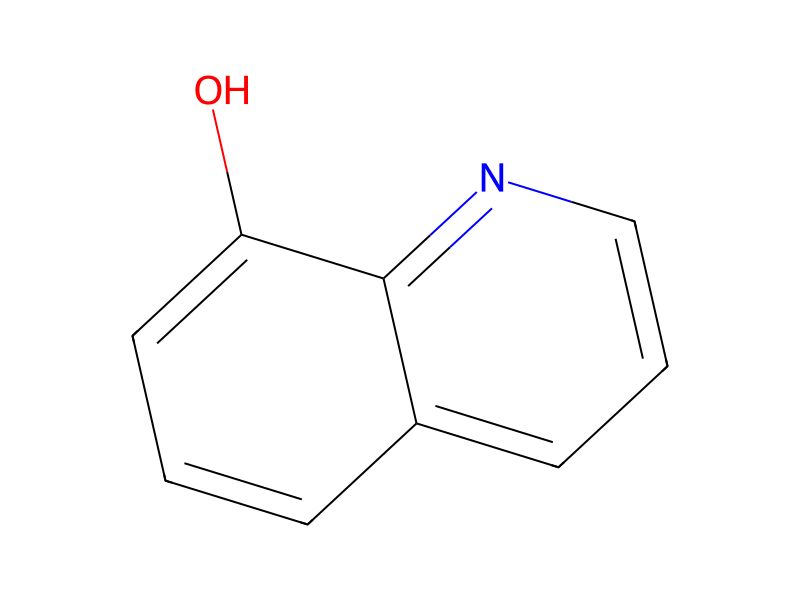
HCID 19238-HydroxyquinolineHCID 127492-MethylimidazoleHCID 581374213-Bromo-5-(pentafluorosulfur)benzoic acid

Product 1

HCID 896999723-(2-Methyl-1H-imidazol-1-yl)-5-(pentafluoro-lambda6-sulphanyl)benzoic acid

Reagents, catalysts & solvents 3

HCID 24350Copper(1+) iodide; Copper(I) iodide; Cuprous iodide; Cuprous iodide (CuI)
Catalyst
HCID 11805541Tetraethylammonium bicarbonateCatalyst
HCID 6228DimethylformamideSolvent

Conditions

Temperature
160 °C

Procedure

1.0 g (3.06 mmol) of the compound of Example 15A and 276 mg (3.36 mmol) of 2-methylimidazole were dissolved in 20 ml of DMF and 2 ml of water, and the mixture was degassed with argon. 2.06 g (6.42 mmol) of tetraethylammonium bicarbonate were added carefully, followed by 232 mg (1.22 mmol) of copper(I) iodide and 177 mg (1.22 mmol) of 8-hydroxyquinoline. The mixture was heated in a microwave oven (Biotage Initiator, with Dynamic Field Tuning) at 160° C. for 60 min. The reaction was then filtered, and the filtrate was adjusted at pH 1 with concentrated hydrochloric acid and concentrated under reduced pressure. The residue was separated into its components by preparative HPLC (Method 17). Evaporation of the product fractions and drying of the residue under high vacuum gave 238 mg (94% pure, 22% of theory) of the title compound.

Workup

  1. custom2 ml of water, and the mixture was degassed with argon
  2. filtrationThe reaction was then filtered
  3. concentrationconcentrated under reduced pressure
  4. customThe residue was separated into its components by preparative HPLC (Method 17)
  5. customEvaporation of the product fractions
  6. customdrying of the residue under high vacuum

Sources & evidence

ORD record
ord-96a6f56361a04f6d845369da31940732
Source dataset
uspto-grants-2016_07
DOI
10.6084/m9.figshare.5104873.v1
Patent number
US09394309B2

Reaction notes

On this pageParticipantsConditionsProcedureWorkupSources & evidenceReaction notes