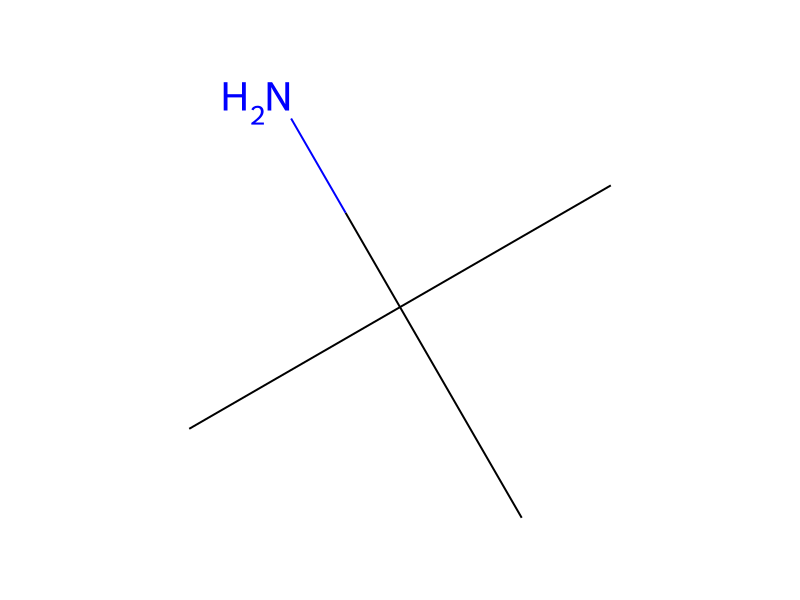
Cl[C:2]1[N:7]=[C:6]2[C:8]([Cl:12])=[N:9][CH:10]=[CH:11][C:5]2=[N:4][C:3]=1[CH3:13].[C:14]([NH2:18])([CH3:17])([CH3:16])[CH3:15]>CN1C(=O)CCC1.O>[C:14]([NH:18][C:2]1[N:7]=[C:6]2[C:8]([Cl:12])=[N:9][CH:10]=[CH:11][C:5]2=[N:4][C:3]=1[CH3:13])([CH3:17])([CH3:16])[CH3:15]A glass microwave reaction vessel was charged with 3,5-dichloro-2-methylpyrido[3,4-b]pyrazine (110 mg, 0.51 mmol) and tert-butylamine (0.16 mL, 1.54 mmol) (Sigma Aldich) in NMP (1.0 mL). The reaction mixture was stirred and heated in an Initiator microwave reactor (Personal Chemistry, Biotage AB, Inc., Upssala, Sweden) at 60° C. for 2 h. The mixture was diluted with water and extracted with DCM (30 mL×3). The combined organic layers was washed with water (30 mL×3) and dried (MgSO4), filtered and concentrated. The residue was purified by silica gel chromatography (10-30% EtOAc in Hexanes) to give N-(tert-butyl)-5-chloro-2-methylpyrido[3,4-b]pyrazin-3-amine (15 mg, 0.060 mmol, 11% yield). MS (ESI, pos. ion) m/z: 251.1 (M+1).