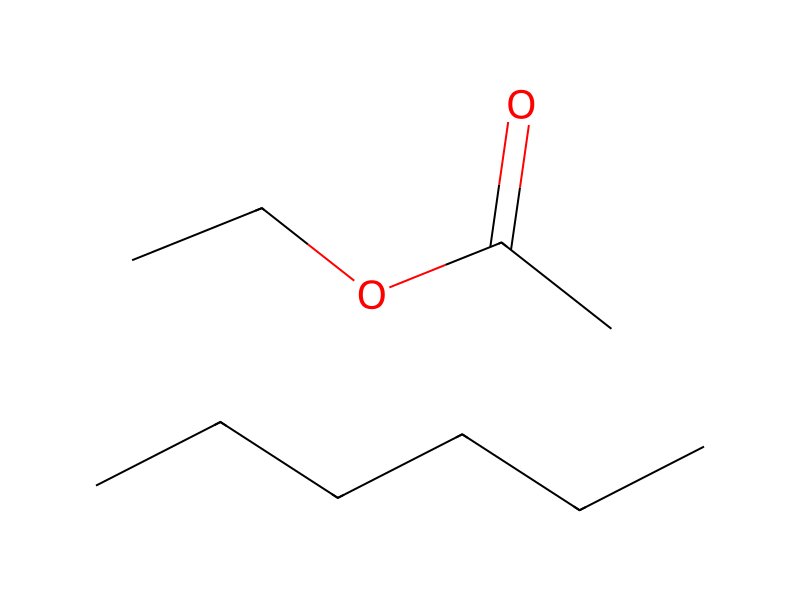
[C:1]([C:3]1[CH:4]=[C:5]([C:9]([NH:11][CH2:12][C:13]2[CH:18]=[CH:17][C:16]([CH2:19][CH2:20][C:21]([O:23][CH2:24][CH3:25])=[O:22])=[CH:15][CH:14]=2)=[O:10])[CH:6]=[CH:7][CH:8]=1)#[N:2].Cl.[NH2:27][OH:28].C(N(CC)CC)C.CC(O)=O>CCO.CCOC(C)=O.CCCCCC>[NH2:2][C:1](=[N:27][OH:28])[C:3]1[CH:4]=[C:5]([C:9]([NH:11][CH2:12][C:13]2[CH:14]=[CH:15][C:16]([CH2:19][CH2:20][C:21]([O:23][CH2:24][CH3:25])=[O:22])=[CH:17][CH:18]=2)=[O:10])[CH:6]=[CH:7][CH:8]=1A solution of the compound of Example 12 (0.476 g, 1.3 mmol), hydroxylamine hydrochloride (0.089 g, 1.3 mmol), and triethylamine (0.18 mL, 1.3 mmol) in absolute EtOH (10 mL) was heated to reflux (86-90° C.). After 5 hours, TLC [1:1 EtOAc/hexane (10 mL)+5 drops of AcOH] showed that starting material was still present. Additional hydroxylamine hydrochloride (0.04 g, 0.6 equivalent) and triethylamine (0.09 mL) was added. After 40 minutes, the TLC showed no change. The reaction was concentrated in vacuo and the residue was dissolved in H2O (30 mL). The aqueous layer was extracted with EtOAc (40 mL). The organic layer was collected, dried over MgSO4, and concentrated in vacuo to give a white solid (0.49 g). NMR was consistent with the proposed structure.