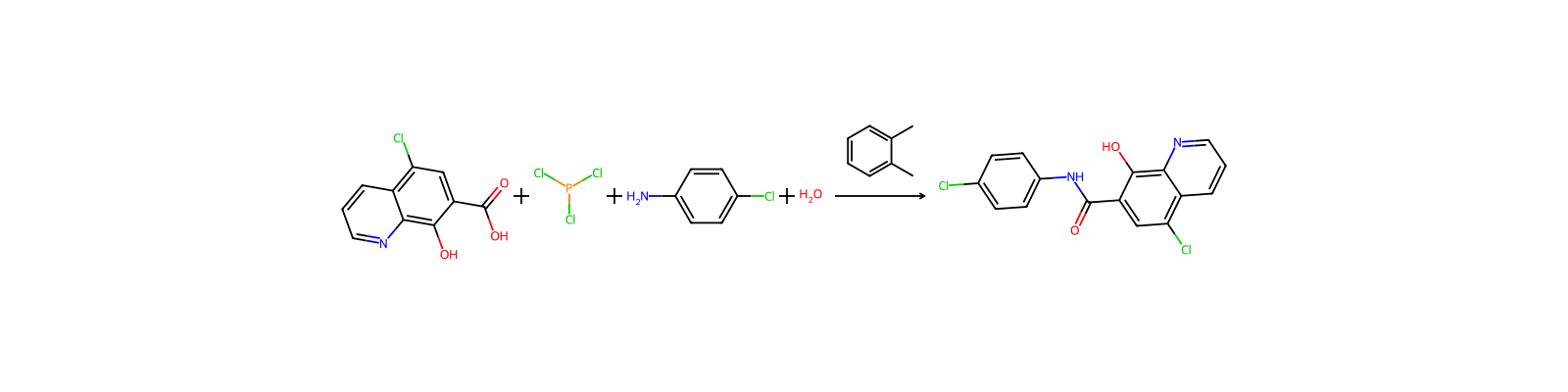
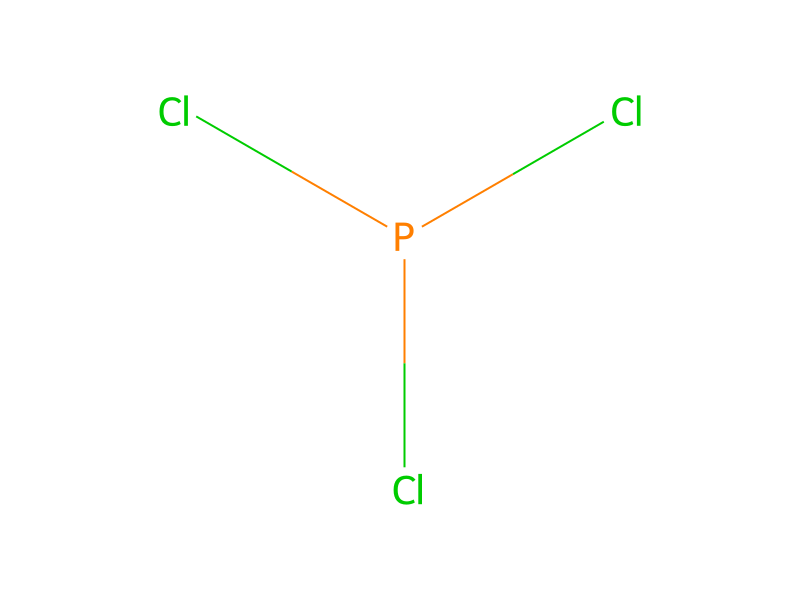
[Cl:1][C:2]1[CH:11]=[C:10]([C:12]([OH:14])=O)[C:9]([OH:15])=[C:8]2[C:3]=1[CH:4]=[CH:5][CH:6]=[N:7]2.P(Cl)(Cl)Cl.[Cl:20][C:21]1[CH:27]=[CH:26][C:24]([NH2:25])=[CH:23][CH:22]=1.O>C1(C)C(C)=CC=CC=1>[Cl:1][C:2]1[CH:11]=[C:10]([C:12]([NH:25][C:24]2[CH:26]=[CH:27][C:21]([Cl:20])=[CH:22][CH:23]=2)=[O:14])[C:9]([OH:15])=[C:8]2[C:3]=1[CH:4]=[CH:5][CH:6]=[N:7]2A suspension of 5-chloro-8-hydroxyquinoline-7-carboxylic acid (0.224 g) of Preparation 3 in 50 mL xylene is heated to reflux. To this is added dropwise PCl3 (0.069 g). After 15 min, 4-chloroaniline (0.128 g) is added. Refluxing is continued overnight. The reaction is then cooled and water is added to destroy excess PCl3. The resulting solid is collected, washed with water and dried. The solid is then partitioned between EtOAc and water. The aqueous layer is extracted with EtOAc (3×). The combined organic layers are washed with water, dried and condensed. The crude product is recrystallized from EtOAc to yield 0.073 g of the title product as an orange solid.