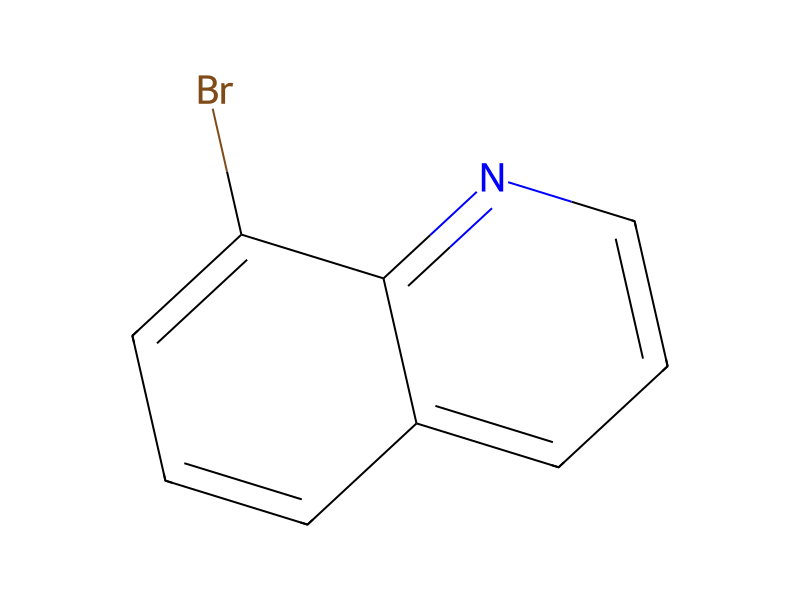
10.4 g (50 mmol) of 8-bromoquinoline in 100 ml of THF were cooled to about −100° C. 20 ml of n-BuLi (2.5M in hexane, 50 mmol) were added dropwise within a period of 5 min while the internal temperature was held below −80° C. After this addition stirring was continued at −80° C. for a further 15 min, and 6.6 g of 1-indanone (50 mmol) dissolved in 30 ml of THF were then added dropwise within a period of 10 min. The reaction mixture was then allowed to reach room temperature gradually and was then heated for 3 b at reflux. Once the mixture had cooled to room temperature, ice was added, followed by hydrochloric acid until the pH was about 1, followed by stirring for 30 min. The aqueous and organic phase were separated. The aqueous phase was mixed with ammonia solution until the pH was about 9 and extracted with ether. The combined organic phases were then evaporated to dryness in vacuo. The resultant viscous oil (1-(8-quinolyl)indan-1-ol (8H2O)) vas mixed with hydrochloric acid until the pH was 0, heated at reflux for 2 hours and then neutralised. After work-up and drying it was possible to isolate 6.6 g of 1-(8-quinolyl)indene (55%) as a colorless solid.