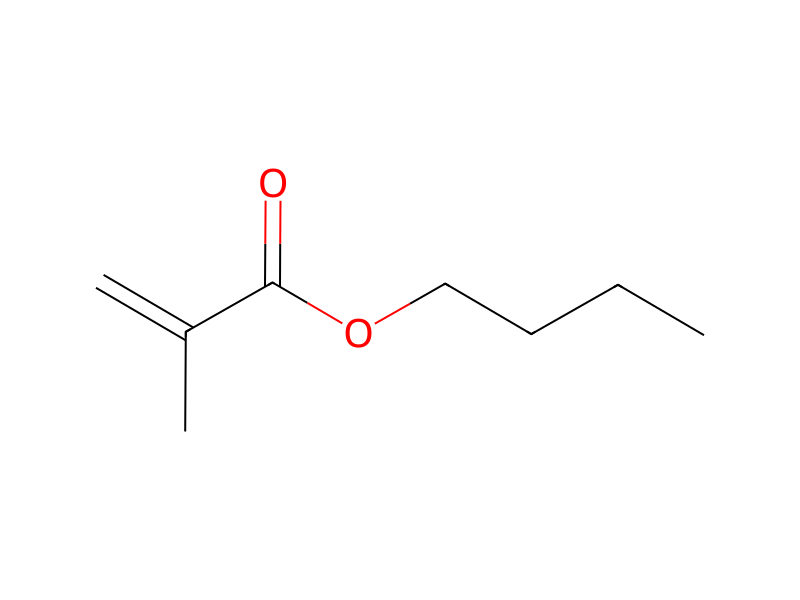
[C:1]([O:6][CH3:7])(=[O:5])[C:2](C)=[CH2:3].C(OCC)(=O)C(C)=C.[C:16]([O:21][CH2:22][CH2:23][CH2:24][CH3:25])(=[O:20])[C:17](C)=[CH2:18].[CH2:26]=[CH:27][C:28]1C=[CH:32][CH:31]=[CH:30][CH:29]=1.C(OCCO)(=O)C(C)=C>C(O)(C)C>[CH3:26][CH2:27][CH2:28][CH2:29][CH:30]([CH2:7][O:6][C:1]([CH:2]=[CH2:3])=[O:5])[CH2:31][CH3:32].[CH3:25][CH2:24][CH2:23][CH2:22][O:21][C:16]([CH:17]=[CH2:18])=[O:20]180 parts of isopropyl alcohol were put in an one-liter four-necked flask equipped with a thermometer, a stirrer, a condenser and a dropping funnel. After nitrogen replacement, the interior temperature of the flask was regulated to about 85° C. Afterwards, a monomer mixture consisting of 180 parts of methyl methacrylate, 15 parts of ethyl methacrylate, 30 parts of n-butyl methacrylate, 30 parts of styrene, 30 parts of N-n-butoxyethyl methacrylate and 15 parts of hydroxyethyl methacrylate were added dropwise into the flask with a catalyst comprising 6 parts of 2,2-azobis(2,4-dimethylvaleronitrile) over about 2 hours. After the completion of the dropwise addition, the reaction was continued at that temperature for further five hours to obtain a colorless, transparent resin solution having a solid content of about 63%.